Laser detection sensors have become indispensable tools across various industrial sectors due to their precision, reliability, and versatility. These sensors operate by emitting laser beams and analyzing the reflected light to measure distance, detect objects, or identify specific characteristics. In manufacturing, they are widely used for quality control, such as inspecting product dimensions, detecting surface defects, and ensuring proper alignment in assembly lines. For instance, in automotive production, laser sensors verify the exact placement of components like brake pads and engine parts, minimizing errors and enhancing safety standards.
Beyond manufacturing, laser detection sensors play a critical role in logistics and warehousing. Automated guided vehicles (AGVs) rely on these sensors for navigation and obstacle avoidance, enabling efficient material handling in dynamic environments. Similarly, in packaging industries, sensors monitor fill levels, count items, and check seal integrity, streamlining operations and reducing waste. The high-speed capabilities of laser sensors make them ideal for applications requiring rapid response times, such as sorting systems in recycling plants or detecting minute contaminants in food processing.
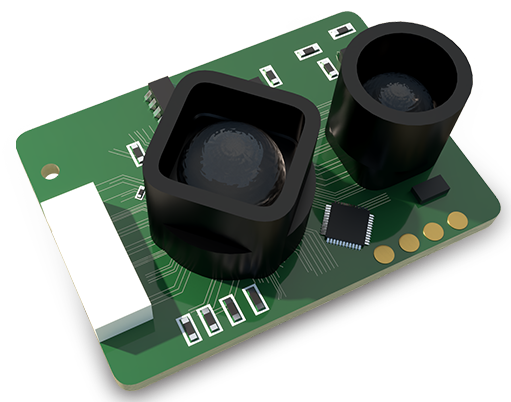
Recent advancements in laser technology have expanded sensor functionalities. Innovations like time-of-flight (ToF) and triangulation methods allow for more accurate 3D scanning and profiling, even in challenging conditions like low light or high temperatures. Integration with IoT and AI systems has further enhanced data analysis, enabling predictive maintenance and real-time monitoring. For example, in energy sectors, laser sensors detect gas leaks or structural weaknesses in pipelines, preventing accidents and ensuring compliance with environmental regulations.
Despite their benefits, selecting the right laser sensor involves considering factors like range, resolution, and environmental robustness. Engineers must assess application-specific needs, such as outdoor durability or compatibility with reflective surfaces, to optimize performance. As industries embrace automation and smart technologies, the demand for advanced laser detection sensors continues to grow, driving innovation in areas like miniaturization and cost reduction. Ultimately, these sensors are pivotal in achieving higher efficiency, safety, and sustainability in modern industrial ecosystems.