In the dynamic landscape of modern manufacturing, precision, efficiency, and automation are paramount. Among the technologies driving this evolution, welding laser tracking sensors stand out as critical components for enhancing the quality and consistency of welding processes. These sophisticated devices utilize laser vision systems to monitor and adjust welding paths in real-time, ensuring optimal weld seam tracking even in the presence of part variations, thermal distortions, or fixture inconsistencies.
At its core, a welding laser tracking sensor operates by projecting a laser stripe onto the workpiece surface ahead of the welding torch. A high-resolution camera within the sensor captures the reflected laser profile. Advanced algorithms then analyze this profile to determine the exact position, geometry, and orientation of the weld joint—be it a butt joint, fillet weld, or lap joint. This real-time data is fed to the robot controller or welding power source, which dynamically adjusts the torch's trajectory, height, and welding parameters. This closed-loop control system compensates for deviations instantly, a capability far surpassing traditional teach-and-playback robotic welding, which lacks adaptability.
The benefits of integrating laser tracking sensors into welding systems are substantial. First and foremost, they significantly improve weld quality by ensuring precise torch alignment along the joint, which minimizes defects such as lack of fusion, undercut, or excessive reinforcement. This leads to stronger, more reliable welds that meet stringent industry standards. Secondly, they enhance process efficiency. By eliminating the need for time-consuming manual programming for each part and reducing the requirement for perfect part fit-up, they slash setup times and increase throughput. Manufacturers can handle higher part volumes and mixed-product batches without sacrificing quality. Furthermore, these sensors reduce material waste and rework costs by preventing faulty welds from the outset.
From an application perspective, laser tracking sensors are indispensable in industries where welding precision is non-negotiable. In automotive manufacturing, they are used for body-in-white assembly, ensuring consistent welds on complex, thin-gauge sheet metal. The aerospace sector relies on them for critical airframe and engine component welding, where material integrity is vital. Heavy machinery and shipbuilding benefit from their ability to track long, non-linear seams on large structures. Even in general fabrication and pipeline welding, these sensors improve productivity and worker safety by automating challenging tasks.
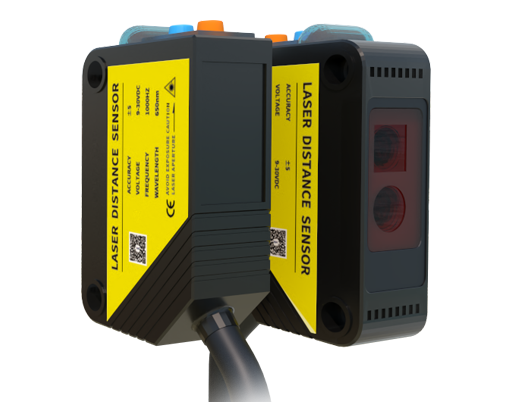
Technologically, modern welding laser tracking sensors have seen remarkable advancements. Early systems were sometimes challenged by highly reflective surfaces, deep grooves, or adverse environmental conditions like spatter and fume. Contemporary models, however, incorporate features like adaptive exposure control, robust filtering algorithms, and protective housings to maintain performance in harsh welding environments. Some sensors integrate seam finding, tracking, and post-weld inspection into a single unit. Connectivity with Industrial Internet of Things (IIoT) platforms is also becoming standard, allowing for data logging, predictive maintenance, and process optimization through analytics.
When selecting a laser tracking sensor, engineers must consider several factors. The sensor's working distance, field of view, and accuracy specifications must match the application's requirements. The type of laser (typically Class 2M for safety) and its wavelength affect performance on different materials. Compatibility with existing robotic arms (from brands like FANUC, ABB, KUKA, or Yaskawa) and welding equipment is crucial. Additionally, the software interface should be user-friendly, enabling easy calibration, programming of tracking parameters, and diagnostics.
Despite their advantages, implementation requires careful planning. Proper sensor mounting relative to the torch is essential to avoid interference and ensure a clear view of the joint. Regular maintenance, such as cleaning the protective window from spatter and dust, is necessary to sustain accuracy. Initial investment costs can be higher than non-tracking systems, but the return on investment is quickly realized through reduced scrap, lower labor costs, and increased equipment utilization.
Looking ahead, the future of welding laser tracking sensors is intertwined with trends like smart manufacturing and artificial intelligence. AI-enhanced sensors could predict weld defects by analyzing subtle joint characteristics, further pushing the boundaries of autonomous welding. As industries continue to demand higher quality and flexibility, the role of these precise optical guidance systems will only expand, solidifying their status as a cornerstone of advanced welding automation.
In conclusion, welding laser tracking sensors represent a transformative technology for industrial welding. By providing real-time, adaptive control, they bridge the gap between robotic automation and the unpredictable nature of real-world welding tasks. For any operation seeking to improve weld consistency, reduce costs, and embrace Industry 4.0, investing in robust laser tracking technology is a strategic step toward a more competitive and efficient future.