Proximity photoelectric sensors are indispensable components in modern industrial automation, offering non-contact detection of objects with high precision and reliability. These sensors operate based on the photoelectric effect, utilizing light beams to sense the presence, absence, or distance of targets without physical contact. The core principle involves emitting a light signal—typically from an LED or laser diode—and detecting changes in the received light to determine object proximity.
There are three primary types of photoelectric sensors: through-beam, retro-reflective, and diffuse reflective. Through-beam sensors consist of separate emitter and receiver units placed opposite each other. An object is detected when it interrupts the light beam between them, making this type highly accurate and suitable for long-range applications. Retro-reflective sensors integrate the emitter and receiver into a single housing, using a reflector to bounce the light back. Detection occurs when an object blocks the reflected beam, offering easier installation than through-beam models. Diffuse reflective sensors also house the emitter and receiver together but rely on light reflected directly from the target object. The detection range depends on the object's surface properties, such as color and reflectivity, making them versatile for varied environments.
The working mechanism begins with the emitter generating modulated infrared, visible, or laser light to minimize interference from ambient light. The receiver, often a phototransistor or photodiode, converts incoming light into an electrical signal. When an object enters the sensing area, it alters the light intensity or beam path, triggering a change in the receiver's output. This signal is processed by internal circuitry—such as amplifiers and comparators—to produce a clean, stable switch output (e.g., NPN/PNP or relay). Advanced sensors incorporate features like background suppression, which uses triangulation to ignore distant objects, and time-of-flight measurement for precise distance calculation.
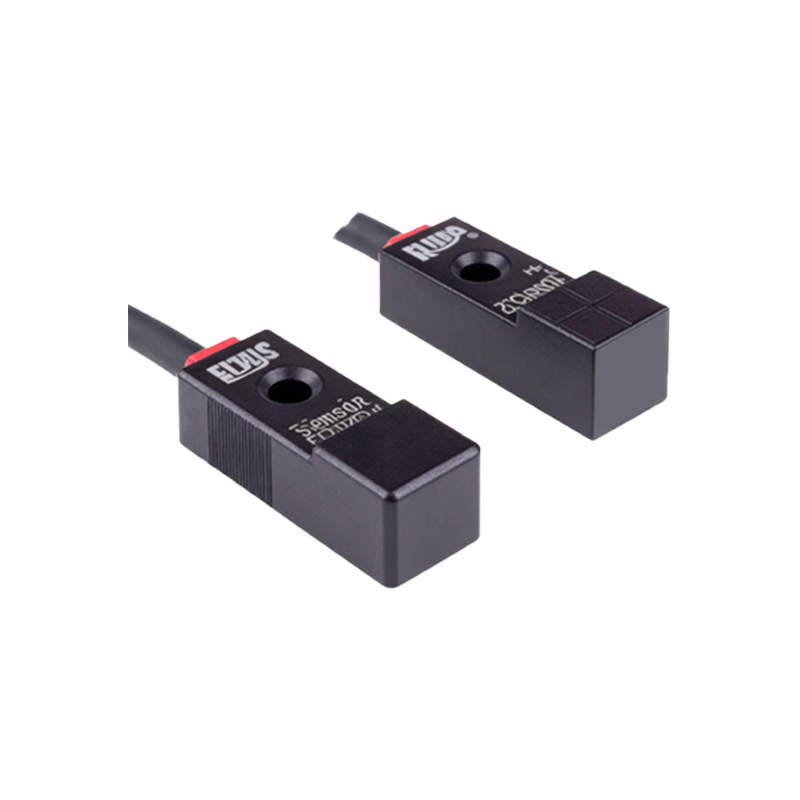
Key advantages of photoelectric proximity sensors include fast response times, often in milliseconds, and the ability to detect diverse materials, including transparent or shiny objects, depending on the model. They are widely used in packaging, material handling, assembly lines, and safety systems. For instance, in conveyor systems, they count products or verify positioning, while in automated doors, they ensure safe operation by detecting obstructions. Maintenance is minimal due to the non-contact nature, reducing wear and tear.

When selecting a photoelectric sensor, factors like sensing range, environmental conditions (e.g., dust, moisture), and target characteristics must be considered. Proper alignment and installation are crucial for optimal performance, as misalignment can cause false triggers. Innovations in this field continue to enhance functionality, with smart sensors offering digital interfaces and IoT connectivity for real-time monitoring. In summary, proximity photoelectric sensors provide efficient, reliable detection by harnessing light-based technology, driving efficiency and safety across industrial applications.