Fiber optic laser sensors represent a transformative technology in the field of measurement and sensing. By utilizing the unique properties of laser light transmitted through optical fibers, these devices offer unparalleled capabilities for monitoring a vast array of physical, chemical, and biological parameters. Their core principle relies on modulating light characteristics—such as intensity, phase, wavelength, or polarization—within the fiber in response to an external stimulus. This modulation is then precisely detected and interpreted to provide accurate, real-time data.
The fundamental architecture of a fiber optic laser sensor system typically involves a laser light source, the optical fiber itself which acts as the sensing element or a conduit to a remote sensor, photodetectors, and sophisticated signal processing electronics. The optical fiber, usually made of silica glass, serves as the medium for guiding light. When external factors like temperature, strain, pressure, or the presence of specific chemicals interact with the fiber, they alter the light's properties. For instance, mechanical strain can change the phase of the light (interferometric sensors), while temperature variations can shift the wavelength of reflected light (Fiber Bragg Grating sensors). These minute changes are captured with extreme sensitivity.

The advantages of this technology are numerous and drive its adoption across industries. A key benefit is immunity to electromagnetic interference (EMI), making these sensors ideal for harsh electrical environments like power generation facilities or near heavy machinery. They are inherently safe in explosive atmospheres as they do not generate sparks. Their small size, lightweight, and flexibility allow for installation in confined or geometrically complex spaces where traditional sensors cannot go. Furthermore, a single fiber can host multiple sensing points, enabling distributed sensing over kilometers of range, which is revolutionary for monitoring large-scale infrastructure like pipelines, bridges, and dams.
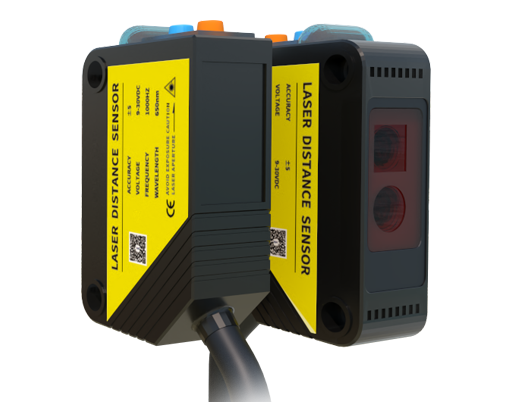
Applications for fiber optic laser sensors are vast and continually expanding. In the oil and gas industry, they are deployed for downhole pressure and temperature monitoring, enhancing resource extraction efficiency and safety. The aerospace sector utilizes embedded sensors in composite materials to monitor structural health and integrity of aircraft wings and fuselages. In civil engineering, networks of these sensors provide continuous strain and vibration data for bridges, tunnels, and skyscrapers, enabling predictive maintenance and early warning of structural flaws. The medical field employs miniaturized versions for precise temperature sensing during thermal therapies and for biochemical sensing in lab-on-a-chip devices.
Looking towards the future, research is pushing the boundaries of what is possible. The integration of nanotechnology, such as coating fibers with nano-structured materials or quantum dots, is enhancing sensitivity for chemical and biological detection. The development of new fiber materials, like polymer or photonic crystal fibers, opens doors to sensing in new spectral ranges and with higher sensitivity. The convergence with the Internet of Things (IoT) and artificial intelligence for data analytics is creating smarter, autonomous sensing networks capable of not just collecting data, but also interpreting it and triggering actions.

Despite the higher initial cost compared to some conventional electronic sensors, the long-term reliability, durability, and rich data yield of fiber optic laser sensors present a compelling value proposition. As manufacturing techniques advance and costs decrease, their use is poised to become more widespread. From safeguarding critical infrastructure to enabling new medical diagnostics, fiber optic laser sensors are a cornerstone technology for building a more measured, monitored, and intelligent world.