In the realm of industrial automation and quality control, precision is paramount. Laser displacement sensor modules have emerged as a cornerstone technology for achieving non-contact, high-accuracy measurements. These sophisticated devices operate on the principle of triangulation or time-of-flight, projecting a focused laser beam onto a target surface and analyzing the reflected light to determine distance or displacement with micron-level resolution.
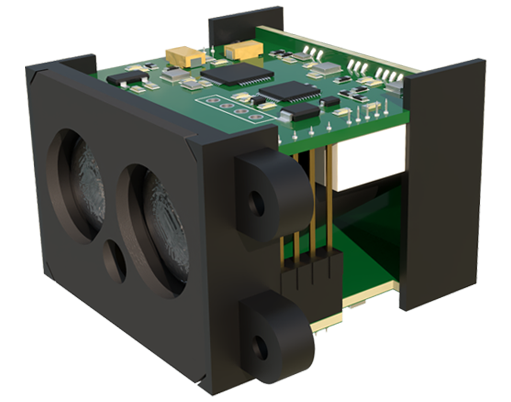
A typical laser displacement sensor module comprises three core components: a laser diode for emission, a lens system for beam focusing, and a high-sensitivity position-sensitive detector (PSD) or CMOS/CCD array. When the laser spot strikes the target, the reflected light is captured by the receiver lens and forms an image on the detector. Any change in the target's position alters the angle of the reflected beam, causing the light spot to shift on the detector plane. The sensor's internal processor calculates the exact displacement based on this positional shift, providing a real-time analog or digital output.
The advantages of using laser displacement sensors are numerous. Their non-contact nature eliminates mechanical wear and prevents damage to delicate surfaces, making them ideal for applications involving soft, hot, or rapidly moving objects. They offer exceptionally high sampling rates, often exceeding 100 kHz, enabling precise measurement of dynamic processes and high-speed production lines. Furthermore, their compact size and robust housing allow for easy integration into machinery, even in harsh environments with significant dust, vibration, or temperature fluctuations.
Key performance specifications to consider when selecting a module include measuring range, resolution, linearity, and spot size. The measuring range defines the minimum and maximum distances over which the sensor can operate accurately. Resolution indicates the smallest detectable change in distance, while linearity reflects the deviation from a perfect straight-line response across the entire range. A smaller laser spot size is crucial for measuring narrow grooves or sharp edges, enhancing the sensor's versatility.
Industrial applications are vast and varied. In automotive manufacturing, these sensors are deployed for gap and flush measurement on car body assemblies, ensuring perfect panel alignment. In electronics, they verify the coplanarity of semiconductor leads or the thickness of coated substrates. Within the metalworking sector, they monitor vibration in rotating machinery, measure thickness of rolled sheets, and inspect surface profiles for defects. The pharmaceutical industry utilizes them for precise fill-level detection in vials and ampoules.
Modern advancements continue to push the boundaries. Confocal chromatic sensors offer enhanced performance for measuring transparent or multi-layered materials. High-speed, blue-laser sensors provide superior stability on organic surfaces like rubber or resin, which traditionally scatter red laser light. Integration with industrial networks like EtherCAT or PROFINET facilitates seamless data exchange for Industry 4.0 smart factories, enabling predictive maintenance and closed-loop process control.
When implementing a laser displacement sensor, proper installation and calibration are critical. Factors such as the target's surface color, texture, and reflectivity can influence measurement stability. For highly reflective or transparent surfaces, specialized models with adjusted sensitivity or different operating principles may be required. Regular maintenance, primarily keeping the lens clean from contaminants, ensures long-term accuracy and reliability.
In conclusion, laser displacement sensor modules are indispensable tools for modern industry, delivering the speed, accuracy, and robustness needed for advanced manufacturing and rigorous quality assurance. By translating minute physical changes into precise electrical signals, they form the eyes of automated systems, driving efficiency, consistency, and innovation across countless sectors.