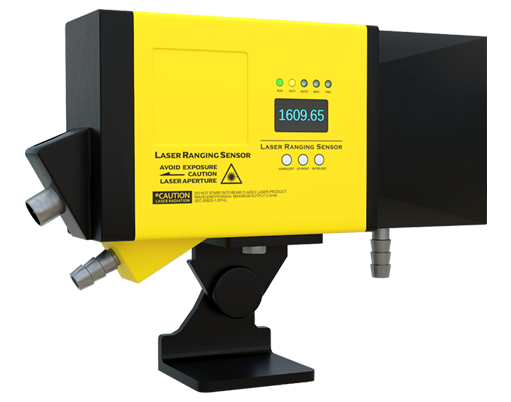
In the precise world of industrial automation, robotics, and quality control, laser distance sensors are indispensable tools. They provide non-contact, high-accuracy measurements critical for countless applications. However, a persistent challenge that engineers and system integrators frequently encounter is the phenomenon of stray light. This optical interference can significantly degrade sensor performance, leading to measurement errors, reduced reliability, and system downtime. A comprehensive understanding of stray light—its origins, its effects, and methods for its suppression—is essential for optimizing sensor deployment and ensuring measurement integrity.
Stray light, in the context of laser distance sensors, refers to any unwanted light that reaches the sensor's photodetector without following the intended optical path from the laser emitter to the target and back. It is essentially "noise" in the optical signal. This extraneous light does not carry accurate distance information and can overwhelm or distort the true return signal. The primary sources of stray light are multifaceted. Environmental ambient light, such as direct sunlight or intense artificial lighting, is a common culprit. More insidiously, stray light can originate from reflections off non-target surfaces within the sensor's field of view. These include machine parts, brackets, enclosures, or even dust particles on protective windows. In some triangulation-based sensors, highly reflective or specular target surfaces can cause the laser spot to reflect directly into the receiver lens from an unintended angle, generating a false signal. Internal reflections within the sensor housing or optical components, though minimized by design, can also contribute under certain conditions.
The impact of stray light on measurement accuracy is profound. It can cause several specific failure modes. The most direct effect is signal saturation, where the total light intensity on the detector exceeds its dynamic range, rendering the sensor temporarily "blind" and unable to process the return signal. Stray light can also elevate the baseline noise floor, reducing the signal-to-noise ratio (SNR). A low SNR makes it difficult for the sensor's electronics to accurately identify the peak of the true return signal, leading to increased measurement jitter or drift. In pulsed time-of-flight (ToF) sensors, stray light can trigger false timing events, causing gross measurement errors. For phase-shift measurement systems, stray light introduces phase noise, corrupting the calculated distance. Ultimately, this manifests in the application as incorrect positioning, failed quality checks, or erratic robotic behavior.
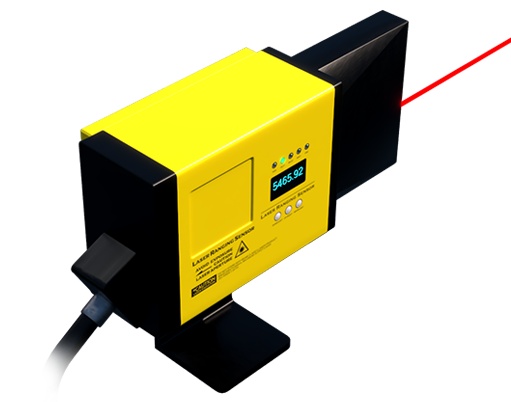
Mitigating the effects of stray light requires a systematic approach combining sensor selection, mechanical design, and environmental control. The first line of defense is choosing a sensor with robust built-in features. Many modern sensors employ optical bandpass filters that are precisely tuned to the wavelength of the laser diode (commonly 650nm red or 850nm infrared). These filters dramatically attenuate ambient light outside this narrow band. Modulated laser signals, where the emitted light is encoded with a specific frequency, paired with synchronous detection in the receiver, allow the sensor to distinguish its own signal from DC ambient light. Sensors with a high degree of housing and baffle design to shield the receiver path are also preferable.
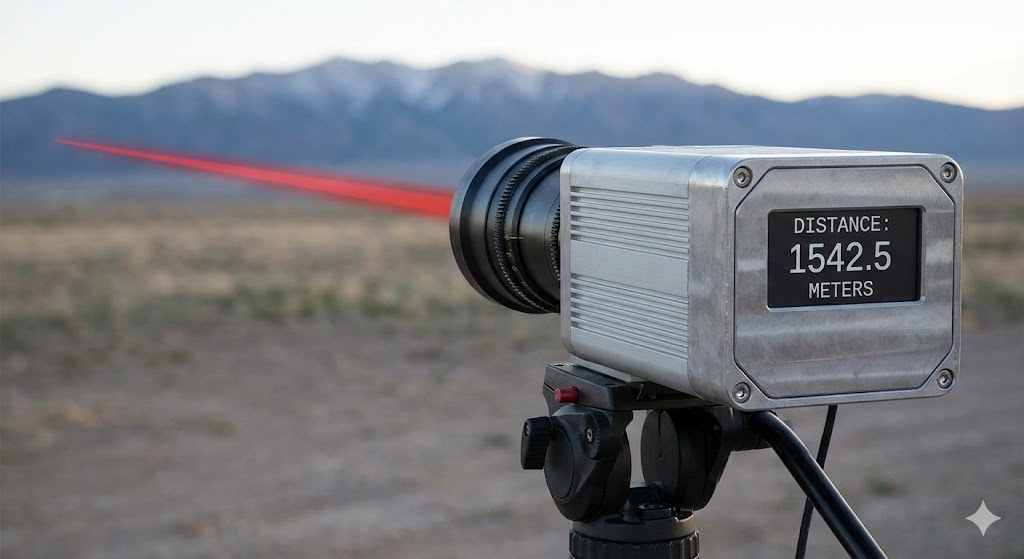
Mechanical integration is equally critical. Proper sensor mounting is paramount. The sensor should be positioned to minimize the line of sight to potential reflective surfaces. Using matte black anodized mounting hardware and creating internal baffles within the machine can absorb stray reflections. For applications involving highly reflective targets, angling the sensor slightly off-perpendicular can prevent direct retro-reflection. Ensuring protective windows, if used, are kept clean and free of scratches is vital, as contaminants can scatter light. In environments with extreme ambient light, constructing simple physical shrouds around the sensor head can provide effective shielding.
Finally, environmental and software strategies play a role. Controlling ambient lighting, perhaps by using shades or selecting lighting with a spectrum different from the laser, can reduce interference. Many sensors offer programmable parameters such as exposure time, laser power, and detection thresholds. Reducing laser power to the minimum necessary level or adjusting the detection window can sometimes help the sensor ignore stray light artifacts. For critical applications, implementing software filtering or median averaging of multiple readings in a PLC or controller can smooth out transient noise caused by stray light.
In conclusion, stray light is an inherent challenge in laser distance sensing, but it is not an insurmountable one. By understanding its mechanisms and implementing a layered defense strategy—selecting the right sensor technology, paying meticulous attention to mechanical integration, and leveraging environmental and software controls—engineers can effectively neutralize its impact. This proactive approach ensures that laser distance sensors deliver their promised precision and reliability, forming a robust foundation for advanced automated systems. Continuous dialogue with sensor manufacturers about specific application challenges is also recommended, as they can offer tailored solutions and next-generation products designed with ever-improving stray light immunity.