In the realm of industrial automation and control systems, the plug-in proximity sensor stands as a pivotal component, enabling non-contact detection and contributing significantly to operational efficiency, safety, and process reliability. Unlike mechanical limit switches that require physical contact, proximity sensors detect the presence or absence of an object within their sensing range through electromagnetic fields, capacitive coupling, or ultrasonic sound waves. The plug-in design, characterized by a compact sensor head connected via a standardized cable and connector, offers unparalleled advantages in installation, maintenance, and system integration.
The fundamental role of a plug-in proximity sensor is to provide a discrete electrical signal—typically a switch from "off" to "on" or vice versa—when a target object enters its detection zone. This simple action forms the cornerstone of countless automated processes. For instance, on a high-speed packaging line, an inductive plug-in proximity sensor can detect metallic product carriers, signaling a programmable logic controller (PLC) to initiate the next action, such as filling, capping, or labeling. This ensures precise timing and sequencing, minimizing product waste and maximizing throughput. In material handling, these sensors are indispensable for position verification. They confirm whether a pallet is correctly seated on a conveyor, a robotic gripper has successfully retrieved a part, or a safety guard is in its closed position, preventing machine cycles unless conditions are met, thereby safeguarding both equipment and personnel.
The choice of sensing technology is critical and depends on the application's specific demands. Inductive proximity sensors, the most common plug-in type, excel at detecting ferrous and non-ferrous metals without physical contact. Their robustness against dirt, dust, and moisture makes them ideal for harsh manufacturing environments like metal stamping, machining centers, and automotive assembly lines. Capacitive proximity sensors, on the other hand, can detect a wider range of materials, including liquids, plastics, wood, and granular substances. This versatility finds applications in level detection within tanks or silos, monitoring fill levels of non-metallic containers, and detecting the presence of glass or cardboard on production lines. Ultrasonic plug-in sensors offer even greater flexibility for distance measurement and presence detection over longer ranges and are unaffected by color or material transparency, proving valuable in complex object handling and logistics.
The plug-in form factor itself is a major contributor to their widespread adoption. This design drastically reduces installation time and complexity. Maintenance personnel can quickly replace a faulty sensor by simply unplugging it and inserting a new unit, minimizing costly machine downtime. The standardized M8 or M12 connectors provide secure, reliable electrical connections that are resistant to vibration—a common challenge in industrial settings. Furthermore, many plug-in models feature LED status indicators for immediate visual diagnostics, allowing engineers to quickly verify sensor operation and troubleshoot issues.
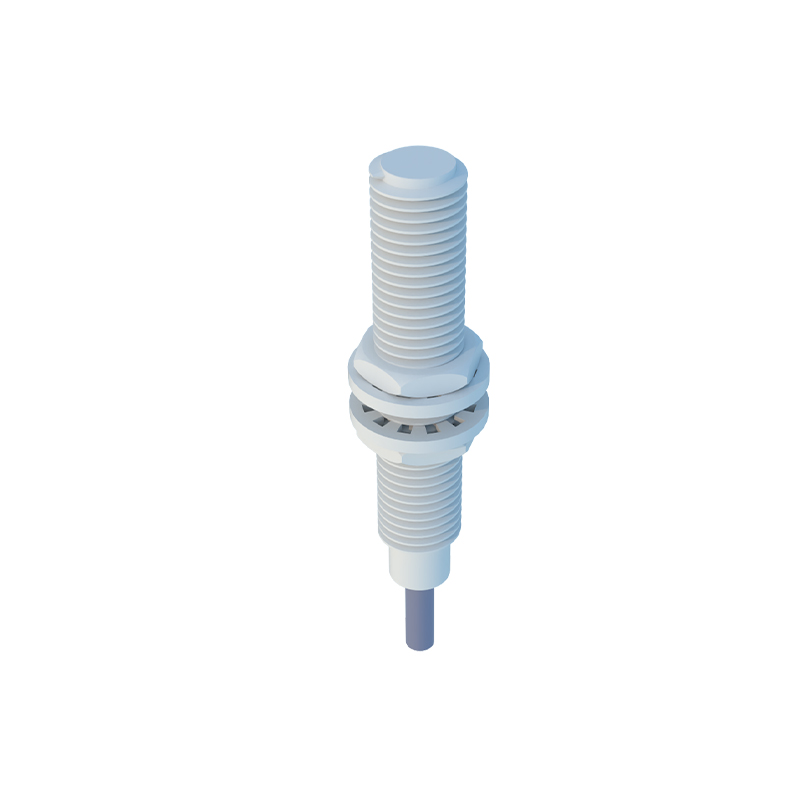
Beyond basic detection, advanced plug-in proximity sensors incorporate features that enhance system intelligence. Analog output versions provide a continuous signal proportional to the distance to the target, enabling precise positioning control. Sensors with IO-Link capability transform simple binary switches into smart devices, enabling digital parameter setting, remote monitoring of operating status, and predictive maintenance data collection directly onto the control network. This digital transformation allows for more flexible production lines and data-driven decision-making.
In conclusion, the plug-in proximity sensor is far more than a simple switch. It is an essential sensory organ for modern automated machinery. By providing reliable, non-contact detection across a vast spectrum of materials and under challenging conditions, it ensures precision, enhances safety, and boosts productivity. Its plug-and-play design aligns perfectly with the needs of scalable and maintainable industrial systems. As automation evolves towards greater connectivity and intelligence, the role of the smart plug-in proximity sensor will only become more integral, forming a critical link between the physical movement of objects and the digital control systems that orchestrate them.