In the realm of industrial automation, proximity sensors are indispensable components for non-contact detection of objects. Among the various form factors available, the square-bodied inductive proximity sensor is a common and robust choice, particularly in environments requiring a compact yet durable sensing solution. This article delves into the specifics of 3-wire DC square proximity sensors, explaining their operating principle, standard wiring configurations, and key application considerations.
Fundamental Operating Principle
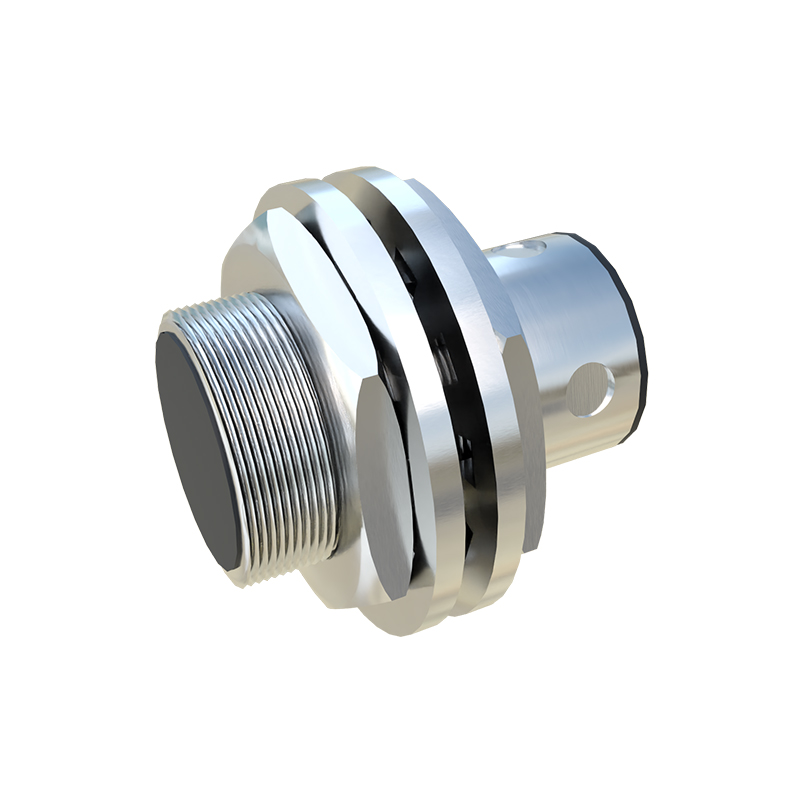
At its core, a 3-wire DC inductive proximity sensor detects the presence of metallic objects (typically ferrous metals like steel, though many can also sense non-ferrous metals like aluminum or copper at reduced ranges). It operates on the principle of electromagnetic induction. The sensor's face contains an oscillator circuit that generates a high-frequency electromagnetic field. When a metallic target enters this field, eddy currents are induced on the target's surface. This causes a change in the oscillator's amplitude, which is detected by a threshold circuit. This change triggers the sensor's solid-state output switch.
The "3-wire" designation is crucial. These sensors require three connections: a positive supply voltage (V+ or brown wire), a common negative or ground (0V or blue wire), and a switched output wire (black wire, sometimes white or another color). The output is classified as either NPN (sinking) or PNP (sourcing), which defines the current flow path when the sensor is active. This is a fundamental distinction that must be correctly matched with the controller's input module (e.g., a PLC).
Wiring Configurations: NPN vs. PNP
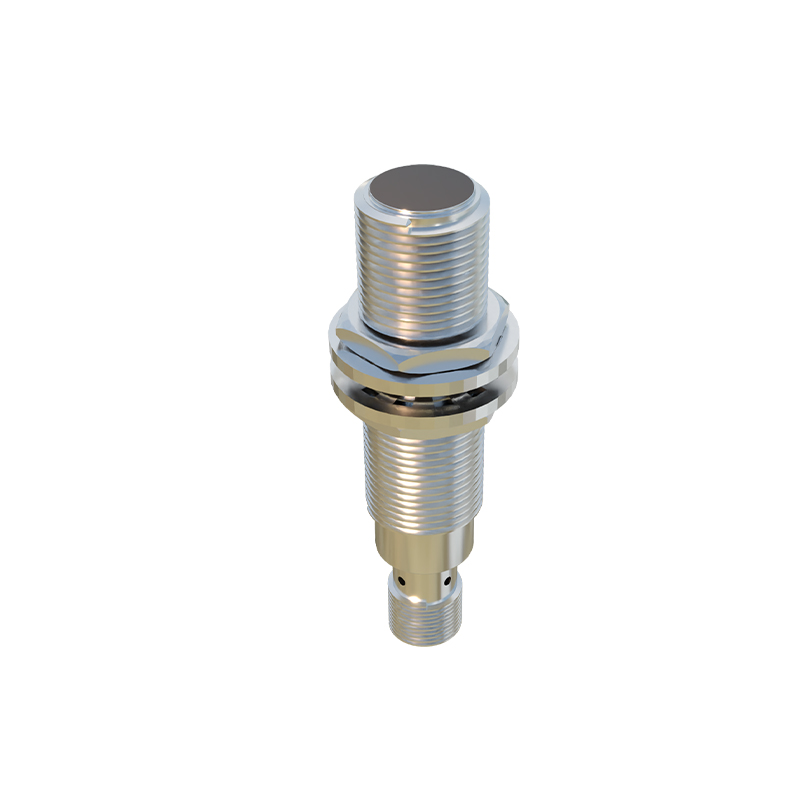
Understanding the difference between NPN and PNP outputs is paramount for correct installation and operation.
PNP (Sourcing) Configuration: In a PNP sensor, the output wire switches the positive supply voltage. When an object is detected, the sensor connects the output wire (black) to the positive supply (brown), sourcing current to the load. The load (e.g., a PLC input) is connected between the output and the common negative (blue). PNP is often the standard in many regions, including Europe and for PLCs with "sourcing" input modules.
NPN (Sinking) Configuration: In an NPN sensor, the output wire switches the ground connection. When active, the sensor connects the output wire (black) to the common negative (blue), sinking current from the load. Here, the load is connected between the positive supply and the output. NPN is commonly used in Asia and with PLCs configured for "sinking" inputs.
Miswiring an NPN sensor to a PNP input circuit, or vice versa, will result in non-operation and could potentially cause damage. Always consult the sensor's datasheet and the controller's manual. The square housing often includes clear labeling (e.g., "PNP NO" for normally open) and a wiring diagram.
Advantages of the Square Design
The square form factor offers several practical benefits in industrial settings. Its flat sides facilitate easy mounting, either with integrated brackets or by using standard channel nuts in a DIN rail enclosure. The design often allows for multi-directional sensing (from the front and sometimes from the top or sides, depending on the model), providing installation flexibility. The robust construction, typically from materials like nickel-plated brass or stainless steel, offers high resistance to mechanical impacts, cutting fluids, and washdowns, making them suitable for harsh environments like machine tools, material handling, and packaging lines.
Key Application Considerations
Selecting and applying a 3-wire square proximity sensor requires attention to several parameters:
1. Sensing Distance: The rated operating distance (Sn) is specified for a standard mild steel target. This distance is reduced for non-ferrous metals. Always derate the sensing distance and consider a 10-20% safety margin to account for temperature fluctuations, voltage tolerances, and part variations.
2. Output Function: Choose between Normally Open (NO) and Normally Closed (NC). An NO output closes the switch (becomes conductive) when a target is detected. An NC output opens the switch when a target is detected.
3. Supply Voltage: Most 3-wire DC sensors operate within a range, commonly 10-30 VDC. Ensure your power supply is stable and within this range.
4. Electrical Protection: Look for built-in protection against short-circuits, reverse polarity, and electrical noise (EMI/RFI). This is critical for reliable operation in electrically noisy industrial plants.
5. Environmental Rating: The Ingress Protection (IP) rating (e.g., IP67, IP69K) indicates the sensor's resistance to dust and water. An IP67 rating is standard for most industrial applications