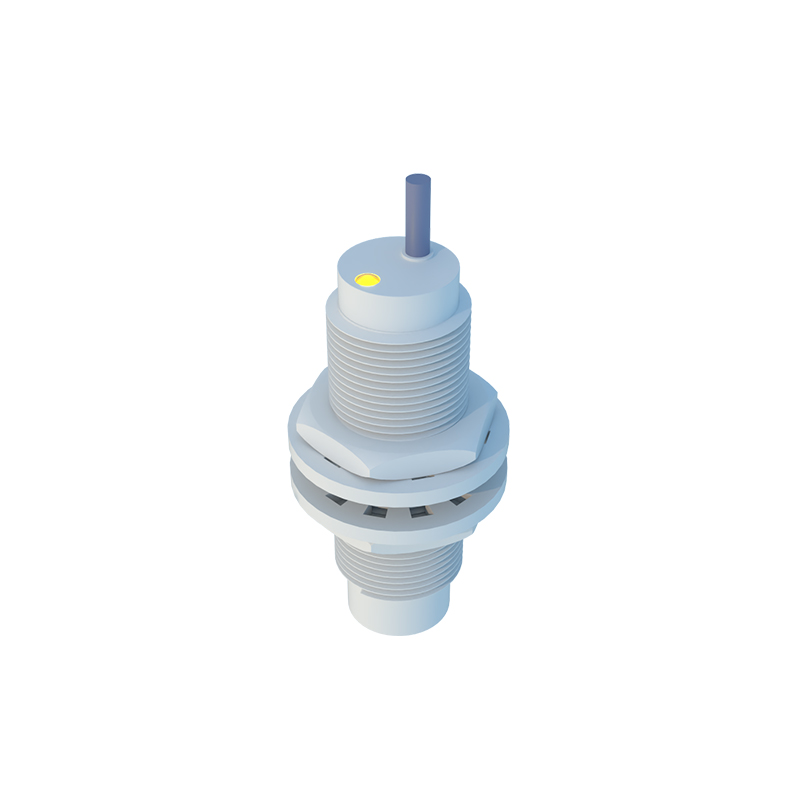
In the realm of industrial automation and control systems, the reliability and precision of sensing components are paramount. Among these critical components, proximity switches stand out for their non-contact detection capabilities. The X3D2 series represents a sophisticated iteration within this category, engineered to meet the rigorous demands of modern manufacturing, material handling, and machinery safety. This article delves into the technical specifications, operational principles, application scenarios, and key advantages of the X3D2 proximity sensor.
The X3D2 is typically an inductive proximity switch, designed to detect the presence of metallic objects without any physical contact. Its core operating principle is based on electromagnetic induction. The sensor generates a high-frequency oscillating electromagnetic field from its active face. When a conductive metal target enters this field, eddy currents are induced within the target. These eddy currents absorb energy from the oscillator, causing a change in the oscillation amplitude. This change is detected by the sensor's internal circuitry, which subsequently triggers a switching action—either opening or closing an output circuit. This entire process ensures rapid, wear-free detection, which is a significant advantage over mechanical limit switches.
Key technical specifications define the X3D2's performance envelope. The sensing distance, often referred to as the nominal range (Sn), is a critical parameter. For the X3D2, this is typically standardized, for instance, at 2mm, 4mm, or 8mm, depending on the specific model. It is crucial to note that this rating is based on a standard target of mild steel. For other metals like stainless steel, aluminum, or copper, a correction factor must be applied, as the effective sensing range decreases. The sensor housing is usually constructed from nickel-plated brass or stainless steel, offering robust resistance to mechanical impacts, coolant, and oil—common in industrial environments. Most X3D2 models feature IP67 or higher ingress protection ratings, making them dust-tight and capable of withstanding temporary immersion in water, ideal for washdown areas in food processing or harsh outdoor conditions.
Electrical characteristics are equally vital. The X3D2 is commonly available in both DC (10-30V DC) and AC/DC (20-250V AC/DC) versions. Output configurations include Normally Open (NO), Normally Closed (NC), or complementary outputs, often in a 3-wire design (brown for +V, blue for 0V, and black for the switched output). Some variants may offer 2-wire AC/DC or 4-wire designs with two separate outputs. The output type can be a solid-state PNP (sourcing) or NPN (sinking) transistor, or a relay contact, allowing for seamless integration with Programmable Logic Controllers (PLCs), motor starters, and other control devices. The switching frequency, indicating how many on/off cycles the sensor can handle per second, is typically high for the X3D2, enabling its use in high-speed counting or positioning applications.
The application spectrum for the X3D2 proximity switch is vast. In automated assembly lines, it is used for part presence verification, ensuring a component is in place before a robotic arm performs an operation. In machine tools, it serves as an end-of-travel limit switch for slides and spindles, preventing over-travel and damage. Within packaging machinery, X3D2 sensors count bottles or packages on a conveyor. They are also indispensable in safety systems, such as monitoring guard door positions; if a door is opened, the sensor sends a signal to halt the machine immediately. Their rugged build allows them to function reliably in challenging locations like welding cells, where spatter is present, or in hydraulic systems with high vibration.
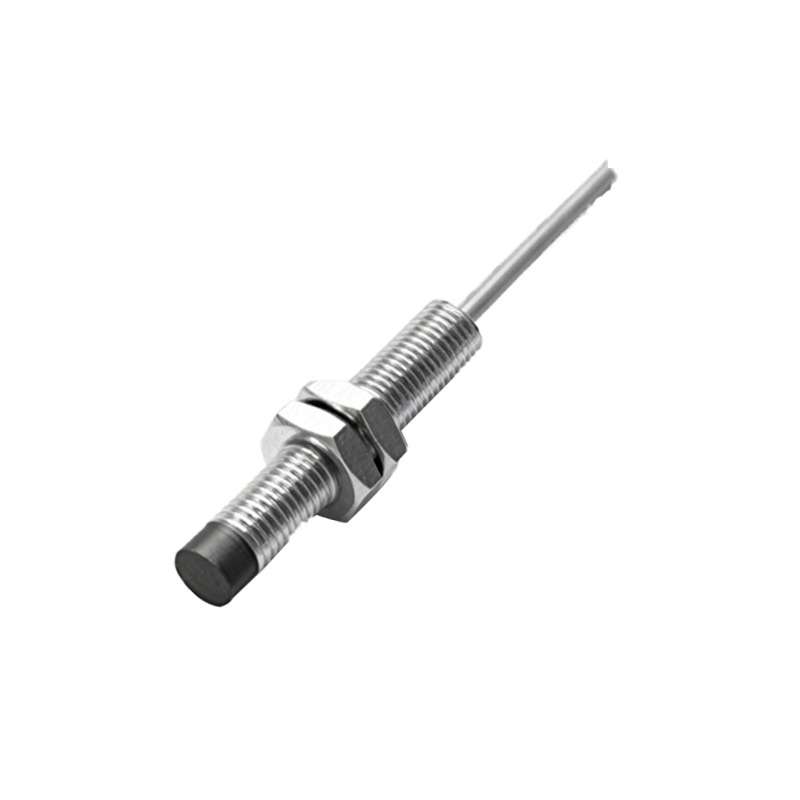
When selecting and installing an X3D2 sensor, several best practices ensure optimal performance. First, ensure the target material and size meet the sensor's specifications. The target should be at least as large as the sensor's active face for the rated sensing distance. Second, pay attention to mounting considerations. Flush-mountable models can be installed embedded in metal without affecting their sensing range, while non-flush models require a clear zone around the active face. Third, avoid mounting multiple inductive sensors too close to each other to prevent mutual interference; a minimum lateral separation distance is usually specified in the datasheet. Finally, proper wiring is essential. Always refer to the manufacturer's wiring diagram, ensure correct polarity for DC models, and consider using shielded cables in electrically noisy environments to prevent false triggering.
In conclusion, the X3D2 proximity switch exemplifies the fusion of robustness, precision, and versatility required in industrial sensing. Its non-contact operation ensures long service life and minimal maintenance, contributing to higher overall equipment effectiveness (OEE). By understanding its technical parameters, operating environment, and correct installation procedures, engineers and maintenance technicians