Laser sensor technology has become a cornerstone of modern industrial automation, offering unparalleled precision, speed, and reliability for a vast array of measurement and detection tasks. At its core, a laser sensor operates by emitting a focused beam of coherent light—typically from a laser diode—toward a target. The sensor then analyzes the properties of the reflected or scattered light, such as its time-of-flight, phase shift, or triangulation angle, to calculate critical parameters like distance, position, thickness, or presence. This non-contact measurement principle is fundamental to its success, eliminating mechanical wear and enabling high-speed inspection of even delicate or hot objects.
The industrial landscape is rich with laser sensor applications. In manufacturing, they are indispensable for precise dimensional gauging, ensuring components meet stringent tolerances. They perform high-speed defect detection on production lines, identifying minute cracks, scratches, or contaminants invisible to the human eye. In robotics, laser sensors provide essential guidance for autonomous mobile robots (AMRs) and precise positioning for robotic arms, enabling complex pick-and-place operations in dynamic environments. Furthermore, laser-based LiDAR (Light Detection and Ranging) systems are revolutionizing sectors like logistics for warehouse mapping and inventory management, and agriculture for yield monitoring and autonomous vehicle guidance.
Several key types dominate the market, each suited to specific needs. Time-of-Flight (ToF) sensors measure the round-trip time of a laser pulse, ideal for long-range distance measurement, often used in level monitoring of bulk materials or vehicle detection. Triangulation sensors use a geometric approach with a receiver at a known angle, providing extremely high resolution for short-range measurements of surface profiles or thickness. Confocal displacement sensors utilize chromatic aberration to achieve nanometer-level accuracy, perfect for measuring transparent or highly reflective surfaces. Lastly, laser profile scanners project a line of laser light, capturing a 2D cross-sectional profile of an object for 3D inspection and contour analysis.
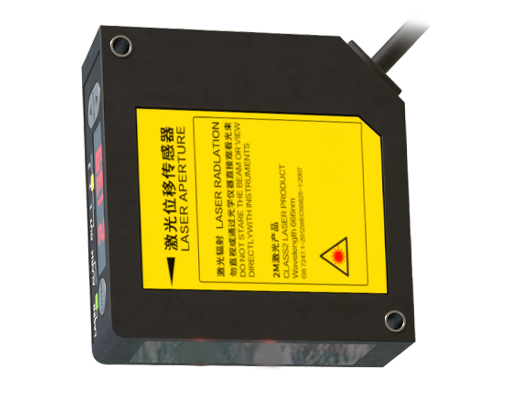
Selecting the appropriate laser sensor requires careful consideration of multiple technical specifications. Measurement range, resolution, repeatability, and linearity are paramount for accuracy. The response time or sampling rate determines the sensor's capability in high-speed processes. Environmental factors cannot be overlooked; industrial settings often present challenges like ambient light interference, dust, oil mist, vibration, and extreme temperatures. Therefore, ingress protection (IP) ratings, robust housing materials, and specialized optical filters are critical for ensuring long-term, stable operation. Compatibility with industrial communication protocols (e.g., IO-Link, EtherCAT, PROFINET) is also essential for seamless integration into networked Industry 4.0 systems.
Looking ahead, the future of laser sensor technology is driven by integration and intelligence. The convergence of laser sensing with advanced vision systems and artificial intelligence is creating smarter, more adaptive solutions. AI algorithms can now interpret complex point cloud data from 3D laser scanners in real-time, enabling predictive quality control and adaptive process adjustments. Miniaturization continues, allowing sensors to be embedded into increasingly compact machinery. Furthermore, the development of novel laser sources and more sophisticated signal processing techniques promises even higher accuracy, longer ranges, and lower costs. As industries push towards greater autonomy and data-driven optimization, the role of the laser sensor will only expand, solidifying its position as an enabling technology for the smart factories and intelligent systems of tomorrow.