Selecting the appropriate laser dust sensor is a critical decision that impacts the accuracy, reliability, and overall effectiveness of air quality monitoring systems across various industries. With numerous models and specifications available, navigating the options can be challenging. This guide outlines key technical and practical considerations to help you make an informed choice.
The core principle of a laser dust sensor involves using a laser diode to illuminate airborne particles. A photodetector then measures the scattered light, and the sensor's algorithm calculates particle concentration based on this signal. The first step in selection is defining your specific measurement needs. What particle sizes are you targeting? Sensors are often categorized by their ability to detect PM1.0, PM2.5, and PM10. For health-related applications, such as indoor air quality monitors in homes or offices, a sensor capable of accurately measuring PM2.5 is typically essential. For industrial environments like construction sites or workshops, monitoring larger PM10 particles might be the priority. Some advanced sensors provide multi-channel data for several particle size ranges simultaneously, offering a more comprehensive view.
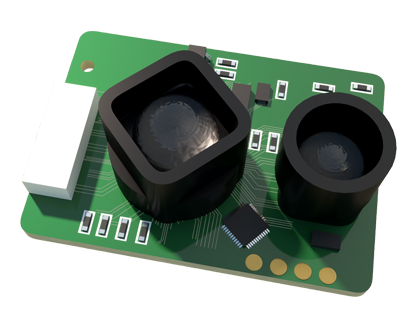
Accuracy and resolution are paramount. Look for sensors with a low minimum detection limit, often expressed in micrograms per cubic meter (µg/m³). A sensor with a limit of 0-1000 µg/m³ is suitable for general purposes, while specialized applications in cleanrooms or laboratories may require a sensor with a much lower range and higher sensitivity. The consistency of readings, or repeatability, is another crucial metric; reputable manufacturers provide this data in their datasheets. Be wary of sensors that lack detailed performance specifications.
The physical environment where the sensor will operate significantly influences the choice. Consider the temperature and humidity ranges. Standard sensors might operate reliably between -10°C to 60°C and 0-95% RH non-condensing. For harsh industrial or outdoor applications, you may need a sensor with a wider operating range and robust housing (IP rating) for protection against dust and water ingress. Airflow is also critical. Some sensors require an external fan to draw air into the detection chamber, while others have built-in fans. The sampling flow rate affects response time. A sensor with a steady, known flow rate will provide more stable and comparable data.
Interface and integration are practical hurdles. Most modern laser dust sensors offer digital outputs like UART (Serial) or I2C, which simplify connection to microcontrollers (e.g., Arduino, Raspberry Pi) or industrial PLCs. Analog voltage or current outputs (0-5V, 4-20mA) are also common for legacy systems. Evaluate the communication protocol and the clarity of the data format provided by the sensor. Well-documented SDKs or libraries can drastically reduce development time. Power requirements are equally important; ensure your system can supply the correct voltage (commonly 5V DC) and current (which can vary from tens to hundreds of milliamps).
Long-term maintenance and sensor longevity are often overlooked. Laser diodes and photodetectors can degrade over time. Inquire about the expected operational lifespan, often stated in hours. Some high-quality sensors are designed for continuous operation for 5-8 years. Also, consider the maintenance cycle. Sensors may require periodic cleaning to prevent contamination of the optical chamber, which can cause drift and inaccurate readings. Models with self-diagnostic functions or easy-access designs for cleaning offer lower total cost of ownership.
Finally, compliance and certification should be verified. For regulatory or commercial reporting, sensors calibrated against recognized standards (such as those from international bodies) add credibility. Check if the manufacturer has relevant certifications for their production and quality control processes. While cost is always a factor, the cheapest option often compromises on accuracy, stability, or durability. Investing in a reliable sensor from a trusted supplier minimizes future recalibration issues and system failures, ensuring consistent and trustworthy data for your air monitoring needs.