In the rapidly evolving landscape of industrial automation and precision measurement, laser sensors have emerged as indispensable tools. These devices utilize the coherent and monochromatic properties of laser light to perform a wide array of tasks, from simple presence detection to complex 3D profiling, with unparalleled accuracy and speed. Their non-contact nature makes them ideal for applications involving delicate, hot, or fast-moving objects where physical probes would fail. This article delves into the core principles, primary types, key applications, and critical selection factors for laser sensors in contemporary industrial settings.
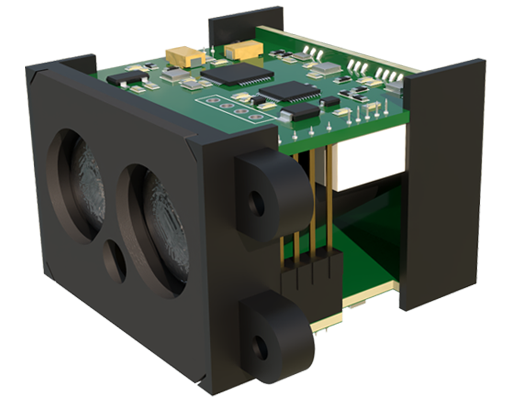
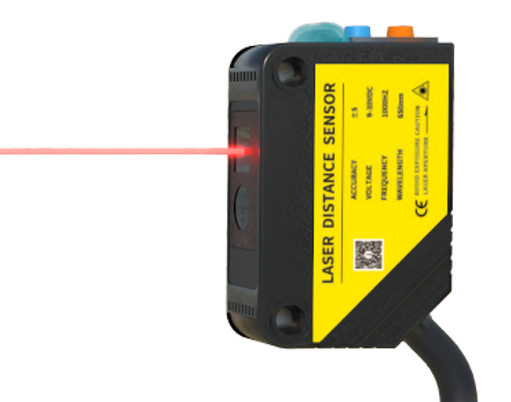
At its heart, a laser sensor operates by emitting a focused beam of light towards a target. The interaction of this beam with the target—whether it is reflected, scattered, or absorbed—is then measured by a receiver within the sensor. The specific measurement technique defines the sensor's type and capability. The most common categories include laser distance sensors, laser displacement sensors, laser contrast sensors, and laser profile scanners. Laser distance sensors, often using time-of-flight or phase-shift principles, measure the absolute distance to an object. They are fundamental in logistics for bin level monitoring and in robotics for navigation. Laser displacement sensors, typically employing triangulation or confocal chromatography, excel at measuring minute changes in position, thickness, or vibration, making them vital for quality control on production lines, such as checking PCB warpage or automotive panel gaps.
Laser contrast sensors are designed to detect marks, labels, or color differences on surfaces by analyzing the intensity of the reflected light. They are the workhorses of packaging and pharmaceutical industries for reading barcodes or ensuring correct label placement. Meanwhile, laser profile scanners, or line lasers, project a line of light onto a target. A camera captures the deformation of this line, enabling the reconstruction of a detailed 2D or 3D profile of the object. This technology is revolutionizing dimensional inspection, reverse engineering, and weld seam tracking.
The applications of laser sensors span virtually every sector. In automotive manufacturing, they ensure precise robot welding paths and measure critical component tolerances. In electronics, they inspect solder paste volume and component placement on circuit boards. In food and beverage, they verify fill levels and check packaging integrity without contamination risk. Furthermore, in logistics and warehousing, laser scanners enable automated guided vehicles (AGVs) to navigate safely and facilitate high-speed parcel dimensioning.
Selecting the appropriate laser sensor for a specific task requires careful consideration of several technical parameters. The first is measurement range and standoff distance, which must suit the physical setup of the application. Resolution and repeatability define the sensor's precision; a micromachining application demands sub-micron resolution, while a pallet detection system may not. The target material and surface properties are crucial, as shiny, transparent, or dark surfaces can challenge some sensors, necessitating models with specialized algorithms or complementary technologies. Environmental factors like ambient light, dust, moisture, and temperature extremes dictate the required ingress protection (IP) rating and housing robustness. Finally, output interfaces (e.g., analog voltage, IO-Link, Ethernet/IP) must be compatible with the existing control system for seamless integration.
The future of laser sensor technology points towards greater miniaturization, enhanced intelligence, and multi-sensor fusion. Integration with AI allows for adaptive sensing and advanced defect classification directly at the edge. Furthermore, the development of more robust and cost-effective models continues to democratize access, bringing high-precision measurement to smaller enterprises. As Industry 4.0 and smart factory concepts mature, the role of laser sensors as critical data acquisition nodes will only expand, providing the essential feedback for closed-loop control and predictive maintenance systems.
In conclusion, laser sensors represent a cornerstone of modern industrial metrology and automation. Their ability to deliver fast, accurate, and reliable data without physical contact solves numerous measurement challenges. By understanding their operating principles, varieties, and the key criteria for selection, engineers and system integrators can effectively harness their power to optimize processes, ensure quality, and drive innovation across diverse industries. Continuous advancements promise even broader capabilities, solidifying their position as a transformative technology in the digital industrial age.
