In the realm of industrial automation and precision measurement, the demand for reliable, non-contact sensing solutions is paramount. Among the array of available technologies, infrared laser linear sensors have emerged as a critical tool for engineers and system integrators. These devices leverage the properties of infrared laser light to detect the presence, position, or displacement of objects with exceptional accuracy and speed, often in challenging environmental conditions.
At its core, an infrared laser linear sensor operates by emitting a focused beam of infrared laser light towards a target. The sensor then analyzes the reflected light. The most common principle employed is the triangulation method. Here, the emitted laser beam strikes the target surface, and the reflected light is focused onto a position-sensitive detector, such as a CCD or CMOS array. Any change in the target's distance causes the reflected spot to shift its position on the detector. By precisely calculating this shift, the sensor can determine the distance to the target with micron-level resolution. Another prevalent technology is time-of-flight (ToF), where the sensor measures the time delay between the emission of a laser pulse and the reception of its reflection to calculate distance. While ToF sensors are excellent for longer ranges, triangulation-based sensors typically offer higher precision at shorter distances.
The advantages of using infrared laser light are significant. Infrared wavelengths, typically in the range of 850nm or 905nm, are less susceptible to interference from ambient visible light compared to red laser diodes. This results in more stable performance in environments with variable lighting, such as factories with overhead lamps or outdoor applications. Furthermore, the coherent, focused nature of a laser beam allows for precise spot definition, enabling the detection of very small objects or edges and allowing for measurements on complex surfaces.
The applications for infrared laser linear sensors are vast and span numerous industries. In automotive manufacturing, they are used for precise gap and flush measurement between body panels, ensuring quality and fit. In electronics assembly, they verify component placement height on printed circuit boards. Within the packaging industry, these sensors monitor fill levels in bottles and containers, and control the thickness of materials like paper, plastic films, or metals in roll-to-roll processes. Robotics heavily relies on them for precise positioning and obstacle detection, enabling accurate pick-and-place operations and safe human-robot collaboration. They are also indispensable in dimensional inspection systems, profile scanning, and vibration analysis.
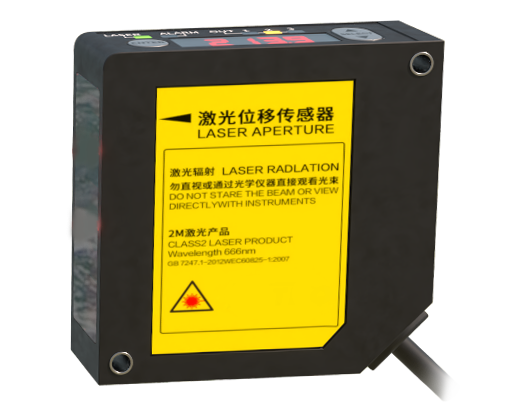
Selecting the appropriate infrared laser linear sensor requires careful consideration of several key parameters. Measuring Range defines the minimum and maximum distances over which the sensor can operate accurately. Resolution indicates the smallest detectable change in distance, critical for high-precision tasks. Linearity Error specifies the maximum deviation from a perfect straight-line response across the measuring range. Spot Size is crucial as it determines the minimum feature size that can be measured; a smaller spot allows for higher lateral resolution. Response Time or sampling rate dictates how quickly the sensor can update its measurement, essential for high-speed production lines. Environmental factors cannot be overlooked; the sensor's Ingress Protection (IP) rating determines its resilience to dust and water, while its operating temperature range must suit the application environment. Output interfaces, such as analog voltage/current, digital (RS-422, USB), or industrial Ethernet (EtherCAT, PROFINET), must be compatible with the existing control system.
Installation and maintenance also play a vital role in ensuring long-term performance. Proper alignment is critical, especially for triangulation sensors, as misalignment can introduce significant errors. The sensor should be mounted securely to minimize vibrations. The characteristics of the target surface significantly affect performance. Highly reflective, mirror-like surfaces can scatter the laser beam, while dark, absorbent surfaces may return a weak signal. Many modern sensors feature advanced background suppression algorithms and automatic teaching functions to compensate for different surface colors and materials, simplifying setup.
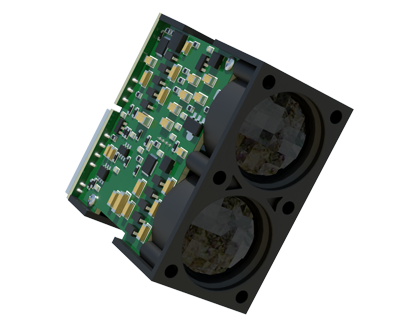
Looking ahead, the evolution of infrared laser linear sensors continues. Integration with smarter onboard electronics allows for more sophisticated data processing directly at the sensor level, reducing the load on central controllers. Miniaturization is enabling their use in increasingly compact machinery. Furthermore, the development of multi-point or profile sensors, which use a laser line instead of a single spot, is expanding applications into 3D contour scanning and area measurement.
In conclusion, infrared laser linear sensors represent a mature yet continuously advancing technology that provides a fundamental solution for non-contact precision measurement. Their robustness, high accuracy, and versatility make them an indispensable component in modern automated systems. For engineers, a thorough understanding of their operating principles, key specifications, and application requirements is essential for selecting and deploying the right sensor to optimize system performance, enhance product quality, and improve operational efficiency.