In the realm of industrial automation and control systems, proximity sensors are indispensable components for non-contact detection of objects. A critical, yet often misunderstood, characteristic of these sensors is hysteresis. For engineers designing, specifying, or troubleshooting sensing applications, a precise understanding of hysteresis is paramount for ensuring system reliability and repeatability.
Fundamentally, hysteresis in proximity sensors refers to the intentional difference between the switch-on point (the sensing distance when a target approaches) and the switch-off point (the distance when the target recedes). This is not a defect or an error; it is a deliberately engineered feature. Imagine a sensor with a nominal sensing range (Sn) of 10mm. Without hysteresis, the sensor might turn on precisely at 10mm as an object approaches and turn off at exactly 10mm as it moves away. In a real-world environment with vibration, temperature fluctuations, or minor target position variations, this could cause rapid, uncontrollable switching—a phenomenon known as "chatter." This chatter can damage relays, confuse PLCs, and lead to erratic machine behavior.
Hysteresis creates a buffer zone. Using the same 10mm sensor example, a typical hysteresis might be 10% of Sn. Therefore, the sensor would turn on when the target reaches 10mm (the operating point). However, it will not turn off until the target moves back beyond 11mm (the release point). This 1mm difference is the hysteresis. This ensures a clean, single switching action even if the target oscillates slightly around the 10mm mark. The switch-off point is always farther away than the switch-on point, providing inherent stability.
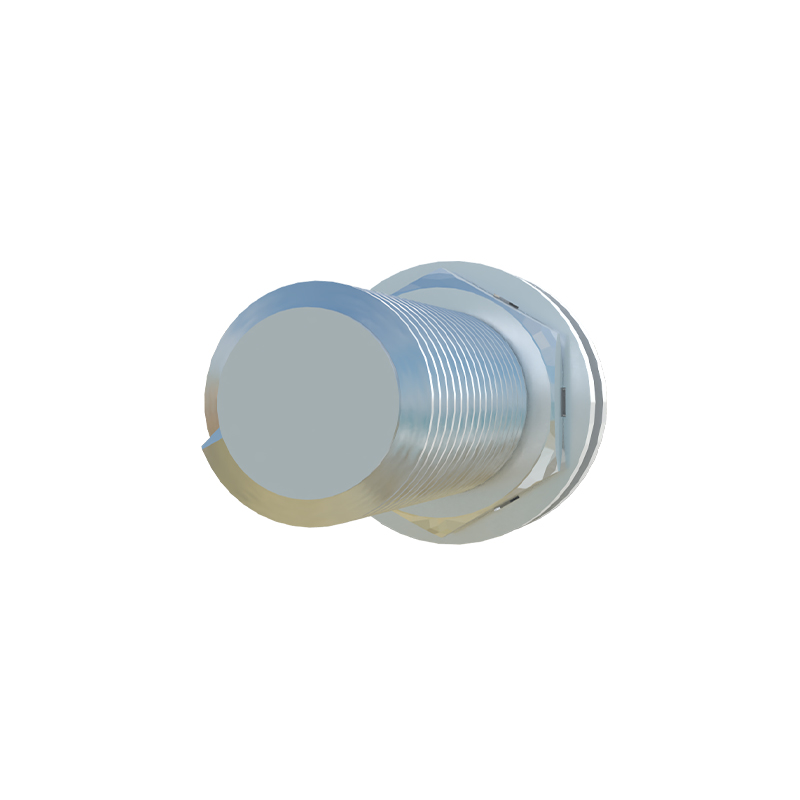
The primary function of hysteresis is to enhance switching stability and noise immunity. It effectively filters out minor mechanical vibrations or fluctuations in the sensor's own output signal. In applications involving slow-moving or oscillating targets, such as in valve positioning or material edge detection, sufficient hysteresis is crucial to prevent false triggering. It acts as a form of electrical debouncing.
Hysteresis is typically expressed as a percentage of the rated sensing distance (Sn) and is a fixed characteristic of a given sensor model, defined by its internal circuitry and design. Common values range from 3% to 15%, depending on the sensor technology and manufacturer. It's important to consult the datasheet. For instance, inductive proximity sensors often have a defined hysteresis, while some advanced photoelectric sensors might offer adjustable hysteresis settings for fine-tuning in sensitive applications.
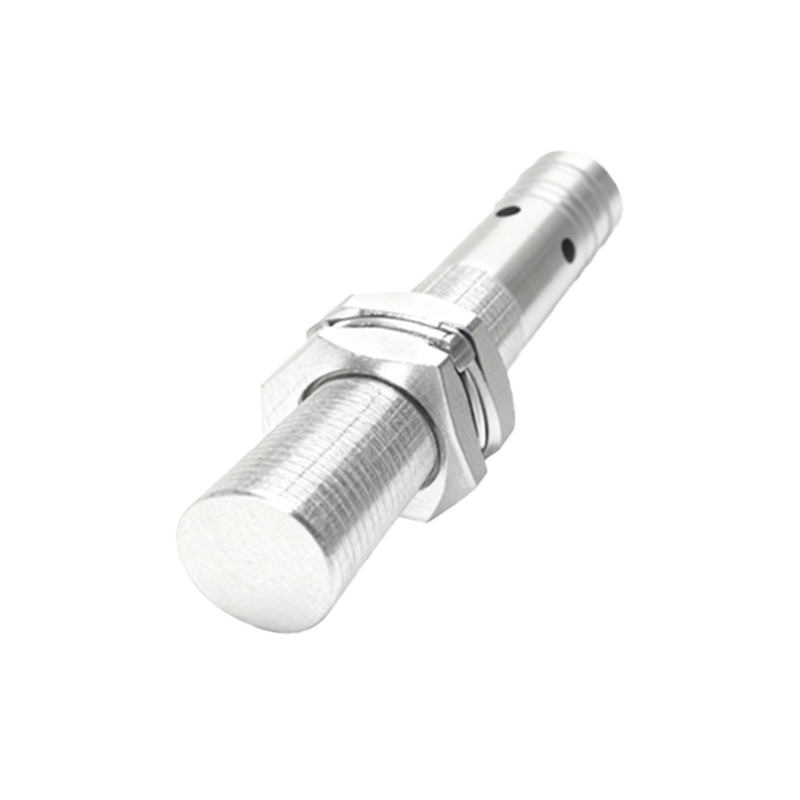
From an application engineering perspective, understanding hysteresis is vital for correct installation and gap setting. The effective "dead zone" created by hysteresis must be accounted for when determining mounting positions, especially in applications with tight mechanical tolerances. If an object needs to be detected at a very precise position for both approach and retreat, a sensor with minimal hysteresis or a specialized linear output sensor might be required instead of a standard switching sensor.
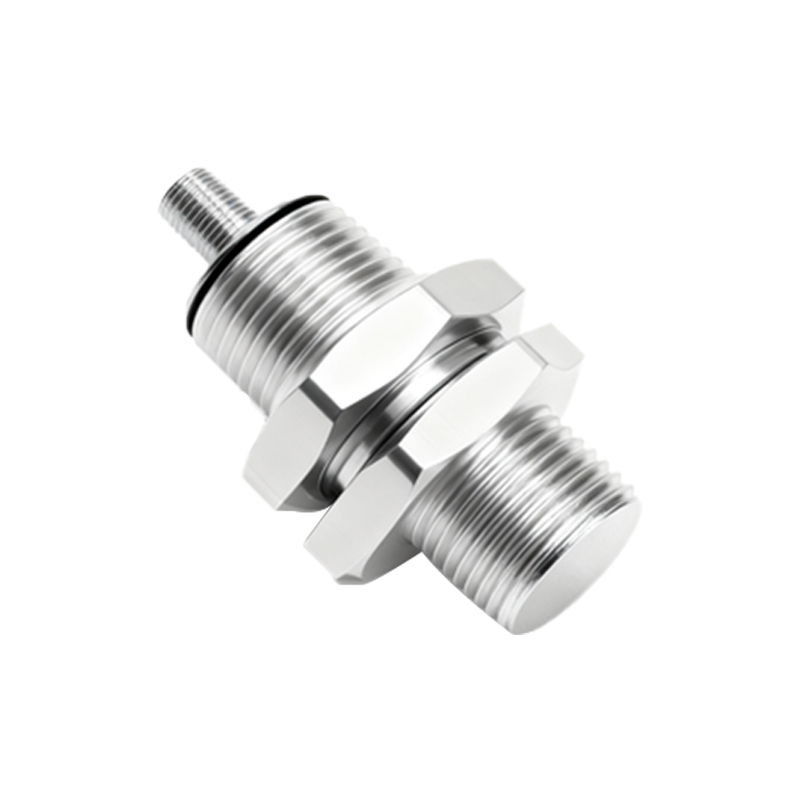
Ignoring hysteresis can lead to several practical issues. An incorrectly selected sensor might fail to release if the retraction distance is insufficient, causing a machine to "think" an object is still present. Conversely, if the mounting is too generous, the stability benefits are lost. Engineers must always consider the full motion path of the target relative to both the operating and release points.
In summary, hysteresis is a fundamental and beneficial property of proximity switches. It is not a measure of inaccuracy but a guarantee of switching reliability. A proficient engineer recognizes that the rated sensing distance is only part of the story; the hysteresis value defines the sensor's behavior in dynamic conditions. By deliberately incorporating this difference between the on and off thresholds, manufacturers ensure that proximity sensors deliver robust, chatter-free performance in demanding industrial environments, thereby protecting downstream control elements and ensuring consistent process operation.