In the realm of industrial automation and machinery, precision and reliability are paramount. Among the myriad of components that ensure seamless operation, inductive proximity sensors play a crucial role. Specifically, a "2mm inductive proximity sensor" refers to a non-contact sensing device designed to detect the presence or absence of metallic objects at a nominal sensing distance, or switching distance, of 2 millimeters. This specification is fundamental to its selection and application.
At its core, an inductive proximity sensor operates on the principle of electromagnetic induction. The sensor generates a high-frequency oscillating electromagnetic field from its active face. When a metallic object, typically ferrous (like iron or steel) or non-ferrous (like aluminum, copper, or brass), enters this field, eddy currents are induced on the surface of the target. This causes a change in the oscillation amplitude within the sensor's coil circuit. The sensor's internal circuitry detects this change and triggers a switching action—either opening or closing an electrical circuit—to provide a discrete output signal (commonly PNP or NPN). The key characteristic of a "2mm" model is its rated operating distance (Sn). According to international standards (e.g., IEC 60947-5-2), this is the nominal distance at which the sensor is guaranteed to detect a standard target under defined conditions. For a 2mm sensor, this standard target is usually a square of 1mm thick mild steel (Fe 360) with sides equal to the sensor's diameter or three times the rated distance, whichever is greater.
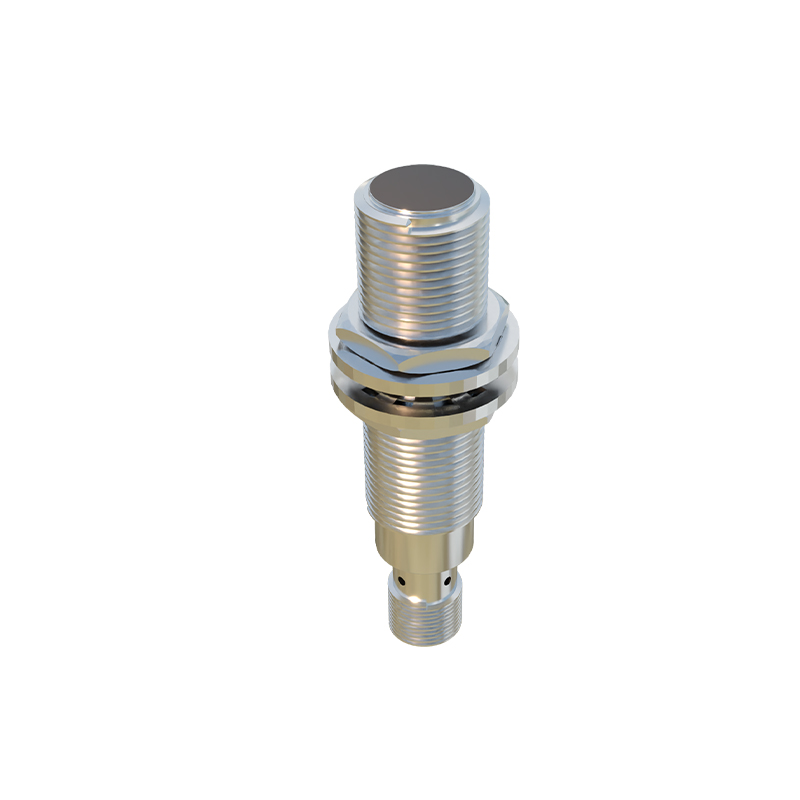
The "2mm" specification is not arbitrary. It represents a balance between sensitivity, physical size, and environmental robustness. Sensors with such a short sensing range are engineered for applications requiring high precision and repeatability, where the target's position must be tightly controlled. The compact sensing field minimizes the risk of false triggers from background metals or adjacent machinery parts. These sensors are often housed in small, cylindrical bodies (e.g., M5, M8, or M12 threaded barrels) or rectangular formats, making them ideal for installations with severe space constraints.
The selection of a 2mm sensing distance is driven by specific application needs. Common use cases include:
Position Verification: Confirming the presence of a metal part in a fixture, clamp, or at the end of a robotic arm stroke.
End-of-Travel Detection: Sensing the limit position of a cylinder piston or a linear slide, where the target is a small metal flag or the piston itself.
Counting and Sorting: Detecting small metallic items on high-speed conveyor lines, such as screws, nuts, or electronic components.
Speed Monitoring: Sensing the teeth of a metal gear to calculate rotational speed.
Machine Tool Applications: Verifying tool presence in CNC spindles or checking the closed position of a metal guard door.
When integrating a 2mm inductive proximity sensor, several critical factors must be considered to ensure optimal performance. First is the target material. The rated 2mm distance is calibrated for mild steel. For other metals, a correction factor must be applied. For instance, stainless steel may reduce the effective sensing distance to approximately 0.7-0.9 times the rated value, while aluminum or copper may reduce it to 0.3-0.5 times. Engineers must consult the sensor's datasheet for precise derating information. Second, the installation environment is crucial. These sensors can be susceptible to electrical noise from motors or frequency drives. Proper shielding, grounding, and the use of sensors with robust electromagnetic compatibility (EMC) ratings are essential. Third, flush-mountable or non-flush-mountable (shielded or unshielded) design determines the installation method. Flush-mountable sensors can be installed embedded in metal without affecting their sensing characteristics, whereas non-flush types require a clearance zone around the active face.
Furthermore, modern 2mm inductive sensors offer advanced features. Many are available in analog output versions, providing a continuous signal proportional to the distance to the target, useful for precision gauging. Others incorporate IO-Link digital communication, enabling detailed diagnostics, parameter setting, and process data integration into Industry 4.0 networks. The housing material, typically nickel-plated brass or stainless steel, and ingress protection ratings (like IP67 or IP69K) ensure reliable operation in harsh conditions involving coolants, oils, and washdowns.
In summary, a 2mm inductive proximity sensor is a highly specialized component defined by its precise, short-range detection capability for metallic objects. Its meaning extends beyond a simple distance measurement; it encapsulates a set of performance expectations for accuracy, repeatability, and durability in tight spaces. For design and maintenance engineers, understanding this specification—alongside material factors, environmental considerations, and output requirements—is key to deploying