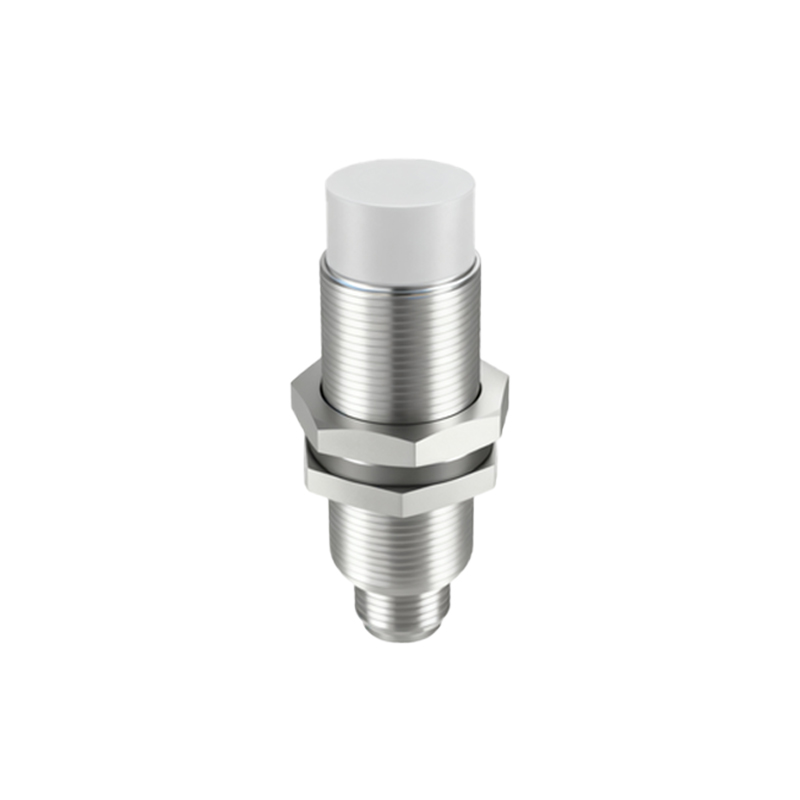
Capacitive proximity sensors have become a cornerstone technology for liquid level detection across a diverse range of industrial sectors. Unlike traditional mechanical float switches or conductive probes, these sensors offer a non-contact, reliable, and maintenance-friendly solution for monitoring fluids in tanks, vessels, and pipelines. Their operational principle is elegantly simple yet highly effective, based on the fundamental laws of capacitance.
A capacitive sensor essentially functions as an open capacitor. Its active face, or sensing area, forms one electrode. When this electrode is brought near a target material—in this case, a liquid—it influences the sensor's electrostatic field. The target acts as the second electrode, with the non-conductive container wall (or air gap) serving as the dielectric. The key physical property leveraged here is the dielectric constant (εr), also known as permittivity. Most liquids, especially water-based or polar solvents, have a significantly higher dielectric constant than air (εr of air ≈ 1). For instance, water has an εr of approximately 80. When the liquid level rises and enters the sensor's electrostatic field, the effective capacitance between the electrodes increases sharply due to this higher permittivity. The sensor's internal oscillator circuit detects this change in capacitance. Once the capacitance surpasses a pre-set threshold, the sensor's output state switches, signaling the presence (or absence) of the liquid at the detection point.
This principle grants capacitive sensors remarkable versatility. They are capable of detecting virtually any material, conductive or non-conductive, provided there is a discernible difference in dielectric constant from the surrounding medium. This makes them ideal for monitoring water, oils, chemicals, fuels, granular solids, and even liquids with foam or residue buildup. For level detection, they are commonly deployed in two primary configurations: point-level sensing and continuous level measurement.
For point-level control—such as high-level alarm or low-level pump protection—a single sensor is mounted at the desired trigger point on the exterior of a non-metallic tank (e.g., plastic, glass) or through a tank wall using a mounting bracket. The sensor detects the presence or absence of liquid at that specific height. A major advantage is the ability to sense through non-metallic walls, eliminating the need for direct fluid contact and thus preventing contamination or sensor corrosion. This is invaluable in food & beverage, pharmaceutical, and chemical processing.
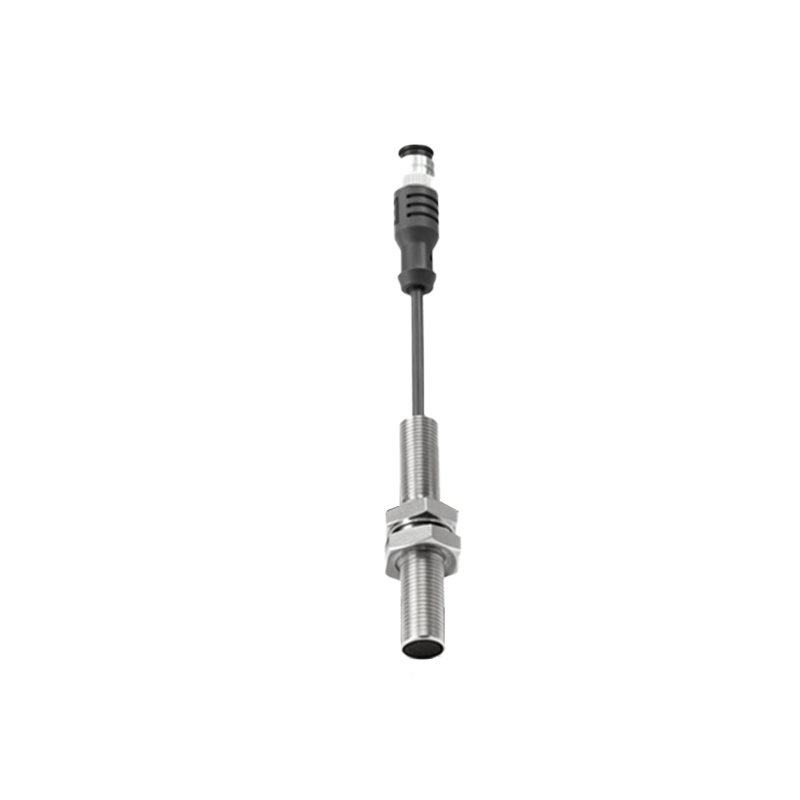
For continuous level measurement, an array of sensors or a specially designed long-range sensor rod (acting as an extended electrode) is used. As the liquid level changes along the length of the rod, the capacitance varies proportionally. This analog signal can be correlated to a specific level height, providing real-time inventory data. However, factors like liquid composition, temperature changes, and container geometry can affect calibration, requiring careful setup.
The selection and installation of a capacitive sensor for liquid level duty require careful engineering consideration. Key parameters include the dielectric constant of the liquid, the thickness and material of the container wall, the required sensing range, and the process environment (temperature, pressure, potential for coating). Modern sensors feature adjustable sensitivity potentiometers or teach-in functions. This allows engineers to calibrate the sensor in-situ, setting the switch point precisely to ignore the container wall and respond only to the liquid, even compensating for adhesions or condensation on the outer wall.
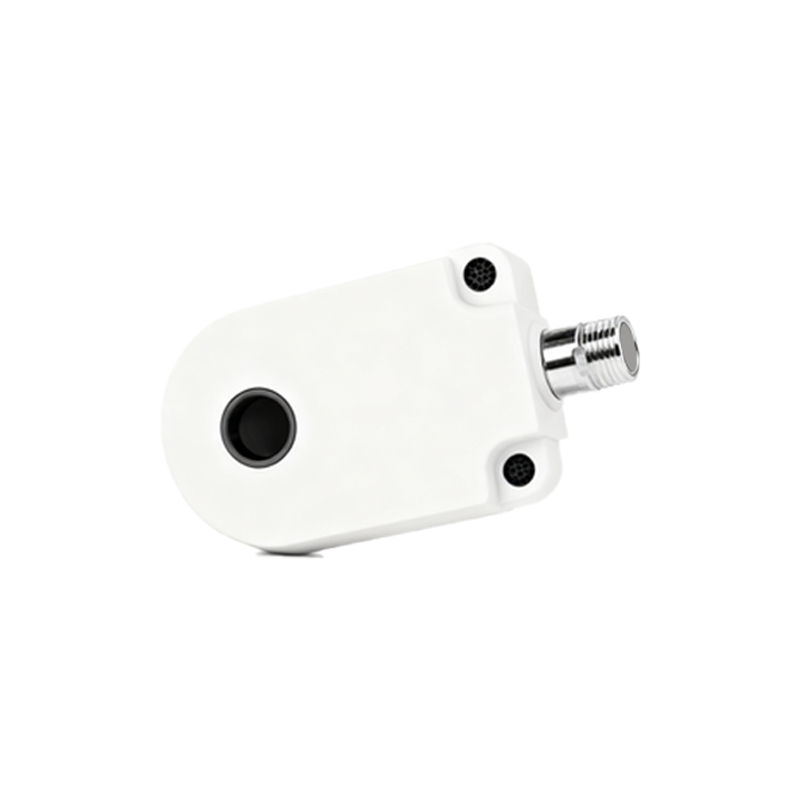
Compared to other technologies, capacitive sensors offer distinct benefits. They have no moving parts, leading to exceptional longevity and reduced maintenance. Their non-contact nature ensures hygiene and prevents cross-contamination. They are generally resistant to pressure, vacuum, and many aggressive media when housed in appropriate materials like PTFE or PPS. However, challenges exist. Metallic containers shield the electric field, requiring a bypass or special mounting arrangement. Variations in liquid properties (e.g., conductivity, temperature affecting εr) can cause drift, necessitating stable processes or sensors with compensation algorithms. Furthermore, external electrical noise in harsh industrial environments must be mitigated through proper shielding and grounding practices.
In practice, applications are widespread. In water treatment plants, they control pump sequences in clearwells. In chemical processing, they monitor solvent levels in reaction vessels. In food production, they ensure precise fill levels in mixing tanks without product contact. Mobile equipment like agricultural sprayers use them to monitor tank contents reliably despite vibration and sloshing.
In conclusion, capacitive proximity sensors provide a robust, flexible, and often superior solution for industrial liquid level detection. By mastering the interplay between sensor configuration, material properties, and application-specific factors, engineers can deploy these devices to achieve highly reliable process control, safety interlocking, and inventory management, contributing significantly to operational efficiency and automation system integrity.