Eddy current proximity sensors are non-contact electronic devices used for the detection, measurement, and positioning of metallic objects. Operating on the principle of electromagnetic induction, these sensors generate a high-frequency oscillating magnetic field from an active coil located in their sensing face. When a conductive target, typically a metal, enters this field, it induces circulating currents known as eddy currents within the target material. These eddy currents, in turn, create their own opposing magnetic field, which interacts with the sensor's original field. This interaction causes a change in the impedance of the sensor's coil. The sensor's integrated electronics, often referred to as the oscillator-demodulator circuit, continuously monitors this impedance change. Once the change reaches a predetermined threshold, it triggers a switching action in the output circuit, signaling the presence of the target.
The core advantages of eddy current sensors stem from their fundamental operating principle. Firstly, they are purely inductive and require no physical contact with the target, eliminating mechanical wear and enabling high-speed operation and long service life. Their performance is exceptionally stable and largely unaffected by environmental factors such as dust, oil, moisture, or other non-conductive contaminants commonly found in industrial settings. This makes them ideal for harsh environments where optical or capacitive sensors might fail. They are capable of detecting all conductive materials, including ferrous metals like steel and iron, and non-ferrous metals such as aluminum, copper, and brass. However, it is crucial to note that the sensing distance, or nominal range, is significantly influenced by the target's material and size. For instance, the sensing range for mild steel is considered the standard. For other materials, a correction factor must be applied; aluminum typically reduces the range to approximately 40-50% of the steel value, while copper may reduce it to 30-40%. The target must also be large enough to fully encompass the sensor's magnetic field; a general rule is that the target's diameter should be at least equal to the sensor's sensing face diameter for the rated sensing distance.
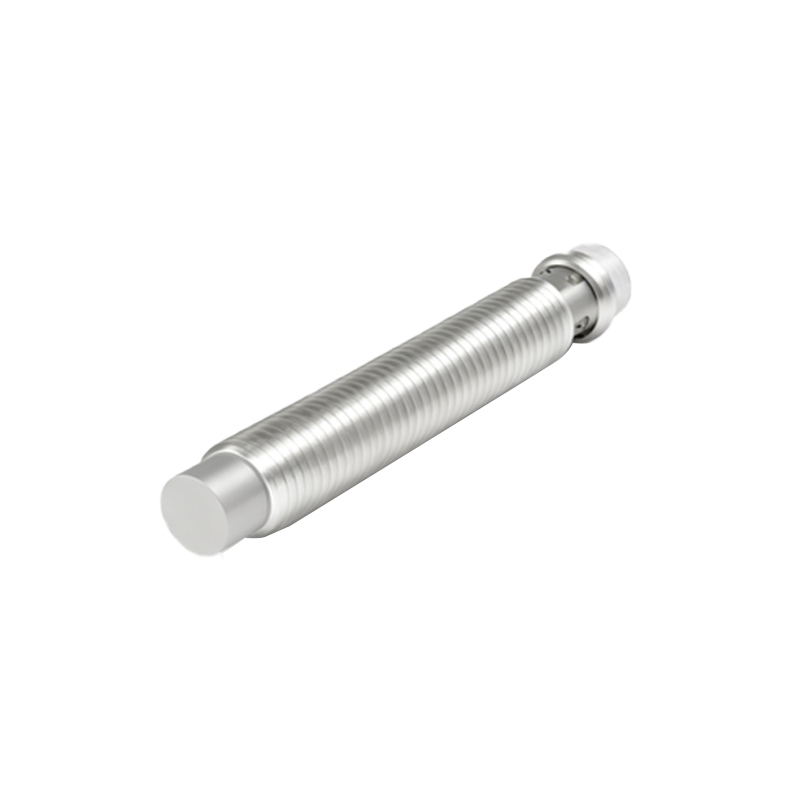
The applications for eddy current proximity switches are vast and critical across numerous industries. In manufacturing and automation, they are indispensable for precise position detection of machine parts, end-of-travel limits on actuators, and checking for the presence or absence of metal components on assembly lines. They play a vital role in rotational speed monitoring by detecting gear teeth or keyways on motor shafts. In the automotive sector, they are used for cam and crankshaft positioning. Within metalworking and CNC machinery, they provide accurate tool positioning and workpiece detection. Their robustness is leveraged in heavy industries like steel mills and mining for monitoring equipment position and detecting broken tools or parts.
Selecting the correct eddy current sensor requires careful consideration of several key parameters. The primary specification is the Nominal Sensing Distance (Sn), defined as the theoretical detection range for a standard mild steel target under specified conditions. The Assured Operating Distance (Sa), typically 0.81 x Sn, accounts for manufacturing tolerances and temperature variations. Engineers must also consider the Hysteresis, the difference between the switch-on and switch-off points, which prevents output chatter when a target is at the detection boundary. The Switching Frequency determines how quickly the sensor can detect successive targets, critical for high-speed counting applications. Output Type is another major decision: two-wire AC/DC, three-wire NPN (sinking) or PNP (sourcing) DC, and analog (4-20mA or 0-10V) outputs for distance-proportional measurement. The Housing Material (often stainless steel, brass, or PBT plastic) and Ingress Protection (IP) Rating must be chosen to withstand the specific environmental conditions, including exposure to coolants, chemicals, or washdowns. Finally, the physical Mounting Style (flush, non-flush, or threaded) directly affects the effective sensing range and must be installed according to manufacturer guidelines.
In summary, eddy current proximity sensors offer a reliable, durable, and maintenance-free solution for metallic object detection in demanding industrial environments. Their selection and application demand a clear understanding of the target material, required precision, environmental challenges, and electrical interface needs. By adhering to these principles, engineers and technicians can ensure optimal system performance, enhanced machine safety, and improved operational efficiency.