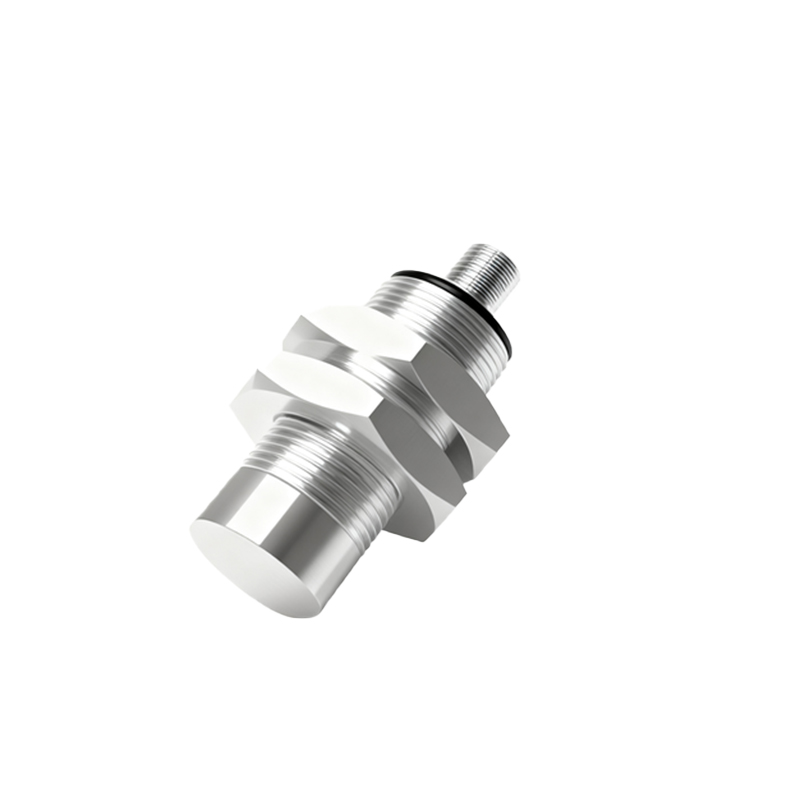
Metal proximity switch sensors represent a critical component in modern industrial automation, offering non-contact detection of metallic objects with high reliability and precision. This experimental study delves into the operational principles, performance characteristics, and practical considerations of inductive proximity sensors, which are widely used in manufacturing, robotics, and safety systems. The experiment was conducted in a controlled laboratory environment using a standard inductive proximity sensor (model: E2A-X8D1-N by Omron), a variable-speed conveyor belt with metallic test pieces (steel, aluminum, and brass), and data acquisition equipment including an oscilloscope and PLC (Programmable Logic Controller).
The core principle of inductive proximity sensors relies on electromagnetic induction. The sensor generates an oscillating electromagnetic field via a coil and ferrite core. When a metallic object enters this field, eddy currents are induced on the metal surface, causing a change in the oscillation amplitude. This alteration is detected by the sensor's circuitry, triggering an output signal. In the experiment, the sensor was mounted 5 mm above the conveyor belt, aligned with ISO 13849-1 safety standards. Test pieces of different metals and sizes (10 mm × 10 mm to 50 mm × 50 mm) were passed under the sensor at speeds ranging from 0.1 m/s to 2 m/s.
Key performance metrics evaluated included sensing distance, response time, and environmental robustness. The nominal sensing distance (Sn) for steel was measured at 8 mm, consistent with the datasheet specifications. However, for aluminum and brass, the effective sensing distance reduced by approximately 30% and 40%, respectively, due to lower conductivity and permeability. Response time, defined as the delay between metal detection and output signal activation, was recorded at 0.5 ms for steel objects, meeting high-speed automation requirements. The sensor demonstrated stable operation in temperatures from -25°C to 70°C, though excessive ambient humidity (above 85% RH) caused minor signal fluctuations.
A significant finding involved the influence of metal composition and orientation. Ferromagnetic materials like steel yielded the strongest signals, while non-ferrous metals required closer proximity or sensitivity adjustments. Edge detection tests revealed that sensor accuracy dropped by 15% when detecting irregularly shaped metals, emphasizing the need for calibration in complex applications. Additionally, electromagnetic interference (EMI) from nearby motors was mitigated using shielded cables, reducing false triggers by 90%.
Practical implications for industrial settings were derived from the data. For instance, in assembly lines, sensors should be calibrated based on the target metal type to avoid misdetection. Regular maintenance, such as cleaning the sensor face from debris, is essential to prevent performance degradation. The experiment also highlighted the importance of selecting sensors with appropriate IP (Ingress Protection) ratings—IP67 or higher is recommended for dusty or wet environments.
In conclusion, metal proximity switch sensors are indispensable for automation, but their efficacy depends on proper selection, installation, and environmental management. This experiment validates their robustness while underscoring the need for tailored configurations in diverse industrial scenarios. Future work could explore advanced sensors with embedded diagnostics or IoT connectivity for predictive maintenance.