In the rapidly evolving landscape of security technology, smart access control systems have become integral to modern infrastructure, from corporate offices and residential complexes to industrial facilities. At the heart of many advanced systems lies a critical component: the infrared proximity sensor. This technology, leveraging infrared light to detect the presence or approach of objects or individuals, offers a sophisticated, reliable, and non-intrusive method for managing entry and enhancing overall security protocols.
Infrared proximity sensors operate on a relatively straightforward principle. They emit an infrared light beam, typically in the near-infrared spectrum, which is invisible to the human eye. When an object or person enters the sensor's detection range, the emitted light is reflected back to the sensor's receiver. The sensor's internal circuitry then processes this reflected signal to confirm presence and can trigger a predefined action, such as unlocking a door, activating a camera, or sending an alert to a security dashboard. The key advantage of infrared technology in this context is its ability to function effectively regardless of ambient light conditions, making it suitable for both brightly lit lobbies and dimly lit corridors.
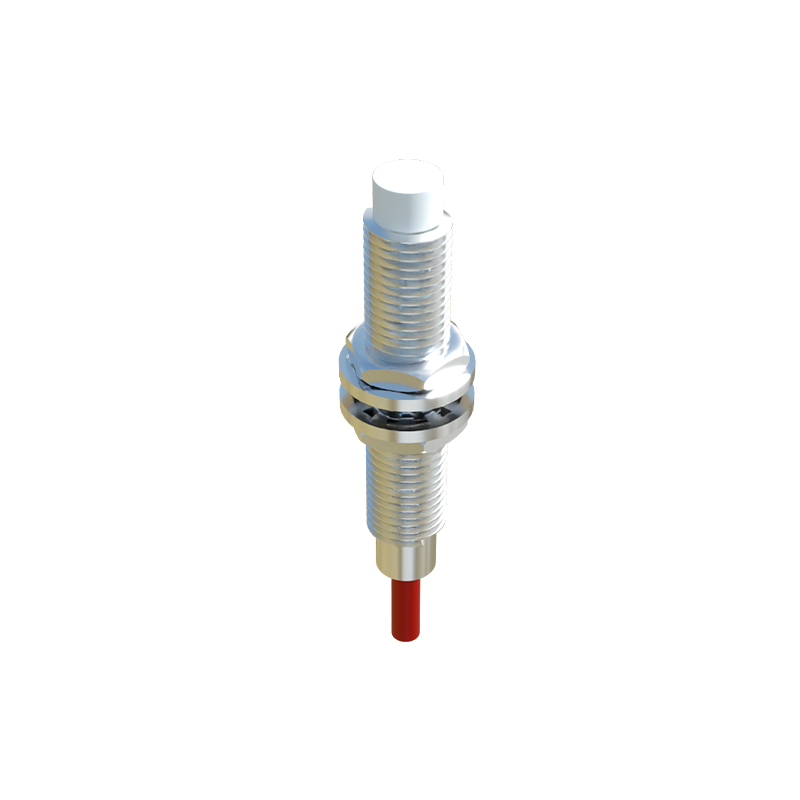
For smart access control applications, these sensors provide several distinct benefits. Firstly, they enable touchless or hands-free operation, a feature that has gained immense importance for hygiene and convenience. A user simply needs to approach the sensor, which can then communicate with the access control panel to grant entry if authorized, often without the need to physically touch a keypad, card reader, or handle. This seamless interaction improves user experience and traffic flow at entry points. Secondly, infrared sensors offer high precision in detection. They can be calibrated for specific ranges and sensitivity, minimizing false triggers from irrelevant movements, such as a passing vehicle outside a window or a small animal. This reliability is paramount for security systems where false alarms can be costly and disruptive.
Integration is another significant strength. Modern infrared proximity sensors are designed to be compatible with broader IoT (Internet of Things) and building automation ecosystems. They can connect via standard protocols like Wi-Fi, Bluetooth Low Energy (BLE), or Zigbee to central management systems. This connectivity allows for real-time monitoring, data logging of entry/exit events, and remote configuration. For instance, a facility manager can adjust the sensor's activation range or temporarily disable access for a specific credential from a centralized software interface. Furthermore, when paired with other technologies like facial recognition cameras or mobile credential systems, infrared sensors act as the initial trigger, initiating the authentication sequence and creating a multi-layered security approach.
From an engineering perspective, designing and deploying these sensors requires careful consideration. Factors such as the sensor's field of view, detection range (which can vary from a few centimeters to several meters), response time, and power consumption are critical. For battery-operated or energy-harvesting systems, low-power sensor variants are essential to ensure long operational life. Environmental resilience is also crucial; sensors intended for outdoor use or harsh industrial environments must be housed in enclosures with appropriate Ingress Protection (IP) ratings to withstand dust, moisture, and temperature fluctuations.
The application scope extends beyond simple door control. In high-security areas, infrared sensors can create invisible detection zones or beams. If the beam is interrupted in an unauthorized manner, it can trigger an immediate silent alarm. They are also used in automatic sliding doors, elevator call panels, and to manage lighting and HVAC systems in energy-efficient buildings—activating these systems only when occupancy is detected.
Looking ahead, the evolution of infrared proximity sensors is intertwined with advancements in AI and machine learning. Future sensors may incorporate basic edge-processing capabilities to distinguish between human and non-human shapes or to analyze movement patterns, adding an intelligent layer to basic presence detection. This will further reduce false positives and enable more predictive and adaptive access control behaviors.
In conclusion, infrared proximity sensors are a foundational yet dynamic technology within smart access control. They provide the essential, reliable detection layer that enables automation, enhances security, and improves operational efficiency. As access control systems continue to trend towards greater intelligence, integration, and user-centric design, the role of the robust and adaptable infrared proximity sensor will undoubtedly remain central, quietly ensuring secure and smooth passage in our increasingly connected environments.