Cylindrical proximity switches are indispensable components in modern industrial automation, offering non-contact detection of metallic objects with high reliability and precision. These sensors, characterized by their tubular housing, are widely used across manufacturing, packaging, robotics, and automotive industries. Their design allows for easy installation in tight spaces, making them a versatile solution for diverse operational environments.
The fundamental operating principle of cylindrical proximity switches involves electromagnetic fields. Inductive-type sensors, the most common variant, generate an oscillating electromagnetic field from a coil within the sensor head. When a metallic target enters this field, eddy currents are induced, causing a change in the oscillation amplitude. This change is detected by the sensor's circuitry, which then triggers a solid-state output signal. This non-contact method eliminates mechanical wear, ensuring a long operational life compared to mechanical limit switches.
Key specifications define a sensor's suitability for an application. Sensing distance, typically ranging from 2mm to 40mm for standard models, is a critical parameter. It is essential to note that the rated sensing distance is defined for a standard target (usually mild steel). Factors like target material, size, and shape can affect the actual sensing range. For instance, sensing distances for stainless steel or aluminum are often reduced, requiring consultation of correction factors provided in datasheets.
Output configuration is another vital consideration. Common outputs include NPN (sinking) and PNP (sourcing) transistor outputs, which interface with programmable logic controllers (PLCs) and other control systems. Some models offer Normally Open (NO) or Normally Closed (NC) contacts, or even analog (4-20mA or 0-10V) or IO-Link outputs for advanced communication and parameterization. The housing material, usually nickel-plated brass or stainless steel, provides robustness against oils, coolants, and physical impacts. Protection ratings, such as IP67 or IP69K, indicate the level of protection against dust and water ingress, crucial for harsh environments.
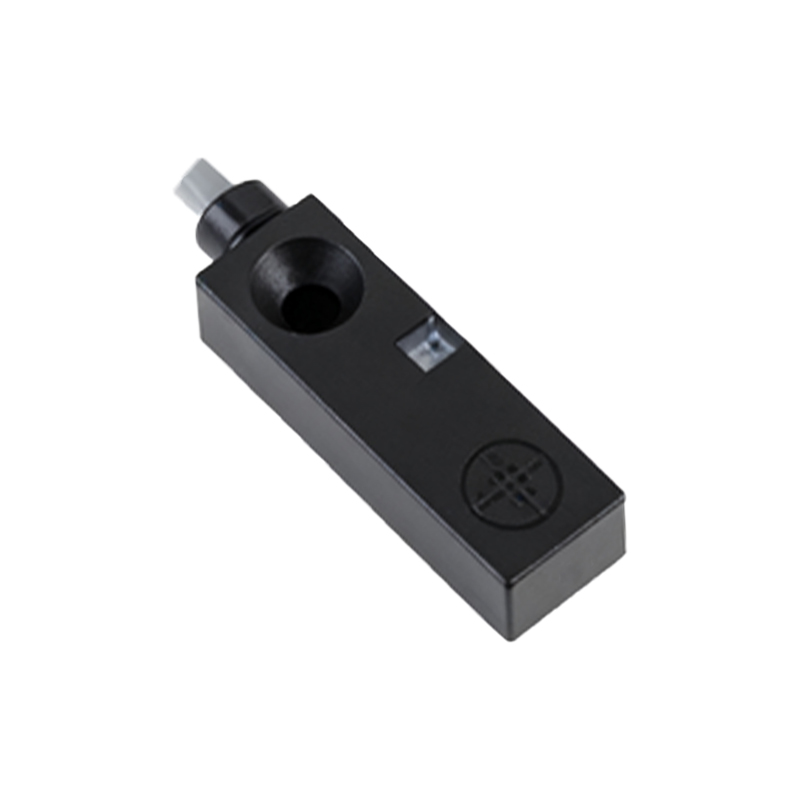
Installation and wiring require careful attention. Proper mounting involves ensuring the correct flush or non-flush installation as specified. Non-flush mountable sensors can detect targets from the side, while flush-mountable types require metal to be mounted flush with their sensing face and are immune to surrounding metal. Wiring must adhere to the specified voltage range (commonly 10-30V DC) and polarity. Incorrect wiring can lead to permanent damage. Shielding and proper cable routing are necessary to minimize electromagnetic interference in electrically noisy industrial settings.
Applications are vast. In conveyor systems, they detect the presence or absence of products, count items, or control sorting gates. In machine tools, they serve as end-position sensors for hydraulic cylinders or spindles. In robotic cells, they provide precise position feedback for grippers or arms. Their ability to function without physical contact makes them ideal for high-speed applications or where the target is delicate.

Maintenance is generally minimal due to the solid-state design. However, periodic checks are recommended to ensure the sensing face remains clean from debris, metal chips, or buildup that could attenuate the sensing field. Diagnostic LEDs, a standard feature on most models, provide immediate status indication for power, output activation, and sometimes overload or short-circuit conditions, facilitating quick troubleshooting.
Selecting the right cylindrical proximity switch involves a systematic approach: define the target material and required sensing distance, determine the environmental conditions (temperature, chemicals), choose the appropriate electrical output and housing thread size (e.g., M8, M12, M18, M30), and verify compatibility with the control system's input module. Consulting with sensor manufacturers or distributors can provide valuable guidance for specialized applications.
In conclusion, cylindrical proximity switches are a cornerstone of industrial sensing technology. Their durability, precision, and adaptability make them essential for enhancing efficiency, safety, and reliability in automated processes. A thorough understanding of their operating principles, specifications, and application guidelines is key to leveraging their full potential and ensuring optimal system performance.