In the realm of industrial automation, particularly within welding applications, achieving consistent, high-quality welds is paramount. This demands precise control over the welding torch's path relative to the workpiece joint. Traditional methods relying on mechanical guides or pre-programmed paths often fall short when dealing with part variations, thermal distortion, or complex joint geometries. This is where welding seam laser distance sensors have emerged as a transformative technology, enabling real-time, non-contact measurement and guidance for automated welding systems.
A welding seam laser distance sensor operates on the principle of optical triangulation or time-of-flight measurement. In a typical triangulation-based sensor, a laser diode projects a visible or infrared spot or line onto the target surface—the welding seam area. A high-resolution CMOS or CCD camera, positioned at a known angle to the laser emitter, captures the reflection. As the distance to the target changes, the position of the laser spot on the camera's sensor shifts accordingly. Sophisticated onboard processors analyze this displacement in real-time to calculate the exact distance with micron-level accuracy. For seam tracking, the sensor often scans a laser line across the joint, creating a detailed 3D profile of the groove, including its width, depth, and centerline position.
The core advantage of these sensors lies in their non-contact nature. They do not interfere with the welding process, withstand the intense heat, spatter, and electromagnetic interference prevalent in welding environments when properly housed. Key performance specifications include measurement range, typically from a few millimeters to several hundred millimeters; sampling rate, often exceeding 1 kHz for high-speed applications; and resolution, which can be in the single-digit micron range. Robust housing with air-purge or water-cooling options protects the optical components from contamination and overheating.
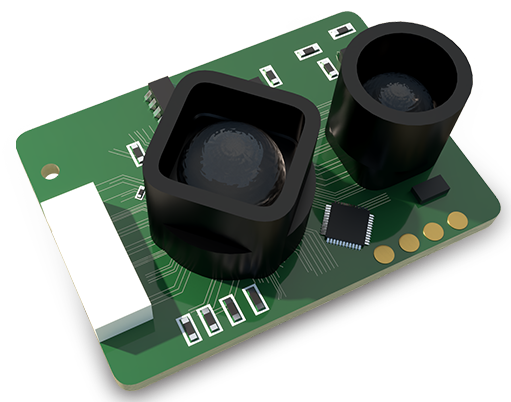
Integration into robotic welding cells or dedicated welding machines is a critical process. The sensor is usually mounted ahead of the welding torch. As the system moves along the workpiece, the sensor continuously scans the joint ahead of the arc. The captured profile data is fed to the robot's controller or a dedicated seam tracker. Advanced software algorithms compare the real-time data to a predefined nominal path. Any deviation—caused by part fit-up inconsistency, thermal warping, or assembly tolerances—is instantly detected. The controller then generates corrective signals to adjust the robot's trajectory, torch height, and sometimes welding parameters (like wire feed speed or arc voltage) on-the-fly, ensuring the weld bead is perfectly placed within the joint.
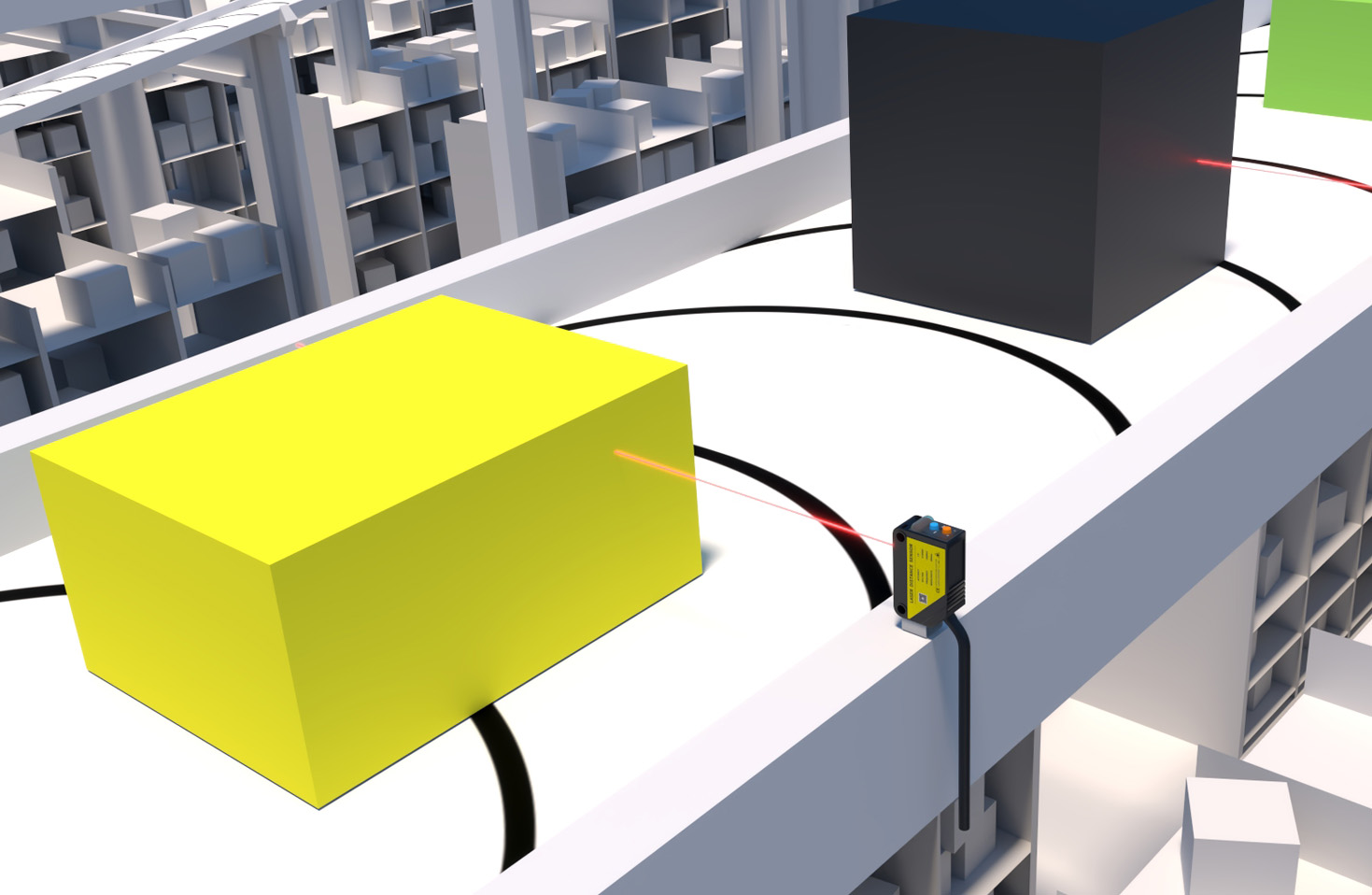
Applications are vast and critical. They are indispensable in heavy fabrication for longitudinal and circumferential seams in shipbuilding, pressure vessel, and pipeline welding. In the automotive industry, they ensure precision in robotic spot welding and laser welding of body-in-white components. They are equally vital for welding complex aerospace structures and for adaptive welding of dissimilar thickness materials. The benefits are substantial: a drastic reduction in rework and scrap by eliminating defects like lack of fusion or misaligned welds; increased productivity through higher travel speeds and fewer stops for manual correction; and enhanced operator safety by fully automating the guidance process in hazardous environments.
When selecting a seam laser sensor, engineers must consider the specific welding process (MIG/MAG, TIG, laser welding), joint type (butt, fillet, lap), material reflectivity, and environmental challenges. The sensor must have sufficient resistance to optical noise from the arc glare. Modern sensors often incorporate filters and intelligent algorithms to distinguish the laser line from the intense welding arc. Furthermore, the choice between a standalone sensor system and one fully integrated with the robot brand's ecosystem impacts ease of programming and data communication.
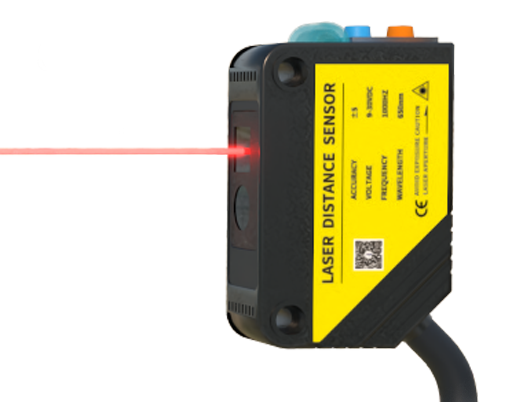
Looking forward, the evolution of welding seam laser sensors is intertwined with Industry 4.0. Sensor data is increasingly used not only for real-time control but also for process monitoring and quality documentation. Integration with cloud platforms allows for predictive maintenance of the sensor itself and analysis of welding process trends. Advancements in sensor fusion, combining laser data with vision-based or arc sensing data, promise even greater robustness and capability for the most challenging applications.
In conclusion, the welding seam laser distance sensor is no longer a luxury but a necessity for modern, high-performance automated welding. It acts as the "eyes" of the welding robot, providing the critical feedback needed to compensate for real-world imperfections. By delivering unmatched precision and adaptability, this technology is fundamental to improving weld quality, boosting efficiency, and driving the future of intelligent manufacturing in the welding industry.