In the realm of industrial automation and control systems, proximity sensors are indispensable components. They detect the presence or absence of an object without physical contact, enabling precise, reliable, and maintenance-free operation in countless applications. However, with a vast array of models, technologies, and specifications available, selecting the right proximity sensor can be a daunting task. This guide will walk you through the key factors to consider when evaluating and choosing a proximity sensor model, ensuring optimal performance for your specific needs.
The first and most critical step is understanding the fundamental sensing technologies. The three primary types are Inductive, Capacitive, and Photoelectric sensors. Inductive proximity sensors are the workhorses of metal detection. They generate an electromagnetic field and detect eddy current losses caused by metallic targets. When selecting an inductive model, key parameters include the sensing distance (nominal range), the target material (steel, aluminum, brass, etc., as sensing distance varies), and the housing style (cylindrical, rectangular, or ring-shaped). For instance, a model designed for ferrous metals may have a reduced range for non-ferrous metals like aluminum.
Capacitive proximity sensors can detect both metallic and non-metallic materials, including liquids, powders, glass, and plastics. They function by detecting changes in capacitance caused by the target entering an electrostatic field. When considering a capacitive model, pay close attention to the dielectric constant of the target material, as it significantly affects the sensing range. Adjustable sensitivity is a common and valuable feature, allowing you to fine-tune the sensor to ignore background materials or container walls.
Photoelectric sensors use a beam of light to detect objects. They offer the longest sensing ranges and are highly versatile. Sub-types include through-beam (separate emitter and receiver), retro-reflective (uses a reflector), and diffuse (reflective), where the sensor and target are on the same side. The choice depends on the required sensing distance, environmental conditions (dust, fog), target color and surface finish (which affect reflectivity), and the need for background suppression.
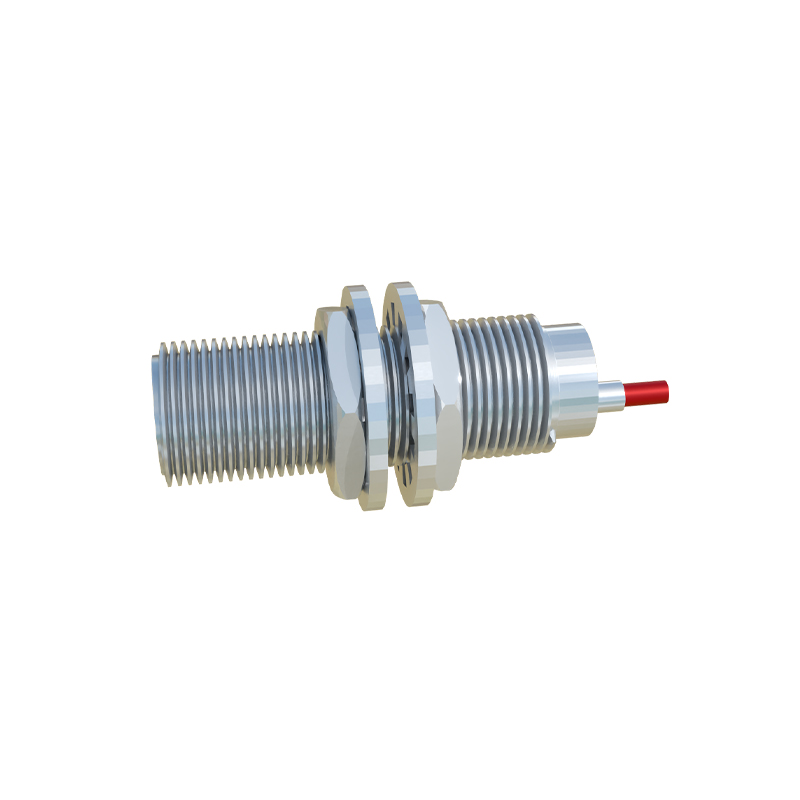
Beyond the core technology, the sensor's specifications are paramount. The rated operating distance (Sn) is the nominal detection range under standardized conditions. Always consider a safety factor; do not operate the sensor at its absolute maximum limit. The hysteresis is the difference between the switch-on and switch-off points, which prevents chatter when a target is at the edge of the sensing field. Switching frequency defines how quickly the sensor can detect objects passing by, a critical factor for high-speed production lines.
Output configuration is another vital decision. Do you need a digital switch output (PNP or NDC sinking, NPN or NOC sourcing), an analog output (4-20mA or 0-10V for distance proportional measurement), or a specialized IO-Link digital communication output for advanced diagnostics and parameter setting? The choice must match your controller's input card specifications.
Environmental and mechanical factors cannot be overlooked. Check the Ingress Protection (IP) rating (e.g., IP67, IP69K) to ensure the sensor is sealed against dust and water ingress suitable for your environment, whether it's a clean cabinet or a high-pressure washdown area. Housing material (typically nickel-plated brass, stainless steel, or PBT plastic) must withstand chemical exposure, mechanical stress, and temperature extremes. The operating temperature range must encompass your application's conditions.
Electrical characteristics include the operating voltage range (e.g., 10-30V DC, 20-250V AC/DC) and current consumption. Ensure your power supply is compatible. Connection style is also important: pre-wired cables, quick-disconnect connectors, or terminal connections offer different levels of installation ease and maintenance flexibility.
Finally, consider application-specific features. Embeddable vs. Non-embeddable inductive sensors: embeddable models can be flush-mounted in metal without affecting their sensing range, while non-embeddable require free space around the sensing face. Factor 1 designation indicates an inductive sensor's performance is independent of the target material's properties (within limits). For challenging environments, look for models with welding spatter resistance, high electromagnetic noise immunity, or chemical resistance.
In conclusion, selecting the right proximity sensor model is a systematic process. Begin by defining your target material and the required detection task. Choose the appropriate sensing technology. Then, meticulously match the sensor's specifications—sensing distance, output, switching frequency, housing, and environmental ratings—to your application's mechanical, electrical, and operational demands. Consulting manufacturer datasheets and application engineers is always recommended for critical or non-standard applications. By following this structured approach, you can ensure reliable detection