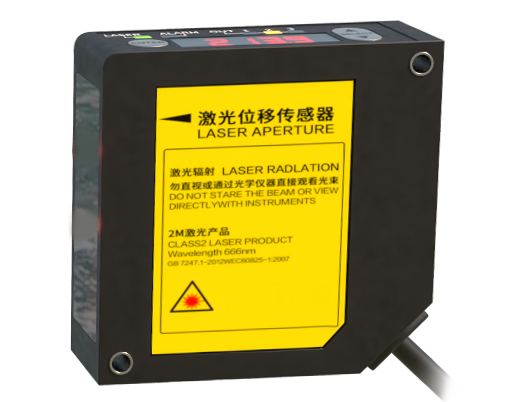
In the rapidly evolving field of sensor technology, laser processing has emerged as a cornerstone for precision manufacturing, enabling the production of highly sensitive, reliable, and miniaturized devices. This article delves into the latest advancements in laser techniques specifically tailored for sensor fabrication, highlighting key applications, benefits, and future trends.
Laser processing, encompassing methods such as laser cutting, drilling, welding, and surface texturing, offers unparalleled accuracy and control. For sensors, where even micron-level deviations can impact performance, lasers provide a non-contact, high-energy solution that minimizes thermal damage and mechanical stress. In micro-electromechanical systems (MEMS) sensors, for instance, ultrafast lasers are used to create intricate patterns on silicon wafers, enhancing sensitivity to pressure, acceleration, or environmental changes. The ability to process a wide range of materials—from metals and ceramics to polymers—makes lasers versatile for diverse sensor types, including temperature, optical, and biomedical sensors.
One significant application is in the production of fiber optic sensors, where laser-induced gratings are written into glass fibers to detect strain, temperature, or chemical compositions with high resolution. Similarly, in automotive and aerospace industries, lasers are employed to fabricate LiDAR sensors by precisely shaping components for light detection and ranging systems, crucial for autonomous navigation. The advent of picosecond and femtosecond lasers has further revolutionized this domain, allowing for cold ablation processes that reduce heat-affected zones, thus preserving material integrity and improving sensor longevity.
Benefits of laser processing extend beyond precision. It enables rapid prototyping and scalable production, reducing lead times and costs. Moreover, lasers facilitate the integration of multiple sensor functions into compact units, supporting the trend toward Internet of Things (IoT) devices. For example, in smart environmental monitors, lasers can etch microfluidic channels and sensor arrays onto chips, enabling real-time detection of pollutants.

Looking ahead, trends indicate a shift toward hybrid laser systems combining additive and subtractive manufacturing, as well as the integration of artificial intelligence for adaptive process control. As sensor demands grow for applications in healthcare, robotics, and sustainable energy, laser technology will continue to drive innovation, offering cleaner, faster, and more efficient manufacturing pathways. Industry professionals must stay abreast of these developments to leverage lasers for next-generation sensor solutions.
In summary, laser processing is not merely a tool but a transformative force in sensor manufacturing, pushing the boundaries of what sensors can achieve. By embracing these advanced techniques, engineers can enhance performance, reliability, and functionality, paving the way for smarter, more connected technologies in our daily lives.