Laser sensors have become indispensable tools across various industrial sectors, offering unparalleled precision in measurement, detection, and positioning tasks. Their operation, based on the emission and reception of laser light, enables non-contact, high-speed, and highly accurate data acquisition. However, to ensure safety, reliability, interoperability, and consistent performance, adherence to established international standards is paramount. This article delves into the key standards governing laser sensors, providing a comprehensive overview for engineers, system integrators, and procurement specialists.
The foundation of laser sensor regulation is built upon safety standards. The most critical among these is the IEC 60825 series, "Safety of laser products," which is harmonized with similar standards like the US FDA's 21 CFR Part 1040. These standards classify lasers into specific classes (Class 1, 1M, 2, 2M, 3R, 3B, 4) based on their potential to cause biological damage to eyes and skin. For industrial laser sensors, Class 1, Class 2, and Class 3R are most common. A Class 1 laser sensor is considered safe under all conditions of normal use, even with optical instruments. Class 2 applies to visible lasers where the natural aversion reflex (blinking) provides protection. Class 3R lasers have a lower risk but still require caution. Compliance with these classifications, through proper labeling, engineering controls (e.g., enclosures), and safety interlocks, is non-negotiable for market access and workplace safety, governed by directives like the EU's Machinery Directive 2006/42/EC.
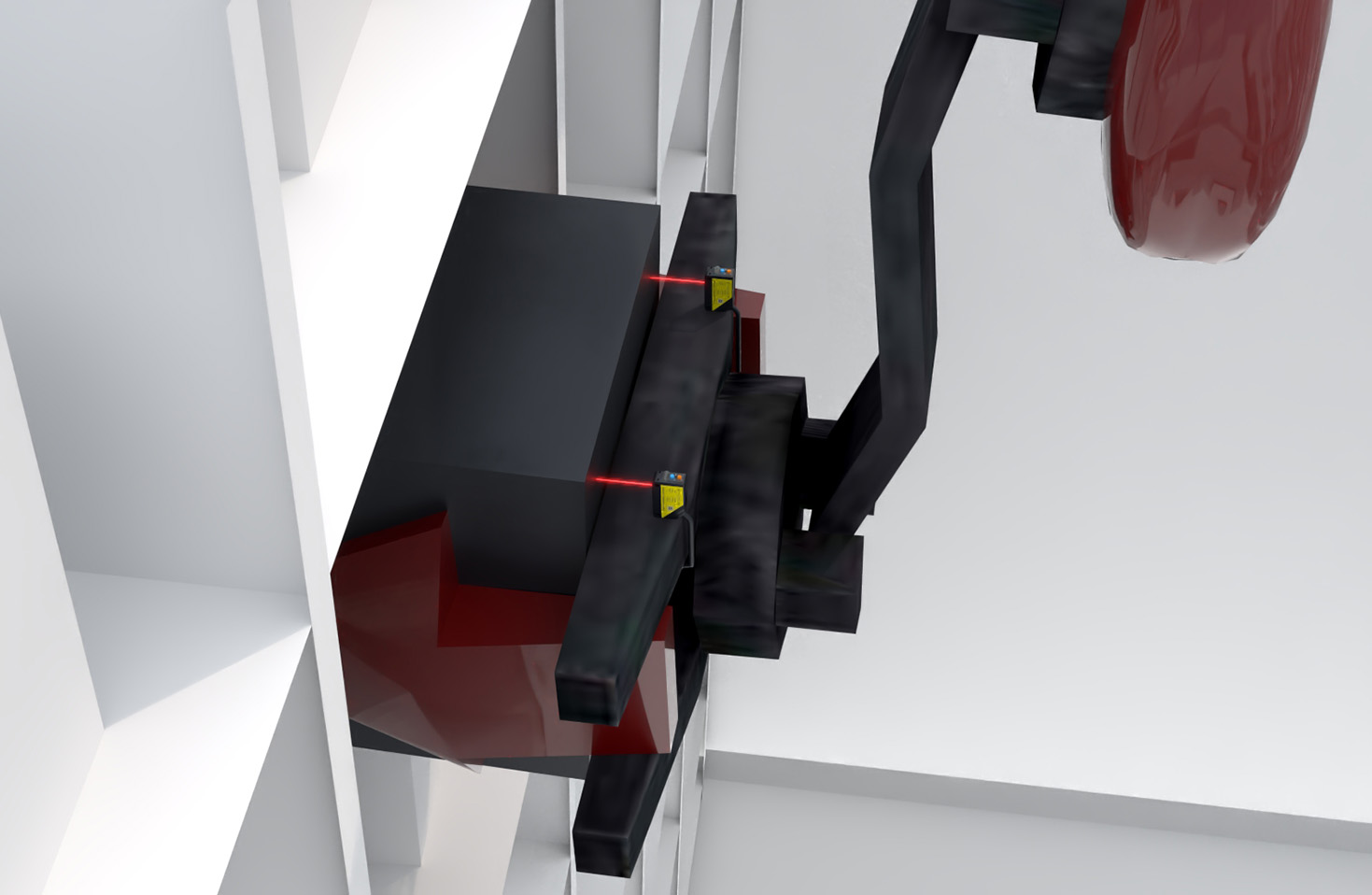
Beyond safety, performance and testing standards ensure that laser sensors deliver on their promised specifications. Key standards in this domain include IEC 61757 for fibre optic sensors, which covers generic specifications and test methods applicable to many photoelectric principles. For dimensional measurement sensors, standards like ISO 10360 for coordinate measuring machines (CMMs) provide frameworks for verifying accuracy, though sensor-specific performance is often validated against manufacturer-defined metrics such as repeatability, linearity, and resolution. Environmental testing standards, notably the IEC 60068 series, are crucial. They define procedures for testing sensor resilience to factors like shock, vibration, humidity, and temperature extremes (e.g., IEC 60068-2-1 for cold, IEC 60068-2-2 for dry heat). Compliance with ingress protection ratings per IEC 60529 (IP codes) and National Electrical Manufacturers Association (NEMA) ratings is equally vital for specifying sensors suitable for harsh industrial environments, from washdown areas to outdoor installations.
Electrical and functional safety standards form another critical pillar. For sensors integrated into automated machinery, compliance with functional safety standards like IEC 61508 (generic) and its sector-specific derivative IEC 62061 (machinery) may be required when the sensor is part of a safety-related control system (SRCS). This involves rigorous documentation, failure mode analysis, and validation to achieve a required Safety Integrity Level (SIL). Electromagnetic compatibility (EMC) is governed by the IEC 61000 series, ensuring the sensor neither emits excessive electromagnetic interference nor is unduly susceptible to it. Standards like IEC 61000-4-2 (ESD), IEC 61000-4-3 (radiated immunity), and IEC 61000-4-4 (electrical fast transient) are typical test benchmarks. Adherence to these EMC standards, often mandated by the EU's EMC Directive 2014/30/EU, is essential for reliable operation in electrically noisy plant environments.
Finally, communication and interface standards ensure seamless integration into modern Industrial Internet of Things (IIoT) and Industry 4.0 architectures. While traditional digital (PNP/NPN) and analog (0-10V, 4-20mA) outputs remain prevalent, standardized industrial networks are increasingly important. Protocols like IO-Link (standardized under IEC 61131-9) provide a point-to-point serial communication that enables detailed parameterization, diagnostics, and process value transmission from intelligent laser sensors. For higher-level network integration, standards based on Ethernet, such as EtherNet/IP, PROFINET, and Modbus TCP, are common. The choice of interface standard directly impacts system design, data accessibility, and maintenance capabilities.
In conclusion, navigating the landscape of laser sensor standards is a complex but essential task. A holistic approach must consider safety (IEC 60825), environmental robustness (IEC 60068, IP codes), electrical performance and EMC (IEC 61000), functional safety when applicable (IEC 61508/62061), and communication interfaces (e.g., IEC 61131-9 for IO-Link). Specifying sensors that carry relevant certifications (CE, UL, etc.) and declaring conformity to these standards mitigates risk, ensures regulatory compliance, and guarantees a baseline of performance and safety for industrial applications. Engineers must treat these standards not as bureaucratic hurdles but as vital tools for designing reliable, safe, and efficient automated systems.