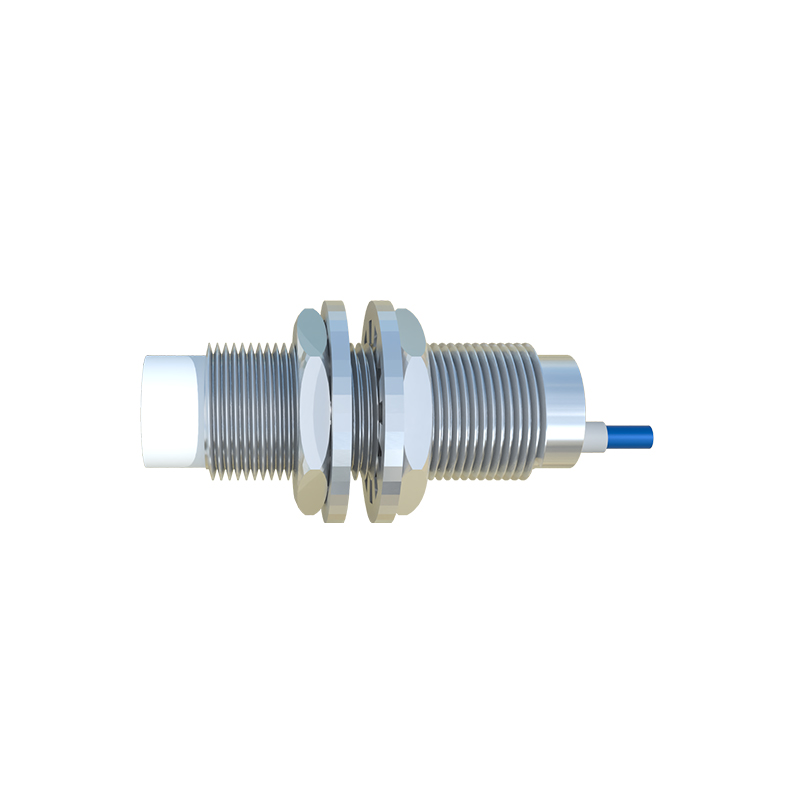
Differential transformer proximity sensors represent a critical component in modern industrial automation, offering precise non-contact detection of metallic objects. These sensors operate on the principle of electromagnetic induction, utilizing a primary coil and two secondary coils wound in opposition to detect changes in magnetic flux caused by nearby conductive targets. When an AC voltage is applied to the primary coil, it generates an alternating magnetic field. In the absence of a target, the induced voltages in the two secondary coils cancel each other out due to their differential connection, resulting in a near-zero output signal. As a metallic object enters the sensor's detection range, it disrupts the magnetic field, creating an imbalance between the secondary coils. This imbalance produces a measurable output voltage proportional to the target's displacement, allowing for accurate position or proximity measurement.
The design of differential transformer proximity sensors provides several advantages over other sensing technologies. They exhibit high linearity and resolution, making them suitable for applications requiring precise displacement measurements, such as in machine tool positioning, robotic arm control, and valve monitoring. Unlike capacitive or optical sensors, they are largely unaffected by non-conductive materials, dust, oil, or ambient light, ensuring reliable performance in harsh industrial environments. Additionally, their rugged construction—often featuring stainless steel housings and epoxy-sealed electronics—enhances durability against mechanical shocks, vibrations, and temperature fluctuations. Common variants include linear variable differential transformers (LVDTs) for linear displacement and rotary versions for angular measurements, both widely used in automotive, aerospace, and manufacturing sectors.
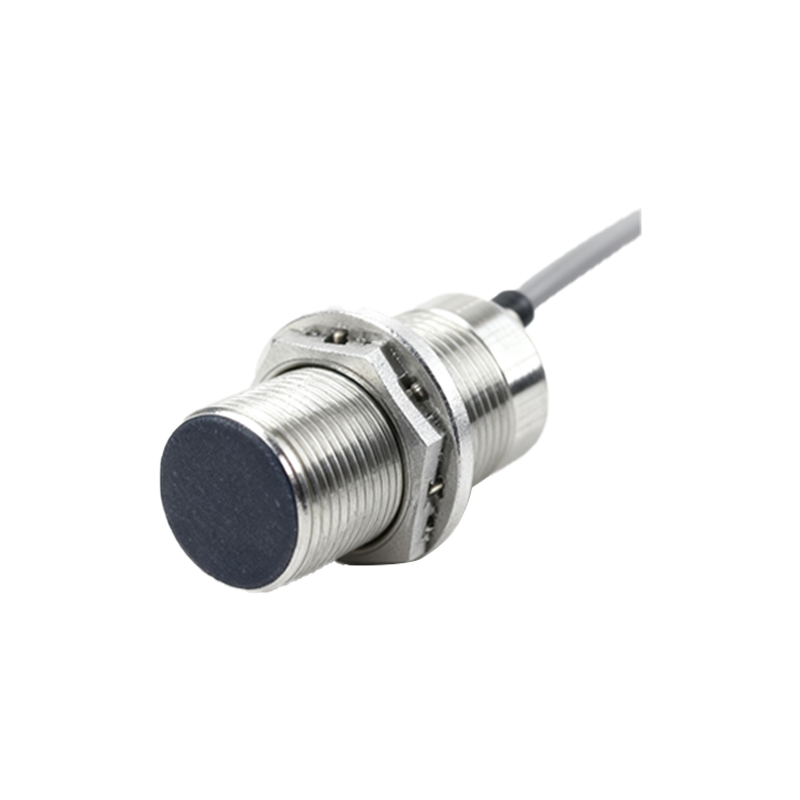
Installation and calibration require attention to detail to maximize sensor efficacy. Proper mounting alignment relative to the target is essential to avoid signal attenuation or false triggers. Factors such as target material (ferrous metals like iron or steel yield stronger signals than non-ferrous ones like aluminum), size, and shape influence detection sensitivity and range, typically spanning from a few millimeters to several centimeters. Regular maintenance involves checking for coil integrity, connector corrosion, and output signal stability using oscilloscopes or multimeters. Modern iterations integrate digital interfaces (e.g., IO-Link or analog outputs) for seamless integration with PLCs and industrial networks, enabling real-time diagnostics and adaptive control.
Despite their robustness, limitations exist. Differential transformer sensors may experience interference from strong external magnetic fields or adjacent metallic structures, necessitating shielding or adequate spacing. They also tend to be more expensive than simpler inductive proximity sensors, but the trade-off is justified in applications demanding high accuracy and repeatability. Future trends focus on miniaturization, enhanced signal processing algorithms for noise reduction, and smart features like self-calibration. In summary, differential transformer proximity sensors remain indispensable for precision industrial automation, bridging the gap between mechanical movement and electronic control with unwavering reliability.