In modern industrial automation, laser sensors are indispensable components, providing high-precision, non-contact measurement for tasks ranging from object detection and positioning to distance measurement and quality inspection. Their reliability is paramount for maintaining continuous production flow and ensuring product quality. However, like any sophisticated electro-optical device, laser sensors are susceptible to various anomalies that can degrade performance or cause complete failure. Understanding the root causes, symptoms, and troubleshooting procedures for these anomalies is critical for engineers and maintenance personnel.
One of the most common categories of laser sensor anomalies stems from environmental factors. Contamination is a primary culprit. Dust, oil mist, coolant, or other particulate matter can accumulate on the sensor's lens or emitter window. This buildup attenuates the outgoing laser beam and scatters the returning signal, leading to reduced sensing range, erratic readings, or false triggers. In extreme cases, it can completely block the optical path. Similarly, ambient light interference poses a significant challenge. Strong external light sources, such as direct sunlight, welding arcs, or other high-intensity lamps, can flood the sensor's receiver, saturating its photodetector and causing it to misinterpret or lose the target signal. This often manifests as intermittent failures or shifts in the measured value.

Electrical and signal-related issues constitute another major group of anomalies. Power supply problems are frequently overlooked. Voltage spikes, sags, or electrical noise on the supply line can disrupt the sensor's internal circuitry, leading to unstable operation or resetting. It's crucial to ensure a clean, stable power source within the sensor's specified voltage range. Wiring faults, such as loose connections, damaged cables, or incorrect polarity, can also cause communication failures or erratic behavior. For sensors with analog or digital outputs, issues like signal drift, incorrect scaling, or communication protocol errors (e.g., IO-Link, PROFINET) can result in inaccurate data being sent to the PLC or controller. Ground loops are another subtle electrical problem that can introduce noise into the signal line.
The sensor itself may experience internal failures. Aging of the laser diode is a gradual process where the output power diminishes over time, reducing the effective sensing range. Sudden failure of the laser diode or the receiver's photodetector element will result in a complete loss of function. Degradation of optical components, such as lenses or filters, can also occur due to prolonged exposure to UV light or harsh chemicals, affecting beam quality. Furthermore, mechanical misalignment, often caused by vibration or physical impact, can misdirect the laser beam, causing it to miss the intended target or reflect from an unintended surface. This leads to consistent measurement errors.
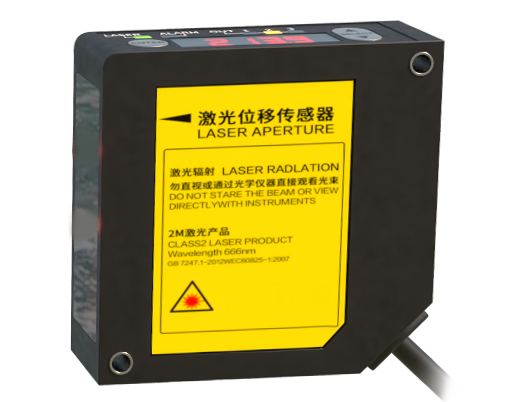
Thermal effects are particularly important for high-precision applications. Laser sensors have specified operating temperature ranges. Exceeding the upper limit can cause internal components to overheat, leading to signal drift, reduced accuracy, or shutdown. Operating below the minimum temperature might slow down circuitry or cause condensation to form on the lens, which acts as contamination. Significant temperature fluctuations in the environment can also cause the target material or the sensor's mounting structure to expand or contract, altering the measurement baseline.
Effective troubleshooting requires a systematic approach. Begin with a visual inspection for obvious contamination, physical damage, or loose connections. Check the installation: ensure the sensor is correctly aligned, securely mounted, and at the proper distance and angle relative to the target. Verify the power supply voltage with a multimeter. Consult the sensor's status indicator LEDs; most modern sensors provide diagnostic information through specific blink patterns indicating conditions like "output active," "signal too weak," or "overload."
Utilize the sensor's built-in teach-in or configuration functions, if available, to recalibrate for the current target and environmental conditions. For analog sensors, measure the output signal directly to see if it corresponds to the expected value. Isolating the sensor from potential environmental interference, such as by installing a protective housing or shade, can be a diagnostic step. Always refer to the manufacturer's technical manual for specific error codes, recommended cleaning procedures (using appropriate, non-abrasive cleaners and lint-free wipes), and environmental specifications.
Preventive maintenance is key to minimizing anomalies. Establish regular cleaning schedules for lenses. Ensure proper electrical installation with surge protection and shielded cables where necessary. Implement measures to control ambient light, such as barriers or filters. Monitor operating temperatures and consider cooling or heating solutions for extreme environments. Finally, keeping a log of sensor performance and any anomalies can help identify patterns or predict end-of-life failure, allowing for proactive replacement during planned downtime.
By methodically analyzing the symptoms—whether it's loss of signal, unstable readings, reduced range, or incorrect output—and correlating them with potential causes in environment, electrical supply, internal health, or thermal conditions, engineers can efficiently diagnose and resolve laser sensor anomalies, thereby ensuring the resilience and accuracy of automated systems.