In the intricate world of industrial automation and machinery, pneumatic systems are fundamental for providing efficient, clean, and reliable motion control. At the heart of optimizing these systems lies a critical component: the proximity angle sensor. This device, often overlooked, plays a pivotal role in enhancing precision, safety, and operational intelligence in applications ranging from robotic arms to packaging machinery.
A proximity angle sensor in a pneumatic context is essentially a non-contact sensing device designed to detect the angular position or rotational movement of a pneumatic actuator's piston rod or a connected rotary element. Unlike simple limit switches that only indicate end positions, these sensors provide continuous or multi-point feedback on the actuator's stroke. They typically operate on principles such as magnetostrictive, inductive, or capacitive sensing. In a common setup, a magnet is embedded in the piston of a pneumatic cylinder. As the piston moves, the sensor, mounted externally on the cylinder body, detects the changing magnetic field and translates it into a precise angular or linear position signal. This real-time data is crucial for systems requiring controlled intermediate stops, variable force application, or synchronized multi-actuator movements.
The primary function of this sensor is to provide accurate positional feedback. In automated processes, knowing the exact extension or retraction angle of a pneumatic actuator allows for sophisticated control sequences. For instance, in a material handling robot, a proximity angle sensor can ensure a gripper rotates to a precise angle before picking up a component, thereby preventing misalignment and product damage. This level of control moves systems beyond simple binary (open/close) operations to nuanced, programmable motion profiles.
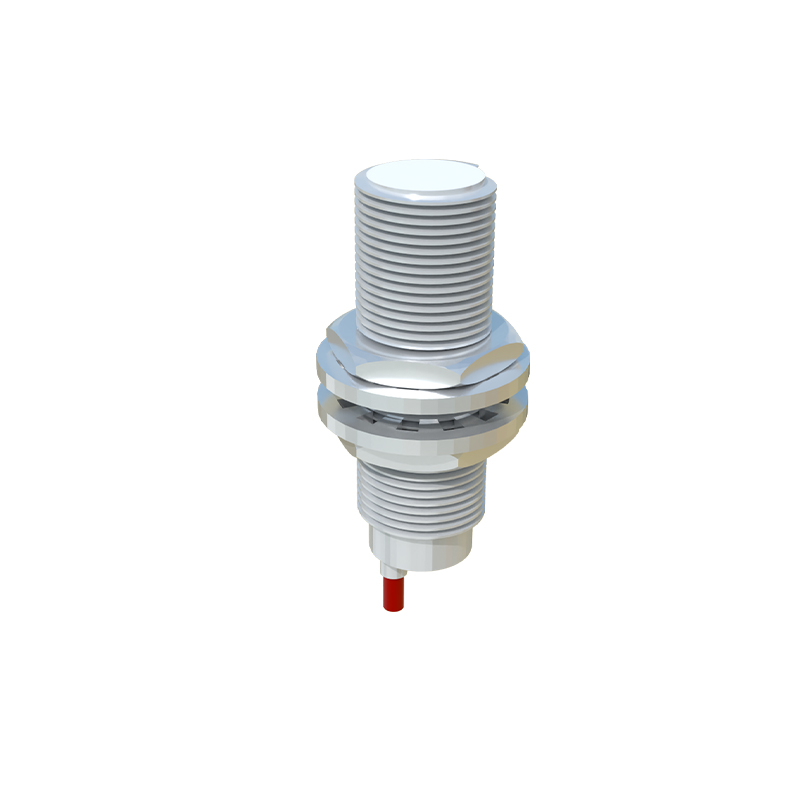
Furthermore, these sensors are indispensable for system diagnostics and predictive maintenance. By monitoring the actuator's position over time, they can detect anomalies such as stalling, sluggish movement due to friction, or deviations from standard cycle times. This data enables maintenance teams to address issues before they lead to catastrophic failure, minimizing unplanned downtime. In safety-critical applications, like press brakes or clamping devices, the sensor ensures the tool is in a verified safe position before allowing the next stage of the operation, thereby safeguarding personnel.
Integration with modern control systems is another key advantage. The analog or digital output from a proximity angle sensor (e.g., 4-20mA, 0-10V, or IO-Link) feeds directly into Programmable Logic Controllers (PLCs) or industrial PCs. This integration facilitates closed-loop control, where the controller continuously adjusts valve commands based on the actual position feedback, compensating for variables like air pressure fluctuations or load changes. The result is significantly improved repeatability and accuracy compared to traditional open-loop pneumatic systems.
When selecting a proximity angle sensor for a pneumatic application, engineers must consider several factors. Environmental robustness is paramount; the sensor should be rated for conditions involving dust, moisture, vibration, and temperature extremes typical in industrial settings. The sensing range, resolution, and response time must match the dynamic requirements of the application. Compatibility with the actuator type—whether a standard cylinder, rotary actuator, or gripper—is also essential. Finally, the choice between analog and digital interfaces depends on the desired level of data richness and network integration.
In conclusion, the proximity angle sensor is far more than a simple position indicator. It is an enabling technology that transforms basic pneumatic force into intelligent, measurable, and controllable motion. By providing precise feedback, it unlocks higher levels of automation efficiency, equipment safety, and process reliability. As Industry 4.0 drives demand for smarter, more connected machinery, the role of these sensors will only become more central, bridging the gap between pneumatic actuation and digital control ecosystems.