Proximity sensors are indispensable components in modern industrial automation, serving as the "eyes" of machinery by detecting the presence or absence of objects without physical contact. As technology evolves and operational demands increase, the need to replace older sensors with newer, more advanced models has become a common maintenance and upgrade task. Understanding the underlying technological principles is crucial for successful replacement and optimal system integration.
The core principle of non-contact detection varies by sensor type. Inductive proximity sensors generate an electromagnetic field using a coil and oscillator. When a metallic object enters this field, it induces eddy currents, causing a change in the oscillation amplitude. This change is detected by a threshold circuit, which triggers a switching output. For replacement, key parameters include the sensing distance (nominal and effective), the target material (ferrous or non-ferrous metals), and the operating frequency. Modern replacements often feature improved shielding (shielded vs. unshielded designs) to reduce electromagnetic interference from adjacent metal or other sensors, a critical factor in dense installations.
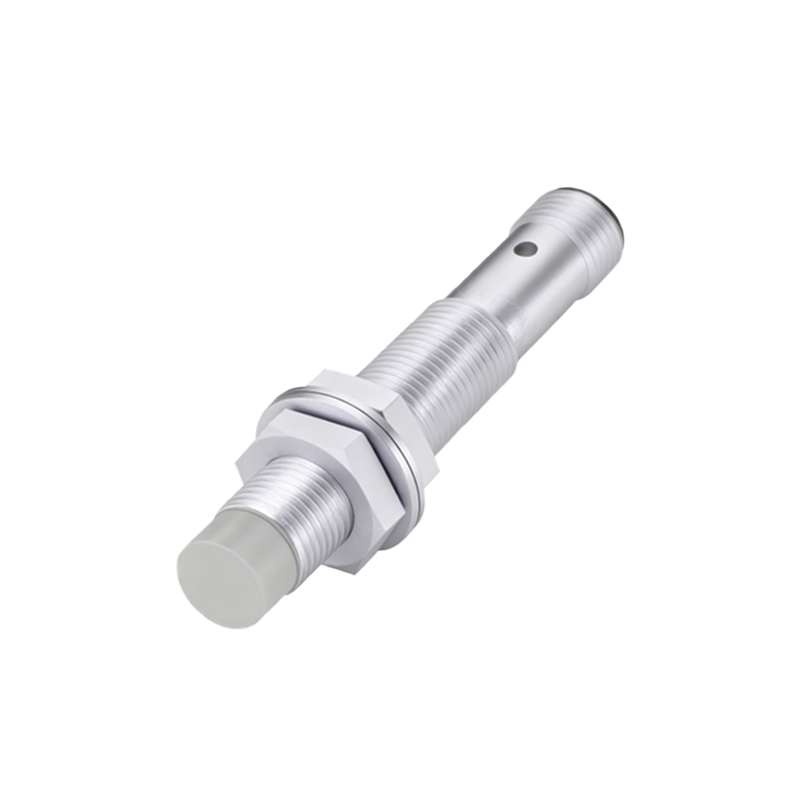
Capacitive proximity sensors operate by generating an electrostatic field. They can detect both metallic and non-metallic materials (plastics, wood, liquids) by measuring changes in capacitance. When an object enters the sensing field, it alters the dielectric constant, increasing the capacitance until a detection threshold is reached. Replacement considerations extend beyond simple size matching. Engineers must evaluate the new sensor's sensitivity adjustment capability to handle different material types and its performance in varying environmental conditions, such as humidity or dust, which can affect dielectric properties.
Magnetic proximity sensors, or reed switches, are activated by a magnetic field, typically from a permanent magnet. They are simple, cost-effective, and used in applications requiring detection of a moving magnet. When replacing, the focus is on the switching capacity, the required magnetic field strength (operate point), and the physical form factor (tubular, rectangular). Modern solid-state versions, like Hall-effect sensors, offer longer life and higher switching speeds but require compatible voltage and output types (PNP/NPN, NO/NC).
Photoelectric sensors represent another major category, using a light emitter and receiver. They are subdivided into through-beam, retro-reflective, and diffuse reflective types. The principle involves the interruption or reflection of a light beam (visible, infrared, or laser). Replacement here is highly nuanced. Technicians must match not only the sensing mode but also the light source type, response time, and especially the environmental rating (IP67, IP69K) for resistance to washdowns, oils, or ambient light interference. Advanced models now feature background suppression or fixed-field teaching functions for precise range setting.
Ultrasonic sensors measure the time-of-flight of sound waves reflected from an object. They are excellent for distance measurement and detecting objects regardless of color or material transparency. Replacing an ultrasonic sensor requires careful attention to the beam angle, measurement range, resolution, and compensation features for temperature variations that affect sound speed. Newer models often include advanced algorithms for echo processing to ignore false echoes from mechanical parts or background structures.
The replacement process is not merely a mechanical swap. It is a systems engineering task. First, a thorough audit of the existing sensor's specifications is mandatory: supply voltage (10-30V DC, 20-250V AC), output configuration (2-wire, 3-wire PNP/NPN, analog 4-20mA, IO-Link), housing material (stainless steel, PBT, nickel-plated brass), and connection type (M8, M12 connectors, cable outlet). Second, the operational environment must be reassessed. Factors like temperature extremes, chemical exposure, mechanical shock, and vibration tolerance dictate the required ingress protection and housing robustness.
Furthermore, the integration with the control system is paramount. A newer sensor with an IO-Link digital communication interface can offer immense benefits like remote parameter setting, condition monitoring, and diagnostic data (operating hours, temperature warnings). However, it requires a compatible master port on the PLC. Replacing a simple 2-wire AC sensor with a 3-wire DC sensor may necessitate changes in the control cabinet wiring and power supply.
Finally, calibration and testing are essential post-replacement steps. For analog sensors, scaling the output to the correct engineering units in the PLC program is necessary. For all types, verifying the repeat accuracy, hysteresis, and response under normal and extreme conditions ensures reliability. Proper alignment, especially for photoelectric and ultrasonic sensors, is critical to achieving the specified sensing range.
In conclusion, replacing a proximity sensor is a strategic decision grounded in a deep understanding of electromagnetic, capacitive, photoelectric, and ultrasonic principles. It involves a holistic review of electrical characteristics, physical form, environmental resilience, and communication protocols. By meticulously applying these technological principles, engineers can ensure seamless upgrades that enhance system performance, reliability, and intelligence, paving the way for