In the realm of industrial automation, laser photoelectric sensors stand as pivotal components, enabling precise detection, measurement, and control across myriad applications. These sensors operate by emitting a focused laser beam toward a target; the presence or absence of the target, or changes in its properties, modulates the beam. The sensor's receiver then analyzes this modulated light to generate an electrical output signal. Unlike standard photoelectric sensors that use LED light, laser variants offer significantly higher accuracy, resolution, and range due to the coherent, monochromatic nature of laser light. This makes them indispensable in environments demanding micron-level precision.
The core working principle hinges on three primary modes: through-beam, retro-reflective, and diffuse reflective. Through-beam sensors, comprising separate emitter and receiver units, are renowned for their long sensing distances and high reliability, as the receiver directly detects the laser beam interrupted by the target. Retro-reflective models utilize a single housing containing both emitter and receiver, relying on a reflector to bounce the beam back; they offer a practical balance of range and ease of installation. Diffuse reflective sensors, also in a single housing, detect light scattered directly from the target's surface, providing flexibility for detecting non-reflective or variably shaped objects. Advanced versions incorporate background suppression or distance measurement capabilities using triangulation or time-of-flight (ToF) methods, allowing them to ignore irrelevant background objects and measure exact distances.
Key advantages of laser photoelectric sensors are manifold. Their exceptional precision allows for detecting minute objects or precise edge positioning, crucial in electronics assembly or semiconductor manufacturing. The small, intense laser spot enables high-resolution tasks like wire diameter measurement or web break detection. Many models feature visible red laser beams, simplifying alignment and setup—a significant operational benefit. Furthermore, their ability to function over long distances, sometimes exceeding hundreds of meters in through-beam configurations, makes them suitable for large-scale applications like warehouse vehicle detection or conveyor monitoring.
Selecting the appropriate sensor necessitates careful consideration of several factors. The sensing distance and required spot size are paramount; for long-range detection of small objects, a laser sensor with a narrow beam is ideal. Environmental conditions play a critical role; factors like ambient light, dust, fog, or temperature fluctuations can affect performance. Sensors with robust housings (e.g., IP67 ratings) and specialized filters mitigate these issues. The target's characteristics—its color, material, surface finish (shiny or matte), and size—directly influence the choice of sensing mode. For instance, a dark, absorbent target may require a through-beam sensor for reliable operation, whereas a diffuse sensor with background suppression is better for detecting objects on a contrasting background.
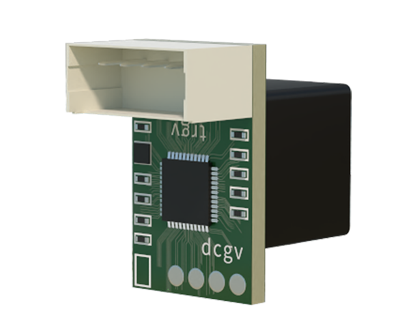
Common industrial applications are extensive. In packaging and material handling, they count products, control filling levels, and detect label presence. Automotive lines use them for robot guidance, part verification, and weld seam tracking. In the pharmaceutical industry, they ensure precise tablet counting and bottle cap placement. Logistics and warehousing benefit from their use in dimensioning systems and automated guided vehicle (AGV) navigation. Emerging trends include the integration of IO-Link for digital communication, enabling parameter setting, diagnostics, and process data exchange directly from the control system, thus enhancing Industry 4.0 connectivity.
Despite their robustness, laser sensors face challenges. Highly reflective or transparent targets can cause false readings, necessitating sensor tuning or the use of polarized filters. Regular maintenance, such as lens cleaning, is essential to prevent performance degradation from contamination. Adherence to laser safety classes (typically Class 1 or 2, which are eye-safe under normal use) is mandatory to ensure operator safety.

In conclusion, laser photoelectric sensors are sophisticated instruments that combine optical precision with electronic intelligence. Their selection and application require a deep understanding of both the sensor technology and the specific task at hand. As automation evolves toward smarter, more flexible systems, these sensors will continue to be fundamental in enabling higher levels of efficiency, quality control, and operational intelligence, solidifying their role as the eyes of modern industrial machinery.
