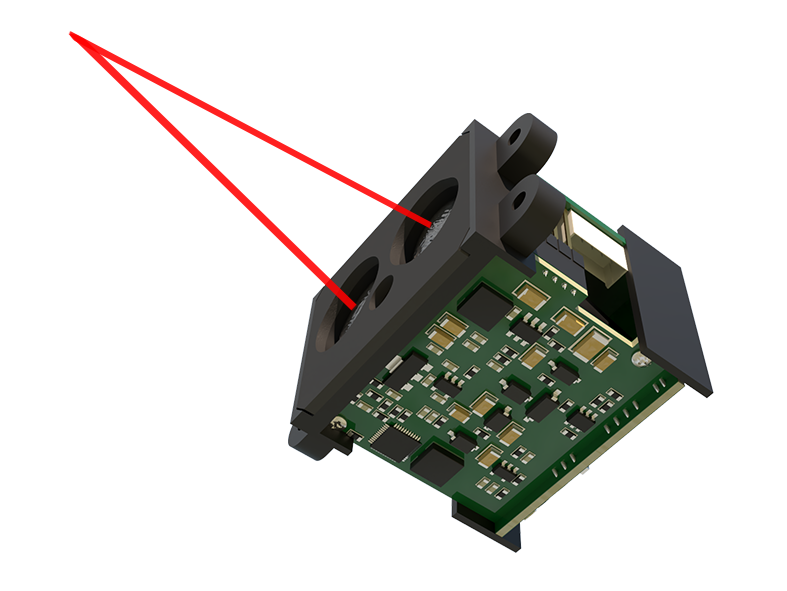
In the realm of modern electrical engineering, the accurate and safe measurement of high voltage parameters is paramount. Traditional methods, often involving direct contact or complex insulation systems, present inherent risks and limitations. The advent of high voltage laser sensors represents a paradigm shift, offering a non-contact, highly precise, and intrinsically safe solution for monitoring critical electrical assets. This article delves into the operational principles, key applications, and recent technological advancements of these sophisticated instruments.
At its core, a high voltage laser sensor operates on the principles of optoelectronics and the electro-optic or magneto-optic effect. The most common technique involves the Pockels effect, where certain crystalline materials change their optical properties—specifically their birefringence—when subjected to an electric field. In a typical setup, a laser beam of known polarization is transmitted through an electro-optic crystal positioned within or near the high voltage field. As the voltage changes, the electric field alters the crystal's refractive indices, causing a phase shift in the laser light. This phase shift modulates the polarization state of the emerging beam. A downstream polarizer and photodetector then convert this polarization modulation into an intensity-modulated signal, which is precisely correlated to the instantaneous voltage. This entire process occurs without any metallic or conductive contact with the high-voltage conductor, eliminating the risk of short circuits and providing exceptional galvanic isolation.
The advantages of this non-contact methodology are substantial. First and foremost is safety. By physically separating the measurement apparatus from the high-voltage line, the risk to personnel and equipment is drastically reduced. Secondly, these sensors exhibit excellent immunity to electromagnetic interference (EMI), a common challenge in substations and power plants where strong fields can distort conventional instrument transformer signals. Their wide bandwidth, often ranging from DC to several megahertz, allows for not only power frequency measurements (50/60 Hz) but also the capture of transient phenomena like switching surges, partial discharges, and lightning impulses. This capability is crucial for power quality analysis and insulation condition monitoring.
High voltage laser sensors find critical applications across the electrical power industry. In high-voltage transmission and distribution substations, they are deployed for revenue metering, protective relaying, and system control. Their accuracy and stability make them suitable for replacing conventional capacitive voltage transformers (CVTs) and inductive potential transformers (PTs). Within gas-insulated switchgear (GIS), compact laser sensors provide reliable voltage monitoring in space-constrained environments. Furthermore, they are indispensable in high-voltage laboratory settings for calibrating other equipment and conducting research on dielectric materials and insulation systems. Another growing application is in the condition-based monitoring of power transformers, cables, and switchgear, where they help detect incipient faults by monitoring voltage waveforms and harmonic content.

Recent technological advancements are pushing the boundaries of performance and integration. The development of all-fiber optic systems, where the laser source, sensing element, and detector are interconnected via optical fibers, enhances robustness and simplifies installation in harsh environments. Advances in digital signal processing (DSP) algorithms have improved signal-to-noise ratios and enabled real-time data analytics directly at the sensor node, contributing to the development of smarter grid sensors. Miniaturization efforts are leading to smaller, more cost-effective sensor heads. Research is also ongoing into new electro-optic materials with higher sensitivity and better temperature stability, as well as into integrated photonic circuits that could lead to chip-scale high-voltage sensors.
Despite their advantages, challenges remain. The initial cost of high-voltage laser sensor systems can be higher than traditional solutions, though the total cost of ownership over the lifecycle is often favorable due to lower maintenance and higher reliability. Ensuring long-term stability and calibration accuracy under varying environmental conditions, such as extreme temperatures and mechanical vibrations, is an area of continuous improvement. System integration with existing supervisory control and data acquisition (SCADA) and digital substation protocols like IEC 61850 also requires careful engineering.
In conclusion, high voltage laser sensors are transformative tools in electrical engineering, offering unmatched safety, precision, and diagnostic capability. As power grids evolve towards greater complexity, renewable integration, and digitalization, the role of these advanced sensors will only become more central. Their ability to provide clean, isolated, and information-rich data makes them a cornerstone technology for building the resilient, efficient, and intelligent electrical systems of the future.