In the realm of industrial automation and machine control, proximity sensors are indispensable components for non-contact detection. Among the various configurations available, the 4-wire proximity switch stands out for its unique capabilities and widespread application. This article delves into the technology, operation, advantages, and typical use cases of 4-wire proximity sensors, providing a detailed guide for engineers and technicians.
Fundamentally, a proximity sensor detects the presence or absence of an object without physical contact. It achieves this by emitting an electromagnetic field or a beam of electromagnetic radiation and looking for changes in the field or return signal. The 4-wire designation refers to the electrical connection scheme. Unlike their 2-wire or 3-wire counterparts, a 4-wire proximity sensor typically features two wires for the power supply and two separate wires for the output signal. This architecture is most commonly associated with sensors that have a relay output or, in some cases, a complementary (NO and NC) solid-state output.
The core operating principle often involves an oscillator circuit that generates a high-frequency electromagnetic field at the sensing face. When a metallic target (ferrous or non-ferrous, depending on the sensor type) enters this field, it induces eddy currents, which dampen the oscillation amplitude. This change is detected by a threshold circuit, which then triggers a change in the output state. For inductive sensors, this is the standard mode. Capacitive 4-wire sensors operate on a similar principle but detect changes in capacitance, allowing them to sense non-metallic materials like plastics, wood, or liquids.
The primary advantage of the 4-wire configuration lies in its isolated output. The power supply terminals (typically labeled as V+ and V- or L+ and L-) are completely separate from the output switching terminals (often labeled as NO, NC, and Common). This electrical isolation offers significant benefits. It provides excellent noise immunity, making the sensor highly reliable in electrically noisy industrial environments. It also allows for great flexibility in output load connections; the output can switch a load of a different voltage than the sensor's supply voltage. For instance, a sensor powered by 24V DC can control a 120V AC relay coil through its isolated contacts. This is a key differentiator from 3-wire PNP or NPN sensors, where the output is referenced to the supply voltage.
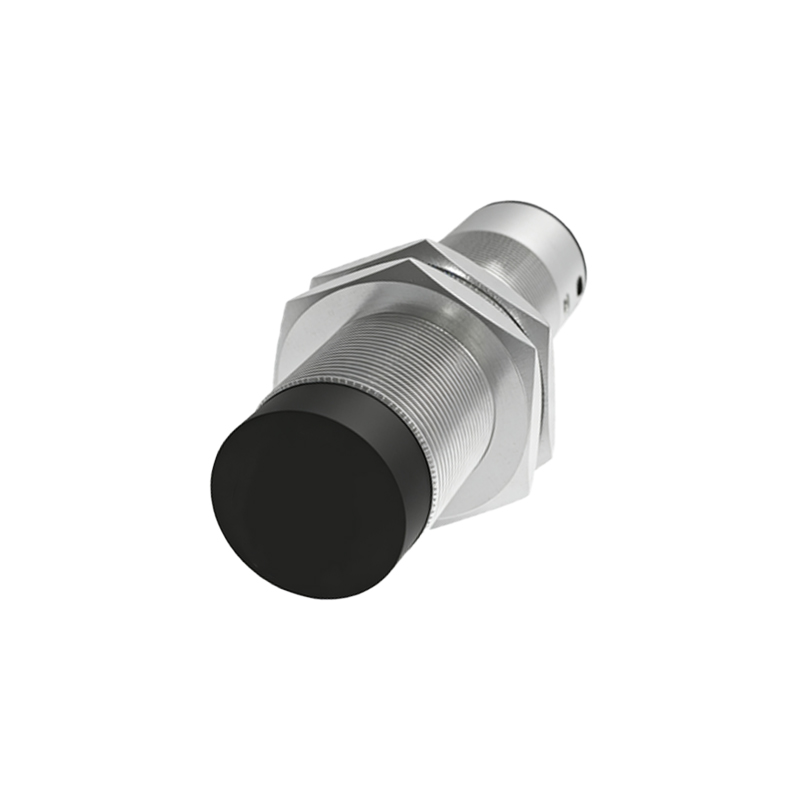
The output of a 4-wire sensor is frequently a mechanical relay or a solid-state relay (SSR). A relay output is electromechanical, characterized by its ability to switch both AC and DC loads, handle high inrush currents, and provide complete galvanic isolation. However, it has a limited switching speed and mechanical lifespan. A solid-state relay output offers faster switching speeds, silent operation, and virtually unlimited cycle life but may have limitations regarding load type and require careful heat management.
When selecting and installing a 4-wire proximity switch, several critical parameters must be considered. The sensing range, repeat accuracy, and housing material (e.g., nickel-plated brass, stainless steel) are chosen based on the application environment. Factors like temperature rating, IP (Ingress Protection) rating for dust and water resistance, and protection against short-circuit and reverse polarity are essential for robust operation. Wiring is straightforward: connect the designated power wires to the appropriate DC or AC supply, and connect the output wires in series with the load (e.g., a PLC input, a contactor coil, or a pilot light). Always consult the manufacturer's datasheet for specific wiring diagrams, as color codes and terminal designations can vary.
Typical applications for 4-wire proximity sensors are vast. They are commonly used in material handling systems for detecting pallets or products on conveyor belts, in machine tools for tool positioning and part presence verification, in packaging machinery for counting and positioning, and in automated assembly lines. Their isolated output makes them ideal for interface applications, such as connecting low-voltage control circuits to higher-voltage power circuits safely.
In conclusion, the 4-wire proximity switch is a versatile and robust solution for industrial sensing tasks requiring electrical isolation between the sensor circuitry and the controlled load. Its design offers enhanced noise immunity and wiring flexibility, making it a reliable choice for complex control systems. Understanding its operating principles, advantages, and application considerations empowers engineers to design more efficient, reliable, and safe automated systems. As technology advances, these sensors continue to evolve with improved sensing ranges, smarter diagnostics, and more compact designs, solidifying their role as a cornerstone of modern industrial automation.