In industrial automation and control systems, proximity sensors play a critical role in non-contact detection of metallic or non-metallic objects. Among the various components that ensure their reliable operation, the 2-wire proximity sensor connector stands out for its simplicity and widespread use. This article delves into the technical specifications, wiring principles, selection criteria, and common application scenarios for these essential components, providing a thorough understanding for engineers and technicians.
A 2-wire proximity sensor connector is fundamentally an electrical interface designed to connect a 2-wire DC proximity sensor to a power source and a load, typically a programmable logic controller (PLC) input module or a relay. Unlike 3-wire or 4-wire sensors that have separate wires for power supply, ground, and signal output, the 2-wire variant integrates the sensor and its switching element directly into the power loop. This design significantly simplifies installation and reduces wiring complexity, making it a preferred choice in many cost-sensitive and space-constrained applications.
The operating principle is straightforward. The two wires handle both the power supply for the sensor's internal circuitry and the switched output signal. In the absence of a target, a small leakage current (often called residual current) flows through the sensor. When a target enters the sensing range, the sensor activates, allowing a significantly higher current to flow, which is interpreted as an "ON" signal by the connected control device. It is crucial to note that the load (e.g., the PLC input) must be connected in series with the sensor. Polarity is also critical for DC sensors; the brown wire (or wire marked +) is typically connected to the positive voltage supply, while the blue wire (or wire marked -) is connected to the load and then to the negative side of the supply.
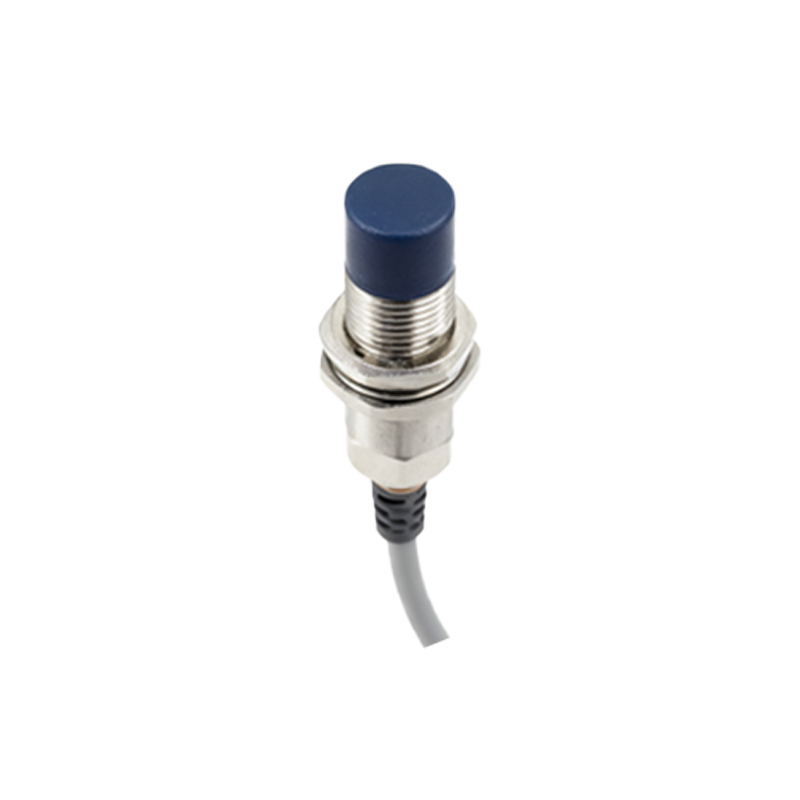
Key technical parameters must be carefully considered during selection and installation. The operating voltage range is paramount; common DC voltage levels are 10-30 VDC or 20-250 VAC/DC for universal types. The load current rating defines the maximum current the sensor can switch, which must not be exceeded to prevent damage. The voltage drop across the sensor in the "ON" state, often between 1.5 to 3 volts, reduces the voltage available to the load and must be accounted for in the system design. Furthermore, the residual current in the "OFF" state must be lower than the minimum holding current of the connected load to prevent false triggering.
Selecting the appropriate 2-wire connector involves several factors. The connector family (e.g., M8, M12) and coding (A-coded is standard for sensors and actuators) must match the sensor's housing and the mating receptacle on the cable or device. The IP (Ingress Protection) rating, such as IP67 or IP69K, indicates the level of protection against dust and water, which is vital for harsh industrial environments. Material choice, typically thermoplastics like PBT or metal for ruggedized versions, affects durability against chemicals, oils, and mechanical stress. Finally, the termination style—screw clamp, spring cage, or solder—impacts installation time and tool requirements.
The advantages of 2-wire proximity sensor connectors are numerous. Their simple two-wire connection drastically cuts down on installation time, material costs, and potential wiring errors. They are often more compact than their 3-wire counterparts. However, limitations exist. The inherent voltage drop can be problematic in low-voltage systems. The residual current can restrict their use with very sensitive PLC inputs or low-power relays. They also generally offer fewer output options (typically normally open or normally closed) compared to 3-wire versions.
In practice, these connectors are ubiquitous. They are found on conveyor systems for detecting package presence, in automated assembly lines for part positioning, on machine tools for tool detection, and in material handling equipment for pallet counting. Their robustness makes them suitable for demanding sectors like automotive manufacturing, food and beverage processing, and packaging machinery.
Proper installation is key to longevity. Ensure the power is disconnected before wiring. Strip the cable to the correct length as specified by the connector manufacturer to ensure a proper seal. Tighten screw terminals to the recommended torque. Always use a cable gland suitable for the cable diameter to maintain the IP rating. After connection, verify the sensor's operation by bringing a target into its sensing field and checking the response at the control system.
In conclusion, the 2-wire proximity sensor connector is a deceptively simple yet vital component in modern industrial control. Its design elegantly balances functionality, cost, and reliability. A deep understanding of its operating principles, specifications, and correct application practices enables engineers to design robust, efficient, and maintainable sensing systems, ensuring seamless automation and operational continuity across countless industries.