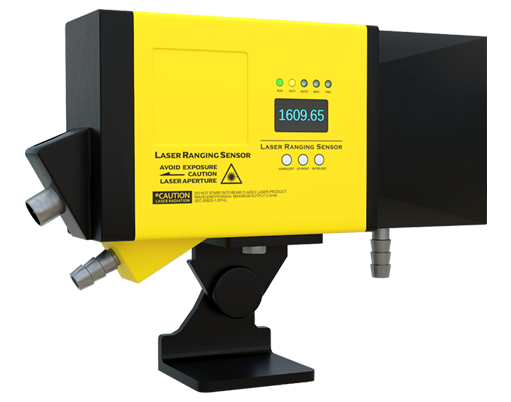
In the realm of high-precision industrial automation and metrology, the integration of laser displacement sensors with precision linear guide systems represents a significant advancement. This combination is pivotal for applications demanding micron-level accuracy in non-contact measurement and positioning. A laser displacement sensor, operating typically on the principle of triangulation or time-of-flight, emits a laser beam onto a target surface. The reflected light is captured by a receiving element, and the displacement or distance is calculated with exceptional resolution and speed. However, the sensor's inherent accuracy is only fully realized when it is mounted on a stable, precise, and repeatable motion platform. This is where precision linear guides come into play.
Linear guides, also known as linear motion guides or rails, provide the mechanical foundation for controlled, low-friction linear movement. High-quality guides utilize recirculating ball or roller bearing systems within a rigid rail and block assembly, ensuring smooth travel with minimal deviation. When a laser displacement sensor is mounted onto the carriage of such a guide, its measurement point can be accurately traversed along a defined axis. This setup is fundamental for profiling, thickness gauging, warp detection, and 3D surface scanning. The guide's straightness accuracy, rigidity, and low vibration characteristics directly influence the measurement integrity. Any wobble, pitch, or yaw in the sensor's path introduces error into the displacement reading. Therefore, selecting a guide with sub-micron straightness and high stiffness is non-negotiable for critical applications.
The synergy between sensor and guide extends to system design considerations. Dynamic performance is crucial. The guide system must allow for rapid, controlled acceleration and deceleration to match the high sampling rates of modern laser sensors, often in the tens of kilohertz. This requires guides with optimized preload and low inertia. Furthermore, environmental factors must be addressed. Many industrial settings involve contaminants like dust, oil, or coolant. Sealed linear guideways protect the bearing mechanism, ensuring long-term reliability and maintaining accuracy without frequent maintenance. For ultra-high-precision environments such as semiconductor fabrication or optical assembly, air-bearing guides are sometimes employed. These provide virtually frictionless motion with exceptional smoothness and no mechanical wear, though at a higher cost and complexity.
Integration involves more than just mechanical mounting. The motion controller driving the linear guide must be synchronized with the data acquisition from the laser sensor. This closed-loop system allows for real-time profile measurement and adaptive control. For instance, in a roll-to-roll web inspection system, a sensor on a linear guide scans across a moving film. The controller coordinates the cross-direction scan with the machine direction speed, building a complete surface map. Any detected anomaly can trigger an immediate process adjustment. Calibration is another critical step. The entire system—sensor, guide, and controller—must be calibrated against traceable standards. This often involves scanning a known artifact, like a step gauge or a flat mirror, to characterize and compensate for any systemic errors in the guide's motion path.
The choice between different linear guide technologies—such as profiled rail guides, cross roller tables, or dovetail slides—depends on the specific requirements of load capacity, accuracy, size, and cost. Profiled rail guides are the most common, offering an excellent balance of performance. For the highest accuracy in a compact footprint, cross roller guides provide superior straightness and rigidity. The mounting surface for the guide rail itself must be meticulously prepared, with adequate flatness and parallelism, to prevent inducing stress or distortion that would degrade performance.
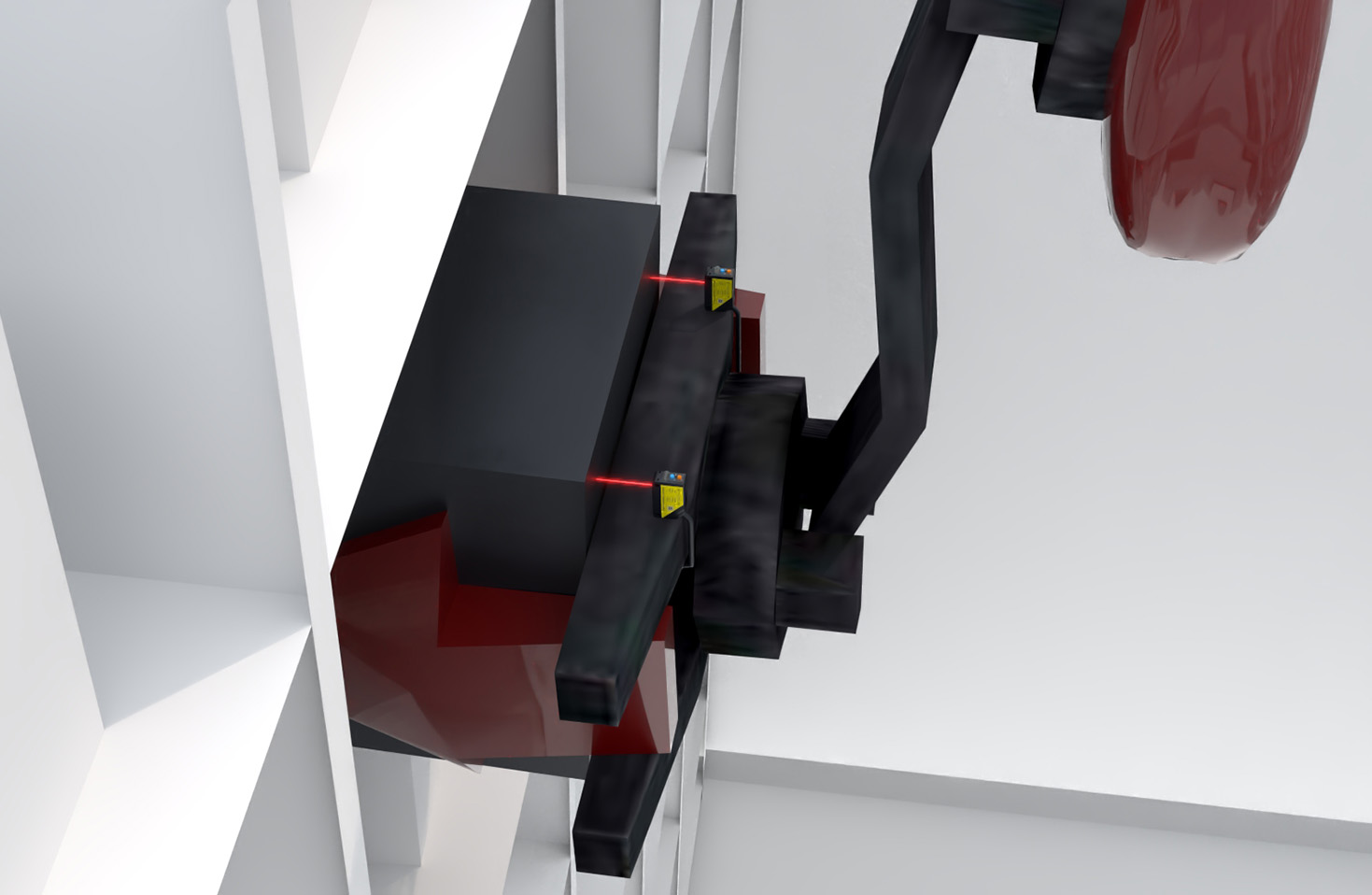
In conclusion, the marriage of laser displacement sensing technology with precision linear guidance is a cornerstone of modern automated inspection and quality control. The linear guide is not merely a positioning stage; it is an integral component of the measurement system itself. Its performance parameters of accuracy, repeatability, stiffness, and smoothness are directly baked into the measurement data. Engineers specifying such systems must therefore evaluate the sensor and guide as a unified package, ensuring both components are matched to the application's demands for speed, precision, and environmental robustness. This holistic approach guarantees that the theoretical capabilities of the laser displacement sensor are fully translated into reliable, actionable metrological data on the factory floor or in the laboratory.