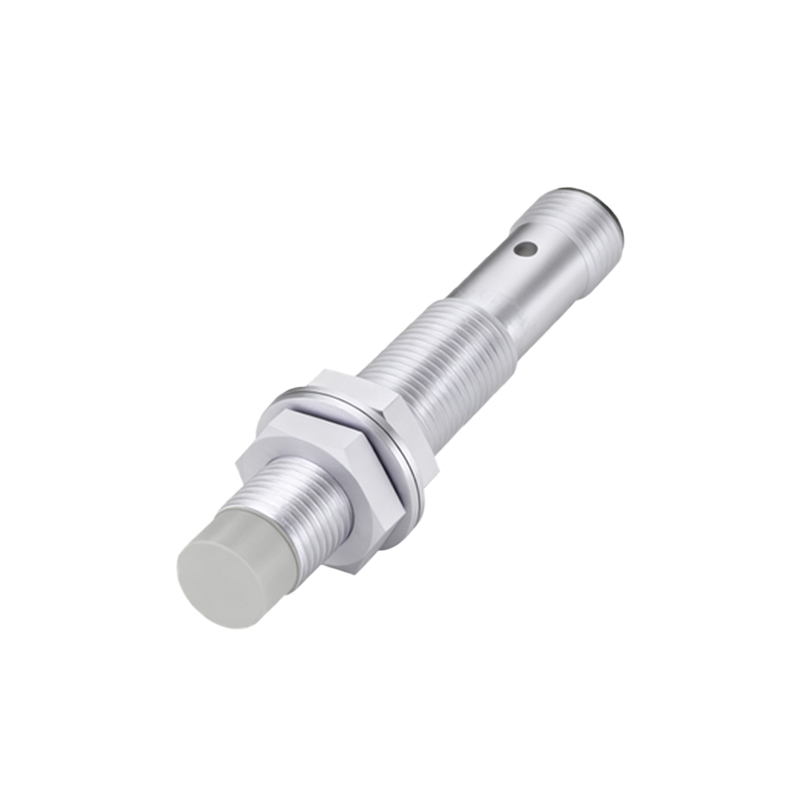
Rectangular proximity sensors, also known as rectangular inductive proximity switches, are widely used in industrial automation for non-contact detection of metallic objects. Their robust housing, typically made of plastic or metal, provides durability in harsh environments like manufacturing lines, packaging machinery, and automotive assembly. Unlike cylindrical sensors, the rectangular design allows for easier installation and integration into machinery with flat surfaces or limited space.
The core operating principle is based on electromagnetic induction. Inside the sensor, an oscillator circuit generates a high-frequency alternating magnetic field that emanates from the active face. When a metallic target (such as steel, aluminum, or copper) enters this field, eddy currents are induced on the target's surface. These eddy currents draw energy from the oscillator, causing a reduction in oscillation amplitude. A detection circuit monitors this change and triggers a solid-state output switch (typically NPN or PNP transistor) when the amplitude drops below a set threshold. This output can control relays, PLC inputs, or other devices, enabling functions like counting, positioning, or safety interlocks.
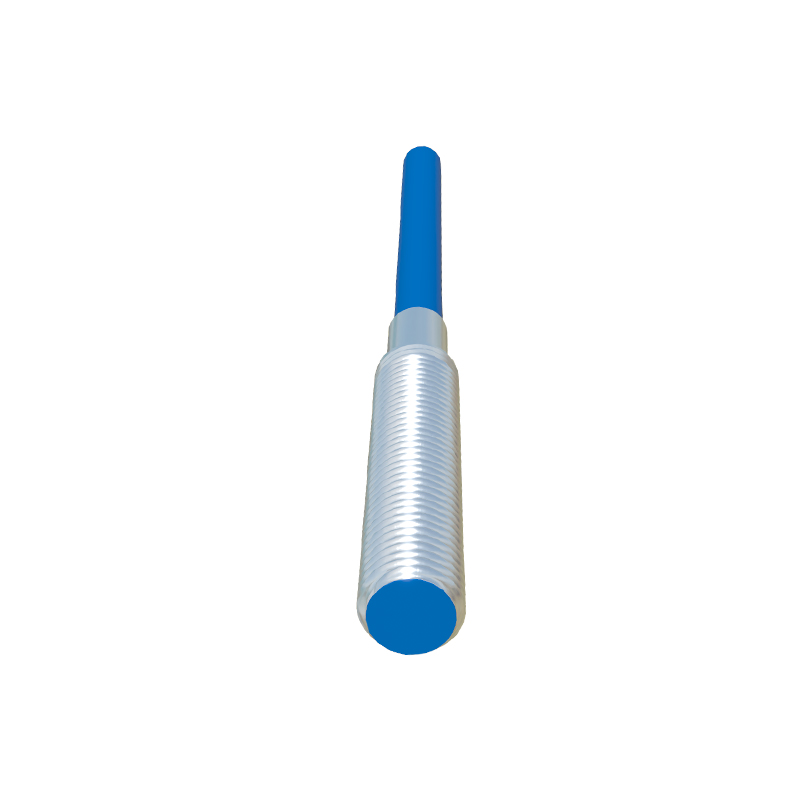
Key components include the oscillator coil, ferrite core, and evaluation electronics, all encapsulated to resist vibration, moisture, and electrical noise. Rectangular sensors often feature built-in LED indicators for status monitoring and adjustable sensing ranges, though the range is generally shorter than cylindrical models due to the coil geometry. They are available in shielded (flush-mountable) or unshielded (non-flush) versions. Shielded types allow side-by-side mounting without interference, while unshielded versions offer longer sensing distances but require clearance from adjacent metal.
Performance is influenced by factors like target material, size, and approach direction. Ferrous metals (e.g., iron) yield the longest sensing range, while non-ferrous metals (e.g., brass) reduce it. The sensor's hysteresis—a small difference between switch-on and switch-off points—prevents output chatter when the target is near the detection limit. Additionally, temperature stability is critical; modern sensors incorporate compensation circuits to maintain consistent operation from -25°C to 70°C.
Applications include detecting presence of machine parts, monitoring conveyor belt items, or ensuring robotic arm positioning. Their rectangular form factor simplifies mounting on brackets or rails, and many models offer IP67 or higher ingress protection for use in dusty or wet conditions. When selecting a sensor, consider voltage supply (commonly 10-30V DC), output type, sensing distance, and environmental ratings to ensure reliable performance. Regular maintenance involves checking for debris accumulation on the sensing face and verifying electrical connections, as contamination can alter effective range.
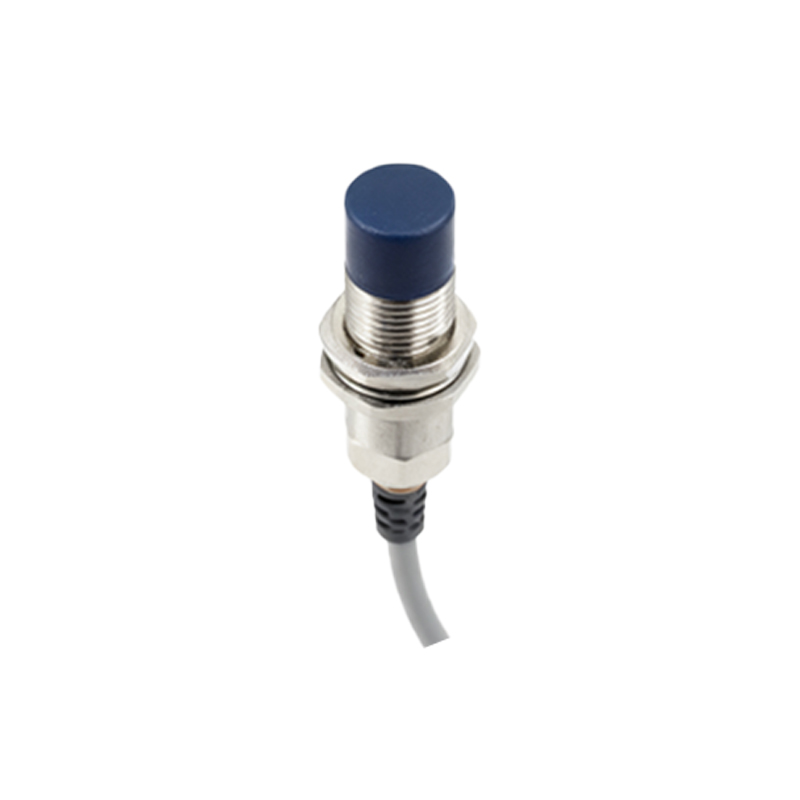
In summary, rectangular proximity sensors provide a reliable, maintenance-free solution for metallic object detection. Their electromagnetic principle ensures fast response times and high switching frequencies, making them indispensable in precision automation systems where durability and accuracy are paramount.