In the realm of industrial automation and precision measurement, CMD (Continuous Measurement and Detection) laser sensors have emerged as a cornerstone technology. These sophisticated devices utilize laser light to perform non-contact, high-accuracy measurements of distance, position, displacement, and presence. Their operation is fundamentally based on the principle of triangulation or time-of-flight (ToF), depending on the specific model and intended application.
The core working principle of a triangulation-based CMD laser sensor involves projecting a focused laser beam onto the target surface. The reflected light is then captured by a receiving lens at a specific angle and focused onto a position-sensitive detector, such as a CCD or CMOS array. Any change in the target's distance causes the reflected light spot to shift its position on the detector. The sensor's internal processor calculates this shift with extreme precision, translating it into a highly accurate distance measurement. This method is exceptionally effective for short to medium ranges, offering resolutions in the micrometer range. Conversely, ToF-based sensors measure the time it takes for a laser pulse to travel to the target and back, calculating distance based on the known speed of light. This technology is better suited for longer-range applications, though typically with slightly lower resolution than triangulation at close quarters.
The advantages of CMD laser sensors are numerous and drive their widespread adoption. Their non-contact nature eliminates mechanical wear and prevents damage to both the sensor and delicate target objects. They provide exceptionally high speed and accuracy, capable of capturing data at kHz rates, which is vital for high-speed production lines. Furthermore, they are largely immune to environmental factors like target surface color, material, or ambient light, especially models equipped with advanced background suppression and adaptive algorithms. This robustness ensures reliable performance in challenging industrial environments, including those with vibration, dust, or temperature variations.
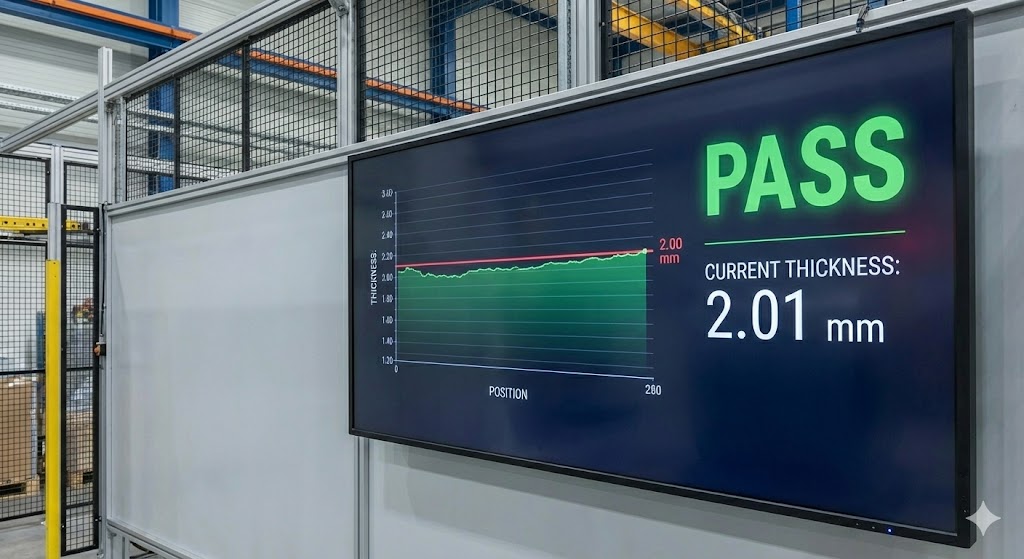
Applications for CMD laser sensors span virtually every industrial sector. In automotive manufacturing, they are used for precise gap and flush measurement between body panels, robotic guidance, and part presence verification. In electronics, they measure component height, coplanarity, and solder paste thickness. In logistics and packaging, they detect object presence on conveyors, measure box dimensions, and control fill levels. They are also indispensable in metallurgy for thickness monitoring, in woodworking for profile scanning, and in pharmaceuticals for precise tablet counting and blister pack inspection.
Selecting the appropriate CMD laser sensor requires careful consideration of several key parameters. The primary factor is the *measuring range*, which must encompass the expected variation in target distance. *Resolution* and *linearity* define the sensor's accuracy; a high-resolution sensor with good linearity ensures repeatable, trustworthy measurements. The *spot size* of the laser is critical when measuring small features or edges. *Response time* or sampling rate must be fast enough to keep pace with the production process. Environmental specifications such as *ingress protection (IP) rating* for dust and water resistance, operating temperature range, and resistance to electrical noise are crucial for long-term reliability. Finally, the output interface—analog (4-20mA, 0-10V), digital (RS-232, RS-485, USB), or industrial network protocols (EtherNet/IP, PROFINET, EtherCAT)—must be compatible with the existing control system.
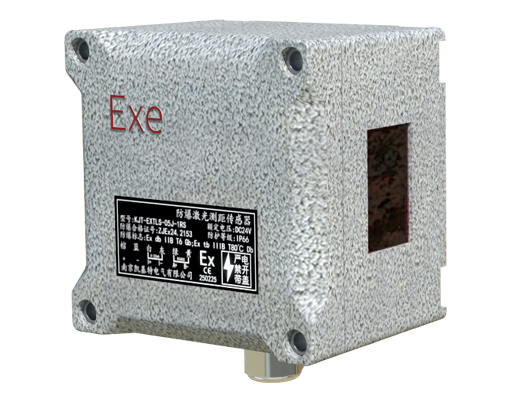
Integration and calibration are vital steps for optimal performance. Proper mounting ensures stability and minimizes the impact of vibration. The sensor must be aligned correctly to the target surface. Many modern CMD sensors feature intuitive teach-in functions, allowing users to easily set measurement windows, thresholds, and output scaling via built-in buttons or software. Regular maintenance primarily involves keeping the front lens clean from obstructions like dust, oil, or debris, which can scatter or attenuate the laser beam.

Looking ahead, the evolution of CMD laser sensor technology continues. Trends include miniaturization of sensor heads, integration of smarter onboard diagnostics and IO-Link communication for predictive maintenance, enhanced connectivity for Industry 4.0 data ecosystems, and the development of multi-point or profile sensors that capture an entire line or array of measurements simultaneously. These advancements promise to further solidify the role of CMD laser sensors as indispensable tools for enhancing quality control, optimizing processes, and enabling the flexible, data-driven factories of the future. Their combination of precision, speed, and robustness makes them not just a measurement tool, but a key enabler of automation excellence.