In the rapidly evolving landscape of industrial automation, the demand for precision, reliability, and adaptability has never been higher. Standard off-the-shelf sensors often fall short when faced with unique environmental challenges, specific measurement ranges, or integration requirements with legacy systems. This is where the customization of laser proximity sensors becomes not just an option, but a critical engineering imperative. Custom laser proximity sensors are engineered solutions designed to meet exact application parameters, offering unparalleled performance where generic models cannot suffice.
The core technology behind these sensors is based on laser triangulation or time-of-flight (ToF) principles. A standard laser sensor emits a focused beam towards a target; the reflected light is captured by a receiver, and the distance is calculated. While this principle is consistent, the magic of customization lies in tailoring every component and parameter. This begins with a thorough application analysis. Engineers must consider the target material's properties—its color, reflectivity, surface texture, and even transparency. A highly reflective metallic surface, for instance, can saturate a standard receiver, while a dark, matte surface may absorb too much light. A custom solution can involve adjusting the laser's wavelength, power output, or employing specialized optical filters and receiver sensitivity settings to ensure a stable and accurate signal regardless of the target.
Environmental factors present another major driver for customization. Industrial settings are notoriously harsh. Extreme temperatures, pervasive dust, oil mist, heavy vibration, or exposure to corrosive chemicals can cripple standard sensor electronics. A custom-designed housing with an appropriate Ingress Protection (IP) rating, such as IP67 or IP69K, is fundamental. Beyond sealing, internal components may be selected or treated for thermal stability. For high-vibration environments, such as on robotic arms or heavy machinery, mechanical design focuses on robust mounting solutions and shock absorption to maintain optical alignment and prevent failure.
The required measurement range and resolution are perhaps the most direct specifications for customization. While standard sensors might offer ranges of a few centimeters to several meters, a custom project might need a very short, high-precision range for micron-level positioning or an extended range for monitoring large storage bins. The optical design is adjusted accordingly—lens selection, beam divergence, and receiver field of view are meticulously calculated. The output signal is another key area. Instead of a simple digital switch, applications may require analog outputs (4-20 mA, 0-10 V), specific fieldbus protocols (PROFIBUS, EtherCAT, IO-Link), or even direct digital communication for integration into a PLC or industrial PC. Custom firmware can be developed to include advanced features like background suppression, multi-point teaching, or data logging.
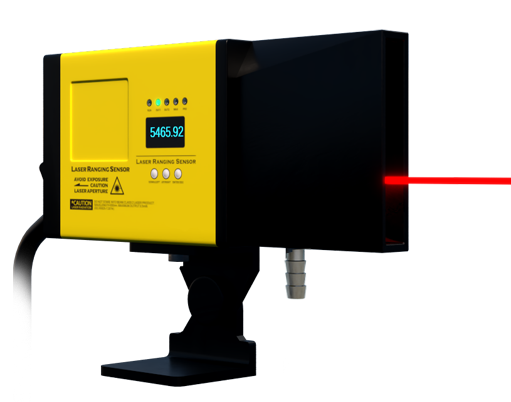
Integration into existing machinery often demands mechanical customization. The sensor housing may need a specific form factor, mounting thread (e.g., M8, M12, M18), or cable exit orientation to fit into cramped spaces. Connector types are chosen based on the plant's standard to simplify maintenance. In some cases, the sensor is not a standalone unit but part of a larger embedded system, requiring a board-level or modular design without a traditional enclosure.
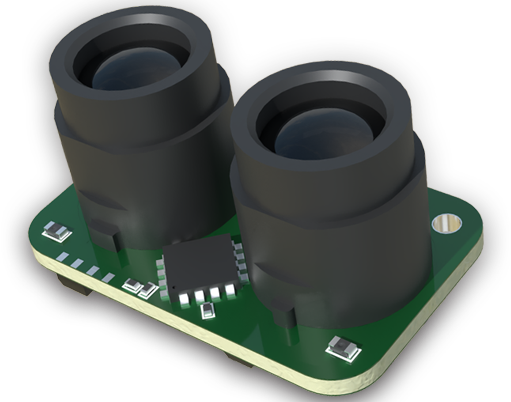
The process of developing a custom laser proximity sensor is inherently collaborative. It starts with a detailed dialogue between the sensor manufacturer's engineering team and the client's technical staff. Prototyping and rigorous testing in simulated or real-world conditions follow. This phase validates performance under stress and ensures the design meets all safety and regulatory standards, such as IEC 60825-1 for laser safety. While the lead time and initial investment for a custom sensor are higher than purchasing a catalog item, the long-term benefits are substantial. These include reduced downtime due to sensor failure, improved product quality through consistent measurement, lower rejection rates, and optimized process efficiency. Ultimately, a custom laser proximity sensor is a strategic tool, transforming a potential automation bottleneck into a reliable, high-performance asset tailored for a specific mission within the industrial ecosystem.