In the realm of industrial automation, robotics, and high-precision measurement, the laser distance sensor stands as a cornerstone technology. Its ability to deliver non-contact, rapid, and exceptionally accurate distance measurements has revolutionized processes across countless sectors. At the heart of its utility lies a singular, critical attribute: precision. This article delves into the engineering principles, key factors influencing accuracy, and the sophisticated applications that demand the highest levels of laser sensor precision.
The fundamental operating principle of most industrial laser distance sensors is based on either time-of-flight (ToF) or phase-shift measurement. In the ToF method, a laser diode emits a short pulse of light towards a target. The sensor's receiver detects the reflected pulse, and an internal processor calculates the distance based on the known speed of light and the measured time delay. This method is excellent for longer ranges, from several meters to hundreds of meters. The phase-shift method, often used for shorter, high-precision applications, involves emitting a continuously modulated laser beam. The distance is determined by measuring the phase difference between the emitted and reflected modulated signal. This technique can achieve sub-millimeter and even micrometer-level precision under controlled conditions.
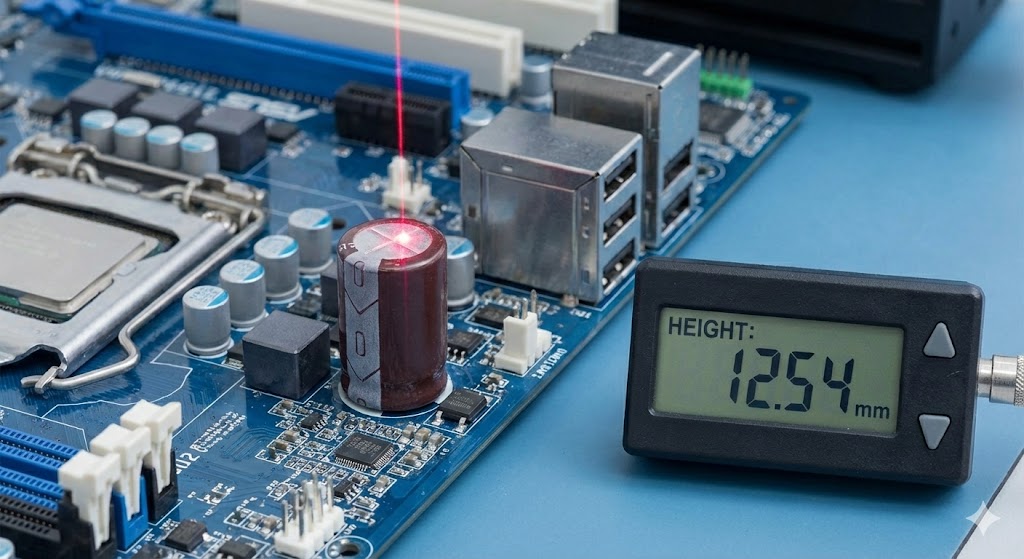
Achieving and maintaining high precision is not a matter of a single component but a symphony of engineered elements. Several critical factors dictate the final accuracy of a measurement. First is the laser source itself. The wavelength, beam quality (collimation and spot size), and stability of the output power are paramount. A stable, well-collimated beam ensures consistent reflection and minimizes measurement noise. Second, the quality of the optical system, including lenses and filters, is crucial for focusing the outgoing beam and collecting the maximum amount of reflected light while rejecting ambient optical noise.

The photodetector and signal processing electronics represent the brain of the sensor. High-speed, low-noise detectors are essential for capturing the faint return signal. Advanced digital signal processing (DSP) algorithms then work to filter out environmental interference, compensate for temperature variations, and extract the precise timing or phase information from the signal. Environmental factors pose the greatest challenge to precision. Variations in air temperature, pressure, and humidity can slightly alter the speed of light, requiring sophisticated compensation algorithms in high-end sensors. The target's surface properties—its color, reflectivity, texture, and angle—dramatically affect the amount and quality of reflected light. A matte white surface provides an ideal diffuse reflection, while a shiny, dark, or transparent surface can scatter or absorb the beam, reducing signal strength and potentially introducing error. Modern sensors often incorporate automatic gain control and advanced algorithms to partially compensate for these material differences.
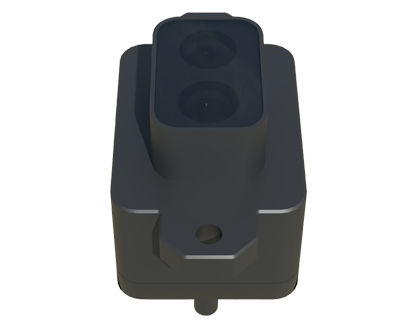
The pursuit of precision has enabled groundbreaking applications. In automated manufacturing, laser sensors perform micron-accurate inspections of component dimensions, verify part presence and orientation, and control robotic arms for precise pick-and-place operations. In the burgeoning field of autonomous vehicles and drones, LiDAR (Light Detection and Ranging) systems, which are essentially arrays of sophisticated laser distance sensors, create real-time, high-resolution 3D maps of the environment with centimeter-level accuracy. In construction and civil engineering, laser distance meters and scanners ensure leveling, alignment, and volumetric calculations with speed and reliability far surpassing traditional methods. Even in logistics, sensors precisely measure package dimensions for automated sorting and warehouse management.
Looking forward, the trajectory of laser distance sensor technology points toward even greater precision, miniaturization, and intelligence. The integration of artificial intelligence and machine learning for adaptive target recognition and error correction is on the horizon. Developments in single-photon avalanche diode (SPAD) arrays and silicon photomultipliers (SiPMs) promise higher sensitivity for longer ranges and lower power consumption. Furthermore, the fusion of laser distance data with other sensor modalities, like vision cameras and inertial measurement units (IMUs), is creating robust perception systems where the precision of laser measurement complements the contextual understanding of other sensors.
In conclusion, the precision of a laser distance sensor is a testament to meticulous optical, electronic, and software engineering. It is a dynamic specification, deeply influenced by both the sensor's intrinsic design and the external application environment. For engineers and system integrators, understanding these nuances is key to selecting the right sensor and deploying it effectively. As industries continue to push the boundaries of automation and data-driven decision-making, the demand for ever-more-precise, reliable, and intelligent laser measurement solutions will only intensify, solidifying their role as indispensable tools in the modern technological landscape.