In the realm of industrial automation and precision engineering, high-precision proximity sensors stand as critical components for enabling non-contact detection, measurement, and control. These sensors are designed to detect the presence or absence of an object within a specified range with exceptional accuracy, repeatability, and reliability, without any physical contact. The underlying principles vary based on the technology employed, each catering to specific application demands and environmental conditions.
The most prevalent technologies include inductive, capacitive, and magnetic (Hall-effect or magnetostrictive) proximity sensors. Inductive proximity sensors operate on the principle of electromagnetic induction. The sensor generates an oscillating electromagnetic field via a coil and ferrite core arrangement. When a metallic target enters this field, eddy currents are induced on the target's surface. These eddy currents draw energy from the oscillator, causing a change in the oscillation amplitude. This amplitude shift is detected by a threshold circuit, which subsequently triggers a switching output. The key to high precision in inductive sensors lies in the stability of the oscillator, the quality of the coil design, and advanced signal processing that compensates for temperature drift and electromagnetic interference. They are predominantly used for detecting ferrous and non-ferrous metals, with sensing ranges typically up to several tens of millimeters.
Capacitive proximity sensors, on the other hand, function by detecting changes in capacitance. The sensor forms one plate of a capacitor, with the target object (or the background) acting as the other plate. An oscillator circuit is connected to this capacitive system. As a target object approaches the active face of the sensor, the dielectric constant of the space between them changes, altering the capacitance. This change affects the oscillator's amplitude or frequency. A subsequent evaluation circuit processes this change to produce an output signal. High-precision capacitive sensors excel at detecting a wide variety of materials, including metals, plastics, liquids, and granular substances. Their precision is enhanced through shielding designs that minimize stray capacitance, sophisticated algorithms to differentiate between the target and background, and compensation for humidity and contamination.
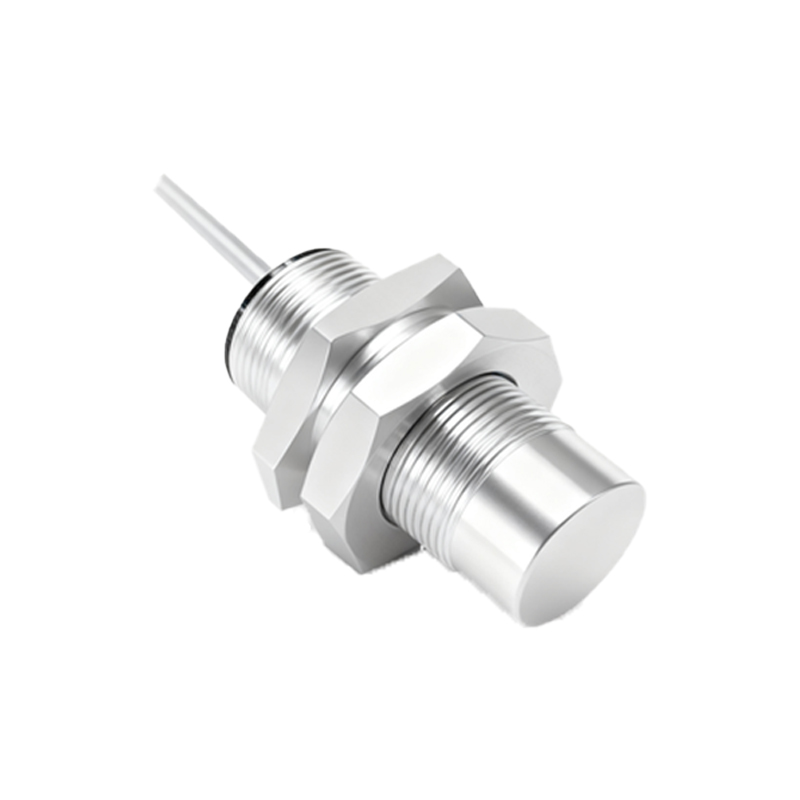
Magnetic proximity sensors, particularly those using the Hall-effect principle, detect magnetic fields. A Hall-effect sensor contains a thin semiconductor material. When a magnetic field is applied perpendicular to the current flowing through this material, it generates a voltage difference (the Hall voltage) across the material, proportional to the magnetic field strength. In a proximity sensor application, a permanent magnet is typically mounted on the moving target. As the magnet approaches the sensor, the changing magnetic field generates a corresponding Hall voltage, which is amplified and processed to provide a switching or analog output. High precision is achieved through the use of linear Hall-effect chips with integrated signal conditioning, temperature compensation circuits, and robust packaging that protects against mechanical stress and external magnetic fields. These sensors are ideal for harsh environments and applications involving permanent magnets.
Beyond the core sensing principle, achieving high precision involves several critical engineering considerations. Repeatability—the sensor's ability to consistently trigger at the same point under identical conditions—is paramount. This is influenced by the stability of the internal electronics, the quality of the oscillator, and the consistency of the target material's properties. Hysteresis is intentionally incorporated into the sensor's switching characteristic to prevent output chatter when the target is near the detection threshold. In high-precision models, this hysteresis is precisely controlled and minimized where necessary for fine positioning tasks.
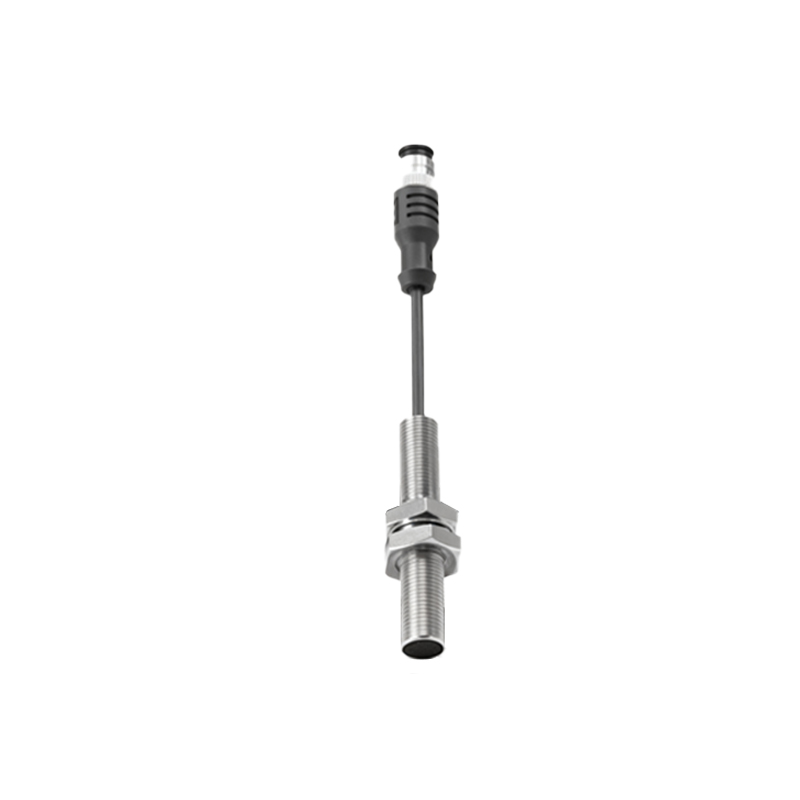
Temperature stability is another crucial factor. All electronic components exhibit parametric shifts with temperature changes. High-precision sensors incorporate temperature compensation networks, often using negative temperature coefficient (NTC) resistors or digital compensation algorithms within microcontrollers, to nullify these effects across the specified operating temperature range.
Output characteristics also define precision. While standard sensors offer digital (ON/OFF) outputs, high-precision variants frequently provide analog outputs (e.g., 4-20 mA, 0-10 V) or IO-Link digital communication. Analog outputs provide a continuous signal proportional to the distance to the target, enabling precise position monitoring. IO-Link adds a layer of digital intelligence, allowing for parameterization, real-time diagnostics, and the transmission of detailed process data, which enhances system accuracy and predictive maintenance capabilities.
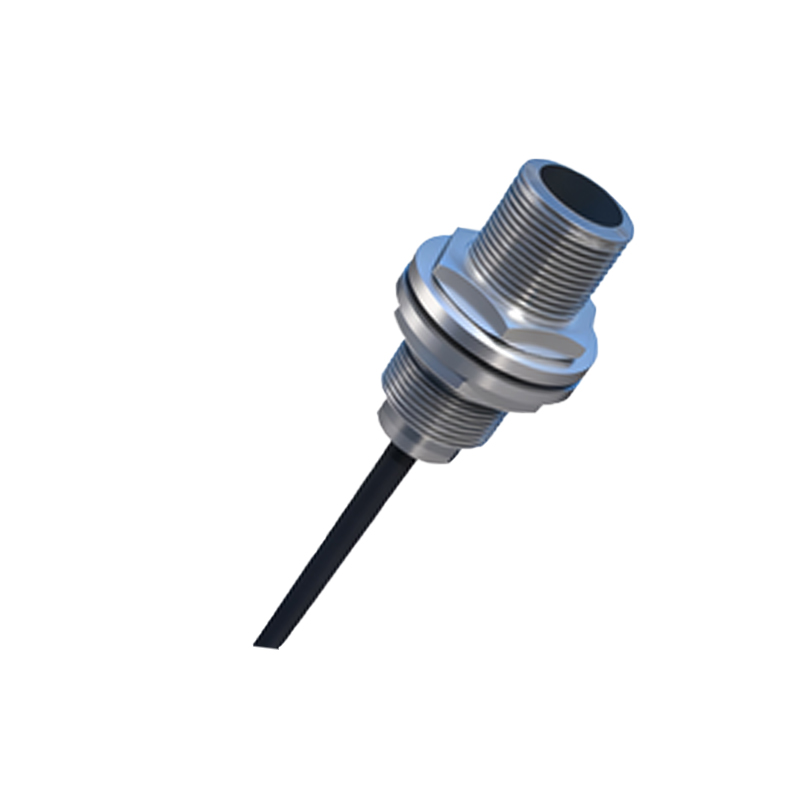
Environmental robustness is non-negotiable in industrial settings. High-precision sensors are housed in rugged enclosures (often stainless steel or PBT plastic) with high Ingress Protection (IP) ratings. They are designed to withstand vibration, shock, and exposure to oils, coolants, and washdown procedures without degradation in performance.
Applications for these sensors are vast and demanding. They are indispensable in automated assembly lines for part presence verification and robotic guidance, in CNC machining centers for tool wear monitoring and workpiece positioning, in semiconductor manufacturing for wafer handling, and in packaging machinery for fill level control. The relentless pursuit of higher precision, faster response times, and greater