In the rapidly evolving landscape of industrial safety and environmental monitoring, laser methane sensors have emerged as a critical technology for detecting methane leaks with unparalleled precision and reliability. Among the global leaders in this field, South Korea has distinguished itself through significant technological innovation and manufacturing excellence. Korean laser methane sensors represent a convergence of advanced photonics, robust engineering, and smart digital integration, setting new benchmarks for performance in sectors such as oil and gas, utilities, wastewater management, and smart city infrastructure.
The core technology underpinning these sensors is Tunable Diode Laser Absorption Spectroscopy (TDLAS). This method involves directing a precisely tuned laser beam through a target area. Methane molecules absorb specific wavelengths of this infrared light. By measuring the attenuation of the laser signal, the sensor can calculate the concentration of methane gas with extreme accuracy. Korean manufacturers have refined this principle, developing lasers with exceptional stability and spectral purity. This minimizes cross-sensitivity to other gases like water vapor or carbon dioxide, a common challenge in harsh industrial environments, thereby ensuring false alarms are drastically reduced.

Key advantages of South Korean laser methane sensors include their exceptional sensitivity and range. Capable of detecting methane concentrations from parts-per-million (ppm) to lower explosive limit (LEL) percentages, these devices provide early warning of minor leaks long before they escalate into hazardous situations. Their non-contact, open-path measurement capability is another standout feature. Unlike traditional point sensors that require physical contact with the gas, these lasers can scan over distances of tens to hundreds of meters. This allows for the monitoring of vast perimeters, pipelines, or hard-to-reach areas from a single, strategically placed unit, significantly reducing installation points and maintenance costs.
Durability and adaptability are engineered into every component. Housed in rugged, often explosion-proof enclosures, these sensors are built to withstand extreme temperatures, high humidity, corrosive atmospheres, and substantial vibration. Korean engineering emphasizes long-term operational stability, which is paramount for continuous monitoring applications in remote or unmanned facilities. Furthermore, integration with the Industrial Internet of Things (IIoT) is a standard offering. Modern sensors come equipped with digital communication protocols like Modbus, 4-20mA outputs, and wireless connectivity (LoRaWAN, cellular), enabling seamless data transmission to central control rooms or cloud-based platforms for real-time analytics and predictive maintenance.
The application spectrum is vast. In the natural gas sector, these sensors are deployed along transmission and distribution networks, at compressor stations, and within LNG terminals to ensure pipeline integrity and prevent fugitive emissions. Municipal utilities use them to monitor underground sewer systems and landfill sites for biogas accumulation. In the burgeoning hydrogen economy, where methane is often a process byproduct, precise detection is crucial for safety. Additionally, they play a vital role in environmental compliance, helping companies monitor and report greenhouse gas emissions accurately.
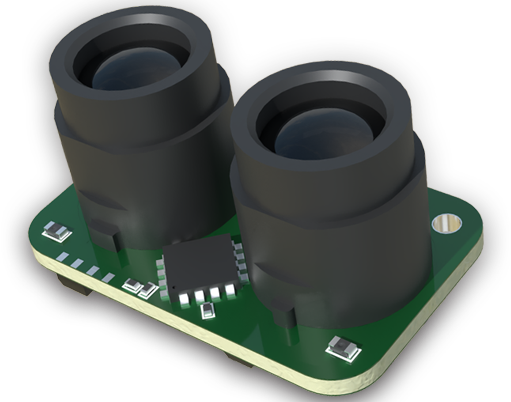
South Korea's leadership is not merely in hardware but in holistic system solutions. Companies often provide comprehensive packages including the sensor, sophisticated data management software, and expert calibration services. This end-to-end approach ensures that clients receive not just a device, but a reliable, actionable safety system. Continuous R&D investments focus on making sensors smaller, more energy-efficient, and even more intelligent with embedded analytics for autonomous leak pinpointing.
In conclusion, South Korean laser methane sensors embody a blend of cutting-edge optical science and practical, rugged design. They offer a proactive solution to methane detection, transforming safety protocols from reactive to predictive. For industries worldwide where gas safety is non-negotiable, adopting these advanced sensors means investing in superior protection for assets, personnel, and the environment, while also enhancing operational efficiency and regulatory compliance. Their proven performance and innovative features solidify South Korea's position at the forefront of the global gas detection technology market.