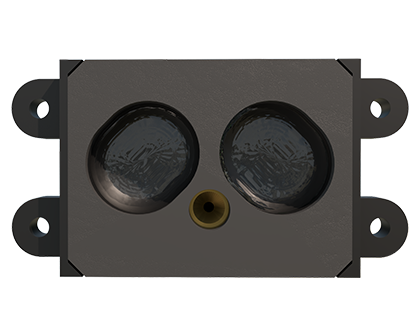
In the realm of industrial automation and precision measurement, laser axis sensors have emerged as indispensable tools for ensuring accuracy, quality, and efficiency. These sophisticated devices, leveraging the fundamental properties of coherent light, provide non-contact, high-resolution detection and measurement of object position, alignment, and displacement along a specific axis. Their integration into manufacturing lines, robotics, and quality control systems has revolutionized processes that demand micron-level precision.
At its core, a laser axis sensor operates by projecting a focused laser beam onto a target surface. The reflected or diffused light is then captured by a high-speed, position-sensitive detector within the sensor. By analyzing the position of the light spot on this detector, the sensor can calculate the precise distance or displacement of the target relative to a reference point. This principle, often based on triangulation or time-of-flight methods, allows for real-time, dynamic measurement without physical contact, eliminating wear and tear and enabling inspection of delicate or hot surfaces.
The applications for laser axis sensors are vast and span numerous industries. In automotive manufacturing, they are crucial for verifying the precise alignment of chassis components, engine parts, and during robotic welding processes. In electronics assembly, these sensors ensure the correct placement of microchips on circuit boards and measure the flatness of semiconductor wafers. The packaging industry relies on them to control web tension, detect edge positions of materials like film and foil, and verify fill levels in containers. Furthermore, in robotics, laser axis sensors provide essential feedback for precise end-effector positioning and path correction, enhancing the robot's ability to perform complex tasks like bin picking or assembly.
When selecting a laser axis sensor for a specific application, several critical parameters must be considered. First is the measurement range, which defines the minimum and maximum distances over which the sensor can operate accurately. Resolution, often in the micrometer or sub-micrometer range, indicates the smallest detectable change in position. Repeatability specifies the sensor's ability to consistently return the same measurement for a static target under unchanged conditions. The response time or sampling rate is vital for high-speed production lines, determining how quickly the sensor can update its measurement output. Environmental factors such as ambient light, temperature fluctuations, dust, and vibrations also play a significant role; therefore, selecting a sensor with appropriate ingress protection (IP) ratings and robust housing is essential for harsh industrial environments.
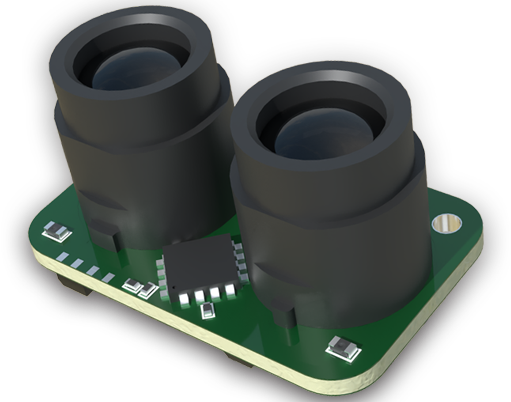
Modern laser axis sensors offer advanced features that enhance their functionality. Analog outputs (e.g., 0-10V, 4-20mA) and digital interfaces (e.g., IO-Link, Ethernet/IP, PROFINET) facilitate seamless integration into Programmable Logic Controller (PLC) networks. Some models incorporate built-in controllers with programmable logic, allowing for standalone decision-making, such as triggering a reject mechanism when a measurement falls outside preset tolerances. The development of red laser diodes and, more recently, blue laser diodes has improved performance on challenging surfaces, with blue lasers offering better visibility and less scattering on shiny or transparent materials.
Installation and calibration are paramount for optimal performance. Proper mounting ensures mechanical stability and minimizes the impact of external vibrations. Alignment of the laser beam perpendicular to the target surface within the sensor's specified field of view is critical. Regular maintenance, primarily keeping the lens clean from dust and oil mist, preserves accuracy. Users must also be aware of safety classifications; most industrial laser sensors are Class 2 or Class 1M, considered safe under normal operating conditions but requiring that the beam not be viewed directly with optical instruments.
In conclusion, laser axis sensors represent a pinnacle of precision measurement technology. Their ability to deliver fast, accurate, and reliable non-contact data makes them a cornerstone of modern industrial automation. As manufacturing trends continue toward greater flexibility, miniaturization, and data-driven optimization—embodied by Industry 4.0 and smart factory concepts—the role of these sensors will only expand. Understanding their operating principles, key specifications, and application requirements is essential for engineers and technicians to harness their full potential, driving improvements in product quality, production throughput, and operational cost-efficiency across countless sectors.