The evolution of laser sensor technology in China represents a cornerstone of the nation's rapid industrial modernization and technological ascendancy. As a senior electrical engineer observing this sector, the trajectory from foundational research to sophisticated, market-ready solutions has been both remarkable and indicative of a broader strategic focus on precision manufacturing, automation, and smart infrastructure. This article delves into the core technological principles, recent advancements, and expansive applications defining China's laser sensor ecosystem.
Fundamentally, laser sensors operate by emitting a focused beam of light—typically from laser diodes—and analyzing the reflected signal. Key measurement principles include time-of-flight (ToF) for distance, triangulation for displacement, and laser Doppler vibrometry for velocity. Chinese R&D institutions and manufacturers have made significant strides in refining these core technologies, particularly in enhancing signal-to-noise ratios, improving resolution down to sub-micron levels, and increasing measurement speeds to meet the demands of high-throughput production lines. The miniaturization of components, driven by advances in photonics and semiconductor fabrication within China, has led to more compact, robust, and energy-efficient sensor designs.
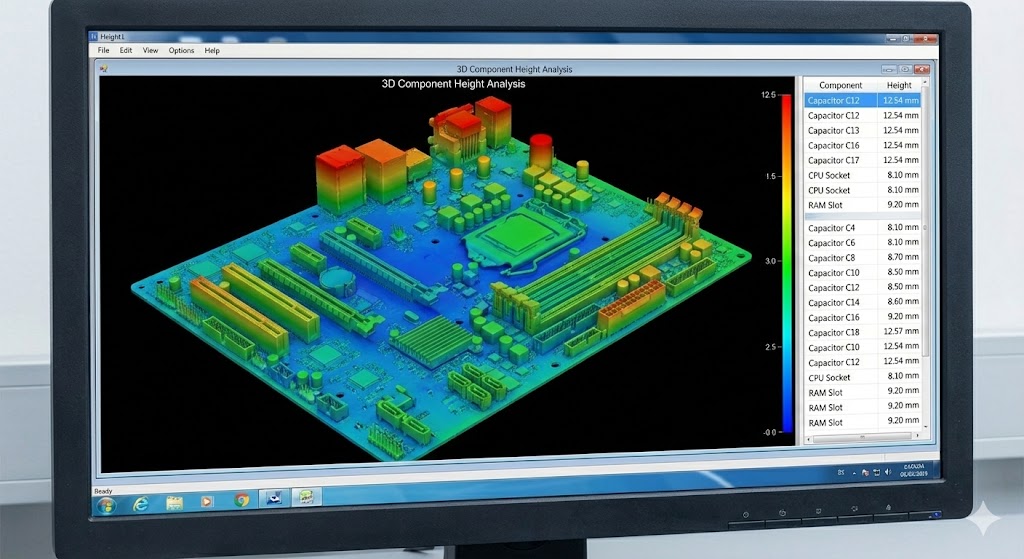
A pivotal area of advancement is in the integration of laser sensing with complementary technologies. The fusion of high-precision laser measurement data with artificial intelligence (AI) and machine learning algorithms is creating a new generation of "smart sensors." These systems, increasingly developed by Chinese tech firms, are capable of not just capturing dimensional data but also performing real-time defect classification, predictive maintenance analytics, and adaptive process control. For instance, in battery manufacturing for electric vehicles, laser sensors combined with AI vision systems meticulously inspect electrode coatings for uniformity, a critical factor in battery safety and performance.
Furthermore, the development of novel laser sources, including fiber lasers and VCSELs (Vertical-Cavity Surface-Emitting Lasers), has expanded the operational envelope. Chinese production of high-quality, cost-effective fiber lasers has empowered sensor manufacturers to offer systems with greater range, stability, and resistance to environmental interference like ambient light or dust—a common challenge in industrial settings.
The application landscape for these advanced laser sensors is vast and deeply integrated into China's industrial pillars. In automated manufacturing and robotics, they are indispensable for precise guidance, positioning, and quality inspection. Laser profile sensors perform 100% inline inspection of machined parts, welds, and assemblies in automotive and aerospace plants, ensuring adherence to stringent tolerances. In the burgeoning field of autonomous vehicles and advanced driver-assistance systems (ADAS), solid-state LiDAR (Light Detection and Ranging), a sophisticated form of laser sensing, is a key enabling technology for environmental perception. Several Chinese companies are at the forefront of developing cost-effective, mass-producible LiDAR solutions.
Beyond manufacturing, applications proliferate in infrastructure monitoring, where distributed laser sensing systems detect subtle deformations in bridges, dams, and pipelines, and in logistics, where laser scanners enable rapid parcel dimensioning and automated sorting in massive distribution hubs. The technology also plays a critical role in renewable energy, optimizing the alignment of solar panels and inspecting wind turbine blades.
The growth of this sector is underpinned by substantial domestic investment in R&D, supportive government policies outlined in initiatives like "Made in China 2025," and a vibrant ecosystem of universities, research institutes, and private enterprises. This synergy has accelerated the transition from technology adoption to genuine innovation. However, challenges persist, including the need for continued advancement in core components like high-speed detectors and specialized chips to reduce dependency on imports, and the ongoing pursuit of even higher reliability for mission-critical applications.
In conclusion, laser sensor technology in China has matured from a specialized tool to a ubiquitous enabler of intelligence and precision across industries. The focus has shifted from mere hardware production to providing integrated measurement solutions that generate actionable data. As the Internet of Things (IoT) and Industry 4.0 paradigms deepen, the demand for accurate, reliable, and connected laser sensing will only intensify. China's engineering and manufacturing community is poised not only to meet this global demand but also to drive the next wave of innovations that will further redefine the capabilities and applications of laser-based measurement.