In the realm of industrial automation and electronic control, proximity sensors are indispensable components for detecting the presence or absence of objects without physical contact. Among the various technologies employed, the Hall Effect proximity sensor stands out for its reliability, durability, and precision. This article delves into the fundamental principles, operational characteristics, key applications, and practical considerations for selecting and implementing Hall Effect proximity sensors.
The core principle behind a Hall Effect sensor is the Hall Effect, discovered by Edwin Hall in 1879. When a current-carrying conductor or semiconductor is placed in a perpendicular magnetic field, a voltage difference, known as the Hall voltage, is generated across the material. This voltage is proportional to the strength of the magnetic field. A Hall Effect proximity sensor utilizes this phenomenon. It typically consists of a Hall element (often made from a semiconductor material like gallium arsenide or indium antimonide), a permanent magnet or an electromagnet, and associated signal conditioning circuitry. When a ferromagnetic or magnetic target object approaches the sensor, it disturbs the magnetic field, causing a change in the Hall voltage. The integrated electronics then process this change to produce a clean, digital output signal (e.g., ON/OFF) or an analog signal proportional to the distance, indicating the object's presence or position.
One of the primary advantages of Hall Effect sensors is their contactless operation. Since there is no mechanical contact with the target, they are immune to wear and tear, ensuring a long operational life even in demanding environments. They are capable of high-speed switching, often reaching frequencies in the kilohertz range, making them suitable for applications involving rapid motion detection, such as counting revolutions or measuring speed in rotating machinery. Furthermore, these sensors are highly resistant to environmental contaminants like dust, oil, and moisture, especially when housed in robust, sealed packages. They are also largely unaffected by non-magnetic materials, providing excellent noise immunity in electrically noisy industrial settings.
Hall Effect proximity sensors find widespread use across numerous industries. In the automotive sector, they are crucial for anti-lock braking systems (ABS), where they detect wheel speed by sensing the teeth of a tone ring. They are also used for gear position sensing, throttle position sensing, and seat belt detection. In industrial automation, they serve as limit switches on linear actuators, detect the position of cylinders in pneumatic or hydraulic systems, and are integral to conveyor belt systems for object counting and positioning. Consumer electronics, such as laptops and smartphones, employ miniature Hall Effect sensors to detect the opening and closing of lids or flip covers. Additionally, they are used in brushless DC motors to sense rotor position for precise commutation.
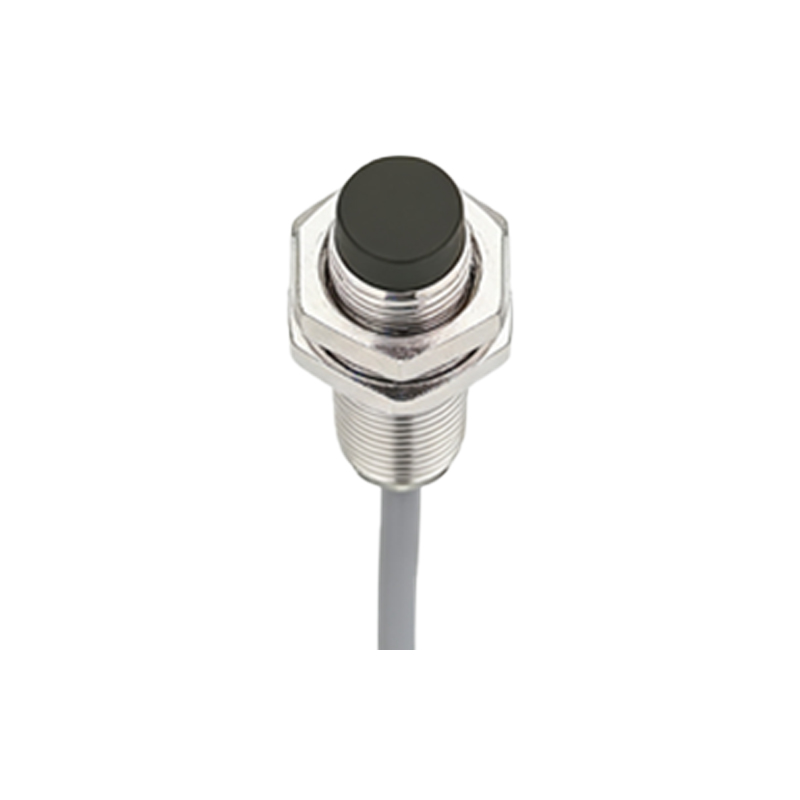
When selecting a Hall Effect proximity sensor for a specific application, several key parameters must be evaluated. The sensing distance, or operating point, is critical and depends on the strength of the magnet and the sensor's sensitivity. The type of output required—digital (e.g., NPN, PNP, or push-pull) or analog (voltage or current)—must match the control system's input. The supply voltage range (commonly 5V DC, 12V DC, or 24V DC) and current consumption are also important for system compatibility. Environmental ratings, such as Ingress Protection (IP) codes for dust and water resistance, and operating temperature range, are vital for ensuring reliability in harsh conditions. The response time and switching frequency must be adequate for the application's speed requirements. Finally, the physical form factor, including housing material (e.g., stainless steel, plastic) and mounting style (e.g., threaded barrel, rectangular), must suit the mechanical installation constraints.
Installation and wiring are straightforward but require attention to detail. The sensor must be positioned correctly relative to the target's path of movement. For optimal performance, especially with digital sensors, a small hysteresis is often designed in to prevent output chatter when the target is at the exact switching point. Proper shielding and grounding of cables are recommended in environments with strong electromagnetic interference.
In conclusion, Hall Effect proximity sensors are versatile, robust, and precise devices that play a critical role in modern sensing technology. Their ability to operate contactlessly in tough conditions, provide fast and accurate responses, and interface seamlessly with electronic control systems makes them a preferred choice for engineers designing automated systems. A thorough understanding of their operating principles and careful consideration of application requirements are essential for successful implementation and achieving desired performance outcomes.