Capacitive proximity sensors are versatile and reliable devices used across numerous industries for non-contact detection of objects. Unlike their inductive counterparts which only sense metals, capacitive sensors can detect a wide range of materials, including liquids, plastics, glass, wood, and granular substances. This capability makes them indispensable in modern automation and process control.
The fundamental operating principle is based on changes in capacitance. A capacitive sensor essentially functions as an open capacitor. Its active face consists of two metallic electrodes arranged concentrically, separated by an insulating material, forming an electrostatic field. When no target is present, the oscillator circuit within the sensor is inactive. As a target object enters the sensing field, it alters the dielectric properties of the space between the electrodes. The object acts as a dielectric, increasing the capacitance of the system. Once this capacitance reaches a specific threshold, the oscillator begins to oscillate, triggering a change in the output state of the sensor (e.g., switching from OFF to ON). The point at which this occurs is the nominal sensing distance, typically specified for a standard target like mild steel or water.
Several key factors influence the performance and sensing range of a capacitive sensor. The most critical is the dielectric constant (εr) of the target material. Materials with a high dielectric constant, such as water (εr ≈ 80), are detected at longer ranges than materials with a low constant, like plastics (εr ≈ 2-5). The size of the target also matters; a larger surface area facing the sensor generally increases the effective sensing distance. Environmental conditions like humidity, dust, or the presence of contaminants can also affect performance, which is why many sensors feature a sensitivity adjustment potentiometer. This allows users to fine-tune the sensor, setting it just above the background capacitance to avoid false triggers from the mounting environment or airborne particles, while still reliably detecting the intended target.
The applications for capacitive sensors are vast and varied. In packaging, they detect the presence of liquid in bottles or the level of powder in containers. In the wood and paper industry, they sense stacks of material or control the winding of rolls. In the food and beverage sector, they are ideal for monitoring fill levels of liquids, pastes, or granular products through non-metallic container walls. They are also commonly used for part presence verification on assembly lines, detecting non-metallic components that inductive sensors would miss. Another critical application is in touch-sensitive interfaces, forming the basis of many modern touchscreens and control panels.
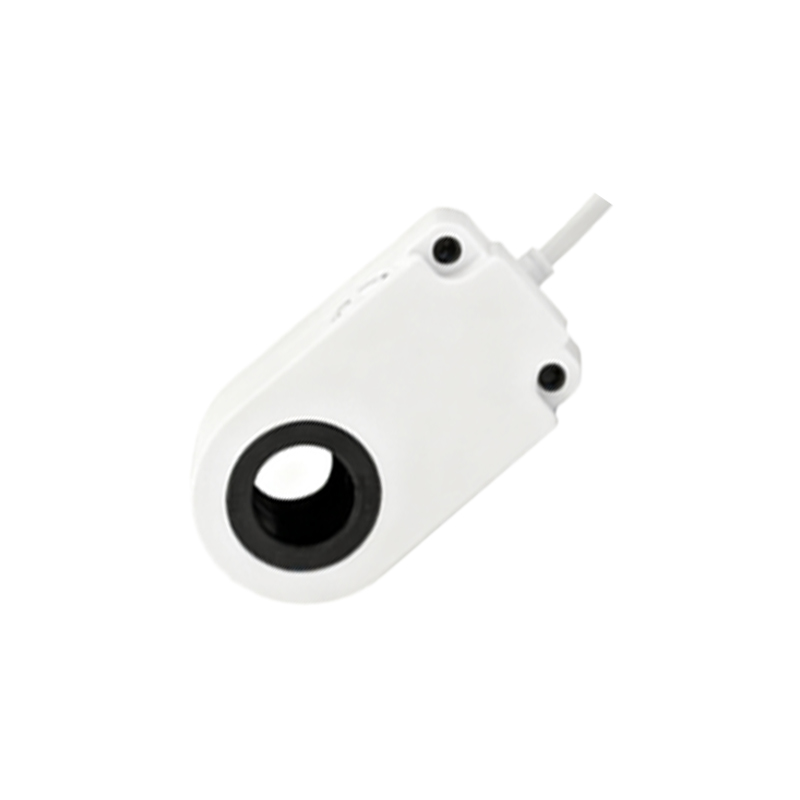
Selecting the right capacitive sensor requires careful consideration of several parameters. First, identify the target material and its dielectric constant to estimate the effective sensing range, which will be reduced for materials other than the sensor's reference. Next, consider the housing style: cylindrical barrels (threaded) are common for easy mounting, while rectangular or block-style housings offer larger sensing faces for specific applications. The sensing face material is also important; PTFE-coated faces are excellent for applications prone to sticky substances, while others may be optimized for high-temperature environments. Output type is another decision point; standard options include DC PNP (sourcing), DC NPN (sinking), or analog outputs (4-20 mA, 0-10V) for continuous measurement. Finally, environmental ratings like IP67 or IP69K for water and dust resistance are crucial for harsh washdown areas in food processing or outdoor use.
Installation and setup are straightforward but require attention to detail. Sensors should be mounted securely to prevent vibration from affecting performance. It is vital to ensure that the mounting bracket or surrounding metallic objects do not intrude into the sensor's field, as this can create a permanent "background" capacitance. The sensitivity adjustment is the key to optimal operation. The best practice is to introduce the target at the desired sensing point and slowly increase the sensitivity until the output reliably switches. For level detection applications, sensors are often mounted on the outside of a tank, eliminating the need for intrusive probes and simplifying maintenance.
In summary, capacitive proximity sensors offer a unique and flexible solution for object detection challenges where material variety is a factor. Their ability to sense through non-metallic walls and their robustness in difficult environments make them a powerful tool for engineers and technicians. By understanding their operating principles, key influencing factors, and proper selection criteria, users can effectively implement these sensors to enhance automation reliability, improve process efficiency, and enable innovative control solutions across a diverse spectrum of industries.