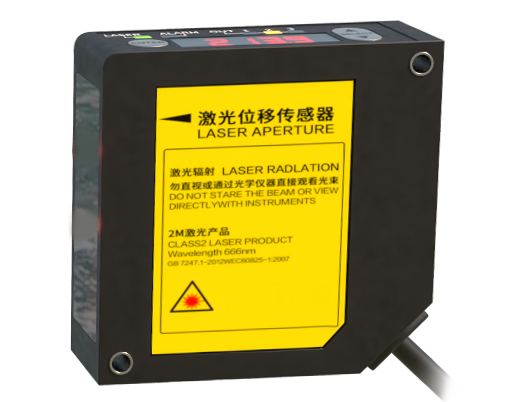
In the high-speed, automated world of modern packaging and manufacturing, labeling machines are critical for product identification, traceability, and branding. At the heart of their precision and reliability lies a key component: the laser sensor. Unlike traditional mechanical or photoelectric sensors, laser sensors offer unparalleled accuracy, speed, and flexibility, making them indispensable for demanding labeling applications. This article delves into the technology, types, benefits, and integration considerations of laser sensors in labeling machinery.
The core principle of a laser sensor in this context is triangulation. The sensor emits a focused, coherent beam of light (laser) onto the target surface—be it a product, a conveyor belt, or the label itself. The reflected light is captured by a receiver element, typically a CCD or CMOS array. By calculating the angle of the reflected beam, the sensor's internal processor can determine the exact distance or presence of the object with micron-level precision. This non-contact measurement is crucial for delicate products or high-speed lines where physical contact would cause damage or inefficiency.

Several types of laser sensors are employed in labeling machines, each suited for specific tasks. Distance-Measuring Laser Sensors are fundamental for detecting product presence and precise positioning on the conveyor. They ensure the label applicator head is triggered at the exact moment the product is in the correct position, preventing misapplied or skewed labels. Contrast Sensors, a subtype, are specifically designed to detect the edge of a label on its backing paper (liner). They distinguish between the high reflectivity of the glossy liner and the lower reflectivity of the label material or the gap between labels. This precise edge detection is vital for accurate label dispensing and cut-to-apply systems. Laser Profilers or line lasers are used for more complex tasks, such as verifying label placement on curved surfaces (e.g., bottles) or checking for wrinkles and bubbles by creating a 3D profile of the labeled area.
The advantages of integrating laser sensors into labeling systems are substantial. First and foremost is precision. They enable consistent label placement within tolerances often less than ±0.1 mm, which is essential for premium branding and compliance with regulatory markings. Speed is another critical benefit. With response times in the microsecond range, laser sensors can keep pace with the fastest production lines without becoming a bottleneck. Versatility stands out as they can detect a vast range of materials—transparent films, glossy papers, dark plastics, or metallic foils—by adjusting sensitivity thresholds. This reduces changeover time for different products. Furthermore, their robustness in challenging industrial environments (resistance to dust, ambient light interference, and vibration) ensures high uptime and reduced maintenance compared to optical sensors.
Successful integration requires careful planning. Engineers must consider the sensing range and spot size. A smaller spot size allows for detection of finer features, such as small gaps between labels. The mounting position relative to the target and potential obstructions is critical to avoid shadowing or false triggers. Environmental factors like heavy dust, steam, or extreme temperatures may necessitate sensors with higher IP ratings or specialized protective housings. Integration with the machine's Programmable Logic Controller (PLC) is straightforward via standard digital I/O or industrial network protocols (e.g., IO-Link, Ethernet/IP), allowing for real-time feedback and adjustment. Calibration is typically simple, often involving a teach-in procedure where the sensor learns the reference values for the target and background.
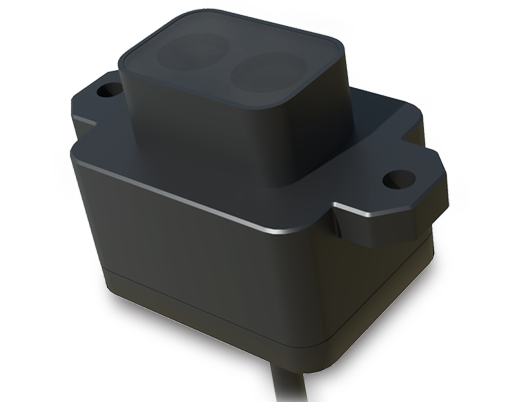
Looking ahead, trends point toward even smarter laser sensors. Integrated IoT capabilities allow for predictive maintenance, where the sensor can monitor its own performance and alert operators to potential issues like lens contamination. Advanced data processing directly within the sensor can simplify system architecture, enabling direct quality decisions without central PLC intervention. Furthermore, the fusion of laser sensing with machine vision systems is creating powerful hybrid solutions for comprehensive label inspection, verifying not just placement but also print quality and content.
In conclusion, laser sensors are far more than simple on/off switches in a labeling machine. They are sophisticated measurement devices that provide the critical data needed for flawless, high-speed operation. Their precision, speed, and adaptability solve the core challenges of modern automated labeling. For engineers designing or maintaining these systems, a deep understanding of laser sensor technology, careful selection based on application needs, and proper integration are fundamental to achieving peak labeling performance, minimizing waste, and ensuring end-product quality. As technology advances, these sensors will continue to push the boundaries of what is possible in automated packaging and identification.