In the realm of industrial automation and smart technology, proximity sensors stand as fundamental components, enabling machines to perceive their environment without physical contact. This guide delves into the intricacies of proximity sensors, exploring their various types, underlying working principles, and extensive applications across diverse industries.
A proximity sensor is a non-contact electronic device designed to detect the presence or absence of an object within a specified range. Its primary function is to convert information about the presence, position, or movement of a target object into an electrical signal. This capability is crucial for automation, as it allows for precise control, safety monitoring, and operational efficiency without the wear and tear associated with mechanical switches.
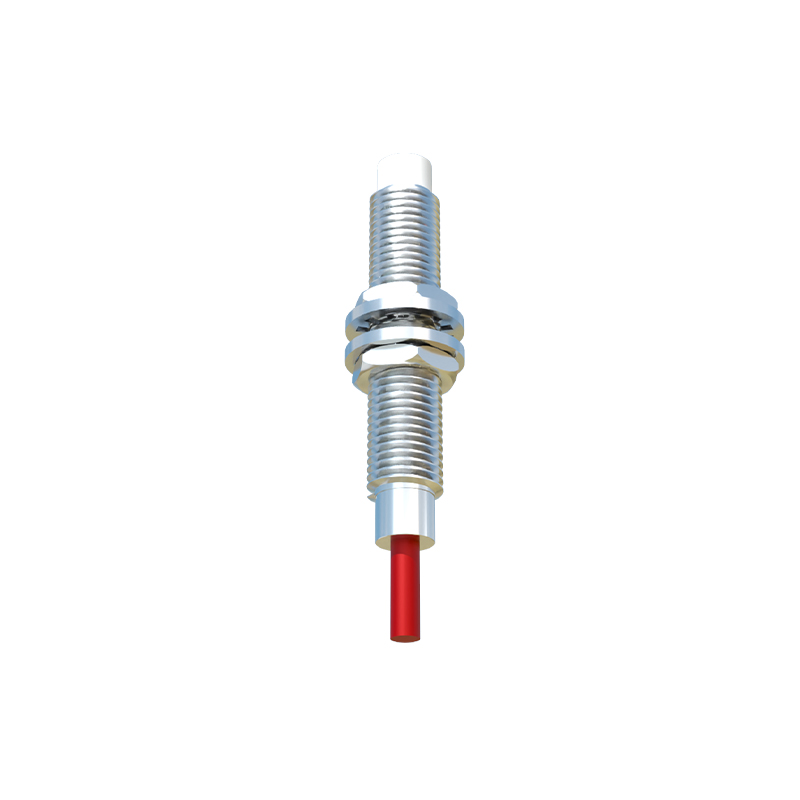
The operation of proximity sensors is based on different physical principles, leading to several distinct types. The most common categories include Inductive, Capacitive, Ultrasonic, and Photoelectric sensors.
Inductive Proximity Sensors are widely used in industrial settings for detecting metallic objects, primarily ferrous metals like iron and steel. They operate by generating an electromagnetic field from a coil in the sensor's oscillator circuit. When a metal object enters this field, it induces eddy currents on the object's surface, which in turn dampens the oscillation amplitude. This change is detected by the sensor's circuitry, triggering a switching output. These sensors are highly reliable, resistant to environmental factors like dust and oil, and are ideal for applications in metal machining, automotive assembly, and material handling.
Capacitive Proximity Sensors, in contrast, can detect both metallic and non-metallic materials, including liquids, plastics, wood, and granular substances. They function by generating an electrostatic field. Any object that enters this field alters the capacitance of the sensor's circuit. The sensor detects this change in capacitance and activates its output. This versatility makes capacitive sensors suitable for level detection in tanks, material presence sensing in packaging lines, and touch-sensitive interfaces.
Ultrasonic Proximity Sensors utilize sound waves beyond the human hearing range. They emit high-frequency ultrasonic pulses and measure the time it takes for the echo to return after bouncing off a target object. By calculating this time-of-flight, the sensor can determine the distance to the object. These sensors are effective for detecting objects of various materials, shapes, and colors, and are commonly used in distance measurement, object profiling, and liquid level control, even in challenging environments with dust or vapor.
Photoelectric Sensors operate on the principle of light transmission. They consist of a light emitter (usually an LED) and a receiver. When the emitted light beam is interrupted or reflected by an object, the receiver detects the change in light intensity, prompting an output signal. They are categorized into through-beam, retro-reflective, and diffuse-reflective types, each suited for different sensing ranges and environmental conditions. Photoelectric sensors are prevalent in packaging, bottling, and conveyor systems for object counting, positioning, and break detection.
The selection of an appropriate proximity sensor depends on several key factors: the material of the target object, the required sensing distance, the operating environment (temperature, presence of contaminants), the required response speed, and the output type needed (e.g., NPN/PNP, analog, IO-Link).
Applications of proximity sensors are vast and critical. In manufacturing, they ensure precise positioning of robotic arms, control automated assembly lines, and monitor machine tool operations. In the automotive industry, they are integral to anti-collision systems, parking assistance, and automated production. Consumer electronics employ miniature capacitive sensors for touchscreens and gesture recognition. Furthermore, they enhance safety by acting as guards on dangerous machinery, preventing operation when an object or person is too close.
Modern advancements are pushing the boundaries of proximity sensing. The integration of IO-Link communication allows for smart sensors that provide detailed diagnostic data and parameter setting remotely. Miniaturization continues, enabling their use in compact devices. Enhanced sensing ranges and improved immunity to environmental interference are also key development areas.
In conclusion, proximity sensors are indispensable enablers of automation and intelligent systems. Understanding their types, based on inductive, capacitive, ultrasonic, and photoelectric technologies, along with their specific working principles, is essential for engineers and technicians. Proper selection and application of these sensors lead to increased productivity, enhanced safety, and the continued evolution of smarter, more responsive industrial and consumer technologies.