In the rapidly evolving landscape of industrial automation and precision measurement, laser sensors have become indispensable tools. Their ability to provide non-contact, high-accuracy, and high-speed measurements makes them critical across diverse applications, from manufacturing and robotics to aerospace and quality control. However, the question "Which laser sensor is the best?" does not have a singular answer. The optimal choice is entirely dependent on the specific application requirements, environmental conditions, and performance parameters. This guide will delve into the key types, technologies, and selection criteria to help engineers make an informed decision.
The core technologies underpinning laser sensors primarily include triangulation, time-of-flight (ToF), and confocal measurement principles. Each has distinct strengths and ideal use cases.

Triangulation laser sensors are renowned for their exceptional resolution and accuracy at short to medium ranges, typically from a few millimeters up to about one meter. They work by projecting a laser spot onto a target; the reflected light is captured by a receiver at a known angle, and the displacement is calculated via trigonometric principles. These sensors excel in applications demanding micron-level precision, such as thickness gauging, profile scanning, and surface inspection. Their performance can be influenced by the target's color, reflectivity, and surface texture, though advanced models with background suppression and automatic exposure control mitigate these effects.
Time-of-Flight (ToF) laser sensors, including pulsed and phase-shift types, measure the time it takes for a laser pulse to travel to a target and back. This technology is ideal for long-range distance measurement, from several meters to hundreds of meters, with good accuracy. They are less sensitive to surface properties than triangulation sensors. ToF sensors are the workhorses in applications like bulk level monitoring, vehicle detection, crane positioning, and large-volume 3D scanning. While their absolute accuracy might be lower than high-end triangulation sensors, their robustness and long range are unparalleled.
Confocal chromatic sensors represent the pinnacle of precision for challenging surfaces. They use white light, where different wavelengths focus at different distances. By analyzing the spectral composition of the reflected light, they can determine the distance to the target with nanometer resolution. Their major advantage is the ability to measure on transparent, reflective, or highly curved surfaces (e.g., glass, polished metal, lenses) where standard laser dots might fail. They are typically used in semiconductor inspection, precision optics, and medical device manufacturing.

Beyond the measurement principle, several critical factors dictate the "best" choice for a project:
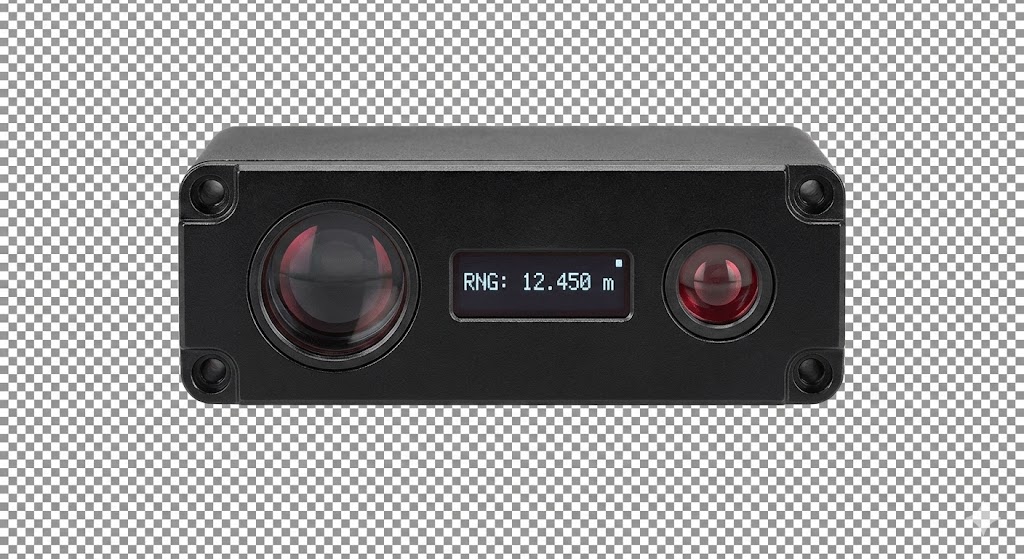
1. Measurement Range and Standoff: The required distance between the sensor and the target. Always choose a sensor with a range that comfortably encompasses your working distance.
2. Resolution and Accuracy: The smallest detectable change and the closeness to the true value. High-precision machining requires sub-micron resolution, while logistics may only need millimeter accuracy.
3. Spot Size and Sampling Rate: A small spot size allows for detailed feature measurement. A high sampling rate (kHz to MHz) is crucial for dynamic processes or fast-moving targets.
4. Environmental Robustness: Consider factors like ambient light, dust, moisture, temperature fluctuations, and vibration. Industrial-grade sensors with high IP ratings (e.g., IP67) and robust housings are essential for harsh environments.
5. Target Characteristics: The material, color, reflectivity, and surface texture (matte, glossy, transparent) significantly impact sensor performance. Some sensors have "teaching" functions to compensate for different materials.
6. Outputs and Connectivity: Standard analog outputs (0-10V, 4-20mA), digital interfaces (RS-422, USB), and industrial protocols (EtherCAT, PROFINET, IO-Link) determine integration ease with PLCs and control systems.
7. Form Factor and Ease of Use: Compact sensors are needed for tight spaces. User-friendly software for configuration and diagnostics is a valuable time-saver.
For general-purpose displacement measurement on opaque, diffusely reflecting surfaces, a robust triangulation sensor often provides the best balance of performance and cost. For long-range applications or presence detection, a ToF sensor is superior. For the ultimate precision on difficult materials, a confocal sensor is unmatched, albeit at a higher cost.
Leading manufacturers like Keyence, Sick, Banner Engineering, Omron, and Micro-Epsilon offer extensive portfolios. Keyence's LK-G series (triangulation) is celebrated for its ultra-high speed and stability. Sick's DT35 series offers exceptional durability for demanding factory floors. Micro-Epsilon's confocalDT series sets the standard for chromatic confocal measurement.
In conclusion, the best laser sensor is the one that most precisely and reliably meets the technical and economic requirements of your specific application. There is no universal winner. A thorough analysis of the measurement task, followed by consultation of detailed datasheets and, whenever possible, practical testing with sample targets, is the only reliable path to selecting the optimal sensor. Investing time in this selection process ensures system reliability, maximizes productivity, and ultimately delivers the highest return on investment.