In the world of industrial automation and smart systems, proximity sensors are the silent, unseen guardians. They detect the presence or absence of an object without any physical contact, triggering a signal that controls machinery, ensures safety, and optimizes processes. This fundamental capability makes them indispensable across countless sectors, from automotive assembly lines to consumer electronics and beyond.
At its core, a proximity sensor operates by emitting a field or beam and monitoring for changes in that field caused by a target object entering its sensing range. The key advantage is the non-contact detection, which eliminates mechanical wear and tear, allows for high-speed operation, and enables use in harsh environments where physical contact is impractical or damaging.
The landscape of proximity sensors is defined by several distinct technologies, each with its own principles, strengths, and ideal applications.
Inductive Proximity Sensors are the workhorses of metal detection. They generate an electromagnetic oscillating field. When a metallic object enters this field, it induces eddy currents within the object, which dampens the oscillation of the sensor's circuit. This change is detected and converted into a switch signal. These sensors are exceptionally robust, resistant to dirt, dust, and moisture, and are perfect for counting metal parts, detecting piston positions in cylinders, or as end-of-travel limit switches in machinery. Their limitation is clear: they only detect metals, with ferrous metals like steel typically offering a longer detection range than non-ferrous metals like aluminum or copper.
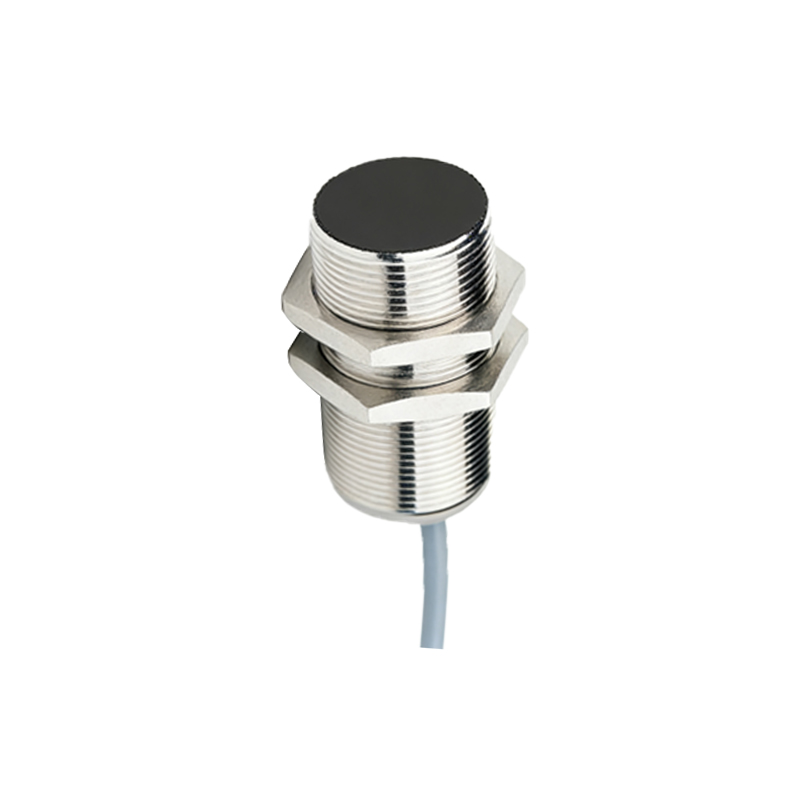
Capacitive Proximity Sensors, in contrast, can detect nearly any material—metals, plastics, wood, liquids, powders, and even glass. They function by generating an electrostatic field. Any object with a dielectric constant different from air will alter the capacitance of this field when it approaches. This change is measured to trigger an output. This versatility makes them ideal for applications like liquid level detection in tanks, monitoring fill levels of granular materials in hoppers, or detecting non-metallic objects on conveyor belts. They can even sense through certain non-metallic container walls.
Ultrasonic Proximity Sensors use sound waves beyond the range of human hearing. They emit high-frequency ultrasonic pulses and measure the time it takes for the echo to return from a target object. This time-of-flight principle allows them not only to detect presence but also to measure distance with high accuracy. They are largely unaffected by the object's color, transparency, or material (though soft materials may absorb sound). Common uses include pallet detection in warehouses, distance measurement in robotics, and level sensing for highly corrosive or sticky liquids where other sensors might fail.
Magnetic Proximity Sensors are simple and highly reliable devices designed specifically to detect permanent magnets. They often use a reed switch or a Hall-effect semiconductor. When a magnet approaches within a specified range, it either closes the reed contacts or causes a voltage shift in the Hall-effect chip. Their primary application is in conjunction with a magnet attached to a moving part, such as detecting the open/closed position of doors or windows, or sensing the position of pneumatic cylinder pistons fitted with magnetic pistons rings.
Photoelectric Sensors, while sometimes categorized separately, function as proximity devices in their diffuse reflective mode. They contain a light emitter (usually LED) and a receiver. In the diffuse mode, the sensor detects light reflected directly off the target object. When the object is present, the reflected light intensity at the receiver crosses a threshold, signaling detection. They are excellent for detecting small objects, offer long sensing ranges, and can detect virtually any material, but their performance can be influenced by color, reflectivity, and environmental contaminants like dust or fog.
Selecting the right proximity sensor requires a careful analysis of the application's needs. Key factors include the target material, required sensing distance, environmental conditions (temperature, potential for washdown, exposure to chemicals), switching frequency (how fast objects pass by), output type needed (PNP/NPN transistor, analog, IO-Link), and electrical requirements. For instance, a dirty, wet environment detecting steel gears would call for a shielded inductive sensor. Detecting the level of plastic pellets in a vacuum hopper would necessitate a capacitive sensor. Precise distance measurement of a cardboard box would point to an ultrasonic sensor.
In conclusion, proximity sensors are a foundational technology enabling automation, precision, and efficiency. Understanding the distinct operating principles of inductive, capacitive, ultrasonic, magnetic, and photoelectric types is the first step toward implementing a reliable and effective sensing solution. By matching the sensor's inherent capabilities to the specific demands of the target, environment, and task, engineers and technicians can build systems that are smarter, safer, and more productive.