In the realm of industrial automation, the seamless integration of control systems and sensing devices is paramount. Among these critical components, the PLC proximity sensor stands as a fundamental pillar, enabling machines to "feel" their environment without physical contact. This guide delves into the operational principles, key selection criteria, and practical application strategies for these indispensable sensors within Programmable Logic Controller (PLC) systems.
At its core, a proximity sensor is a device that detects the presence or absence of an object within its sensing range, outputting a discrete signal. When paired with a PLC, this signal becomes a crucial input, triggering programmed logic for control actions such as counting, positioning, speed monitoring, or automated sorting. Unlike mechanical limit switches, proximity sensors offer non-contact detection, leading to significantly longer service life, higher operational speeds, and reliability in harsh environments filled with dust, oil, or moisture.
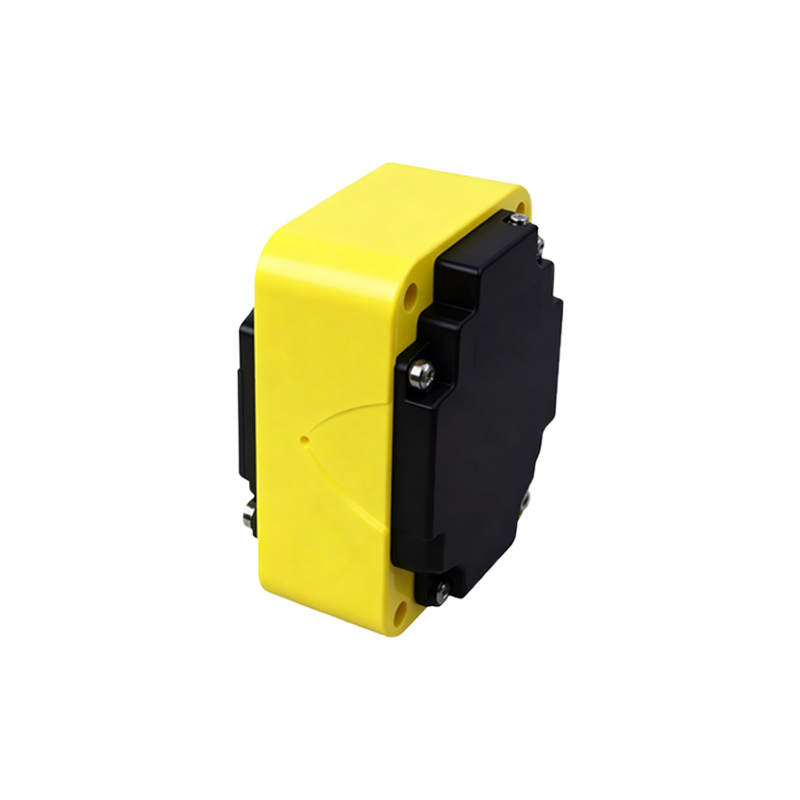
Several technologies dominate the proximity sensor landscape, each with distinct advantages. Inductive proximity sensors are the most common for metal detection. They generate an electromagnetic field; when a metallic object enters this field, it induces eddy currents, causing a change in oscillation amplitude that is detected and converted into a switching signal. These sensors are ideal for detecting ferrous and non-ferrous metals in applications like machine tools or robotic arms. Capacitive proximity sensors, on the other hand, can detect both metallic and non-metallic materials (plastics, wood, liquids) by sensing changes in capacitance. This makes them suitable for level detection in tanks or material handling of non-metallic products. For longer sensing distances and precise position detection of any material, photoelectric sensors use a light beam (often infrared) and are a frequent choice in packaging and assembly lines. Lastly, ultrasonic sensors use sound waves and are excellent for distance measurement and detecting transparent or irregularly shaped objects.
Selecting the right PLC proximity sensor requires careful consideration of several technical parameters. First, the sensing distance, or "rated operating distance," must be chosen with a safety margin to account for target material variations, temperature fluctuations, and voltage tolerances. The sensor's output type must be compatible with the PLC input module. This is typically a 3-wire DC configuration (PNP or NNP sourcing/sinking) providing a 24V DC signal, though 2-wire AC/DC and analog output models are also available. The physical housing style (cylindrical, rectangular, slot-type) and material (often nickel-plated brass or stainless steel) must withstand the installation environment, including potential exposure to chemicals, weld fields, or physical impact. Key specifications like switching frequency (response speed), repeat accuracy, and protection ratings (e.g., IP67 for dust and temporary immersion) are non-negotiable for ensuring system reliability.
Integration into a PLC system involves both hardware wiring and software configuration. Physically, the sensor's output wire is connected to a discrete input point on the PLC. A crucial step is ensuring a proper common ground and, for DC sensors, observing the correct polarity. Shielded cables are recommended in electrically noisy environments to prevent electromagnetic interference (EMI) from causing false triggers. Within the PLC programming software (like Siemens TIA Portal, Rockwell Studio 5000, or Mitsubishi GX Works), the corresponding input address (e.g., I0.0) is used in the ladder logic or function block diagram. The programmer creates logic where a change in the state of this input bit (from FALSE to TRUE or vice versa) initiates a control sequence, such as stopping a conveyor, incrementing a counter, or activating a solenoid valve.
Common application challenges often involve electrical noise, sensor misalignment, and target material issues. False triggering can frequently be traced to EMI from variable frequency drives (VFDs) or welding equipment. Solutions include using sensors with built-in noise immunity, employing ferrite cores on cables, and maintaining proper separation between power and signal lines. For sensing difficulties with small or misaligned targets, choosing a sensor with a narrower or more focused sensing field is essential. Regular maintenance, though minimal, should include periodic cleaning of the sensor face to remove debris and verification of the sensing distance and output signal under operational conditions.
The evolution of Industry 4.0 and the Industrial Internet of Things (IIoT) is shaping the future of proximity sensing. Modern sensors now come with advanced diagnostics, such as IO-Link communication. This smart sensor protocol not only transmits the standard switch signal but also a digital data stream containing parameters like operating health, temperature, and signal strength directly to the PLC. This enables predictive maintenance, remote configuration, and richer data collection for process optimization. Furthermore, the demand for miniaturization continues, allowing sensors to be installed in increasingly compact machinery.
In conclusion, the effective deployment of PLC proximity sensors is a blend of understanding sensor technology, meticulous selection based on application demands, and correct