In the realm of modern industrial automation and precision measurement, the laser head stands as a pivotal component within sensor systems. This sophisticated device, often the heart of optical sensors, generates a coherent, monochromatic beam of light that enables non-contact, high-accuracy detection and measurement across countless applications. Its integration into sensor technology has revolutionized processes from manufacturing floors to advanced robotics and beyond.
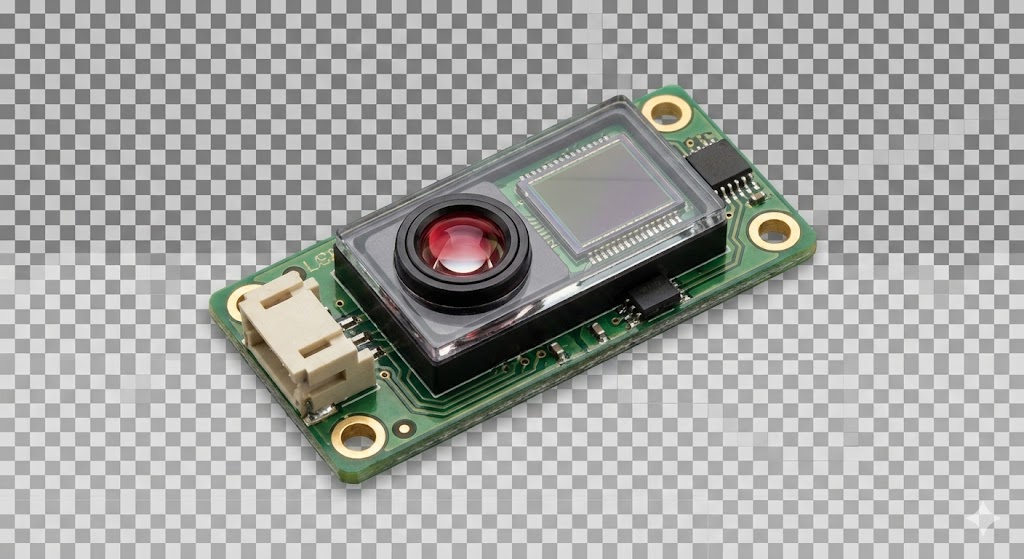
At its core, a laser head for sensors operates on the principle of stimulated emission. It typically contains a laser diode, optical elements like lenses and collimators, and often integrated drive electronics. The laser diode, when electrically pumped, emits light that is then shaped into a precise, focused beam. This beam serves as the probing tool for the sensor. When this light interacts with a target—be it a surface, an object on a conveyor belt, or even a gas molecule—its properties change. These changes, such as reflection, scattering, absorption, or a shift in wavelength (Doppler effect), are captured and analyzed by the sensor's photodetector and processing unit. The resulting data provides critical information: distance, presence, thickness, velocity, or chemical composition.
The advantages of using laser heads in sensors are manifold. Firstly, they offer exceptional precision, capable of micrometer or even nanometer-level resolution in displacement sensors. Secondly, the non-contact nature eliminates mechanical wear and prevents damage to delicate targets. Speed is another key benefit; laser-based sensors can perform measurements at incredibly high frequencies, making them ideal for dynamic processes and high-speed production lines. Furthermore, their ability to focus on very small spots allows for measurements in confined spaces and on tiny features.

Applications are diverse and sector-spanning. In automotive manufacturing, laser displacement sensors ensure precise gap and flush measurements between body panels. In electronics, they verify component placement on circuit boards. LiDAR (Light Detection and Ranging) systems, crucial for autonomous vehicles and topographic mapping, rely on powerful, pulsed laser heads to measure distance by calculating the time-of-flight of light pulses. In process industries, tunable diode laser absorption spectroscopy (TDLAS) sensors use specific laser wavelengths to detect trace gases by analyzing light absorption. Even in everyday consumer devices, such as barcode scanners and computer mice, miniature laser heads function as the fundamental sensing element.
Selecting the appropriate laser head for a sensor application requires careful consideration of several parameters. The wavelength is paramount; common choices include visible red (around 650nm), infrared (e.g., 850nm, 1550nm), and blue-violet lasers. Wavelength affects beam visibility, penetration through certain materials, and eye safety classifications. Output power determines the working range and signal strength, while the beam profile (e.g., Gaussian) influences spot size and measurement characteristics. Class 1 or Class 2 lasers are generally preferred for their inherent safety in open applications.
Looking ahead, the future of laser heads in sensor technology is geared towards miniaturization, increased intelligence, and enhanced performance. The integration of VCSELs (Vertical-Cavity Surface-Emitting Lasers) allows for compact, efficient arrays used in 3D sensing and facial recognition. Advances in frequency combs and quantum cascade lasers are opening new frontiers in ultra-precise spectroscopy and chemical detection. Furthermore, the fusion of laser sensing with AI and edge computing is leading to smarter sensors that can not only capture data but also interpret complex patterns in real-time.
In conclusion, the laser head is far more than a simple light source; it is the enabling technology that赋予s optical sensors their remarkable capabilities. As innovation continues to push the boundaries of laser power, efficiency, and cost-effectiveness, we can expect these critical components to drive further advancements in automation, quality control, scientific research, and smart technology, solidifying their indispensable role in an increasingly data-driven and precise world.
