In the realm of industrial automation, robotics, and high-precision measurement, the demand for accurate, reliable, and fast positioning systems is paramount. Among the various technologies available, multi-point laser positioning sensors have emerged as a critical solution, offering unparalleled capabilities for complex spatial detection and alignment tasks. Unlike single-point laser sensors that measure distance or presence at one specific spot, multi-point systems project an array of laser points, lines, or patterns onto a target surface. By analyzing the deformation, displacement, or profile of this pattern, these sensors can derive detailed three-dimensional information, including position, orientation, contour, and even surface defects.
The core technology behind multi-point laser positioning sensors typically involves triangulation. A laser emitter projects a structured light pattern onto the target. A high-resolution CMOS or CCD camera, positioned at a known angle relative to the laser source, captures the image of this pattern. Sophisticated onboard processors then analyze the distortion of the pattern in the captured image. Using precise calibration data and algorithms, the sensor calculates the X, Y, and Z coordinates of each point in the pattern relative to the sensor itself. This process happens at high speeds, often thousands of times per second, enabling real-time monitoring and control.
The advantages of deploying multi-point laser sensors are substantial. First and foremost is their high precision and resolution, capable of detecting micron-level variations. They provide non-contact measurement, which is essential for delicate, hot, or moving surfaces that could be damaged or distorted by physical probes. Their speed allows for 100% inline inspection in manufacturing processes, significantly improving quality control. Furthermore, their ability to capture full profiles rather than single points makes them ideal for applications like robotic guidance, where knowing the exact orientation of a part is as crucial as its location.
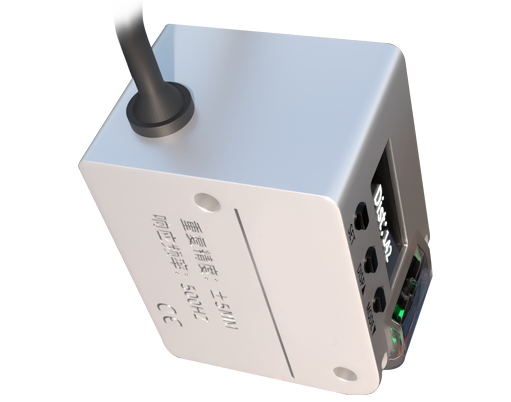
Key applications span numerous industries. In automotive manufacturing, these sensors are used for precise gap and flush measurement between body panels, ensuring perfect fit and finish. In electronics assembly, they guide robots to accurately place components on circuit boards by detecting fiducial marks and component leads in three dimensions. In logistics and warehousing, they enable automated parcel dimensioning and palletizing by quickly scanning box sizes and orientations. In metal fabrication, they assist in weld seam tracking and post-weld inspection by profiling the bead geometry. Even in emerging fields like autonomous mobile robots (AMRs), multi-point laser sensors serve as a primary perception tool for navigation and obstacle avoidance in dynamic environments.
Selecting the right multi-point laser positioning sensor requires careful consideration of several technical parameters. The measurement range and field of view must match the target object's size and the required working distance. Resolution and repeatability specifications dictate the smallest detectable change. The number of projected points or the density of the line pattern affects the detail level of the captured profile. Environmental robustness is critical; factors like IP rating for dust and water ingress, resistance to ambient light interference, and operational temperature range must align with the installation site. Finally, the output interface (e.g., Ethernet/IP, PROFINET, EtherCAT, analog) and compatibility with existing control systems are practical necessities for integration.
Integration and calibration are vital steps for optimal performance. Proper mechanical mounting to minimize vibration, correct lighting conditions to avoid optical noise, and precise sensor alignment relative to the target are fundamental. Modern sensors often come with user-friendly software for setup, calibration, and data visualization. This software allows users to define measurement zones, set tolerances, and configure output triggers. Regular maintenance, primarily keeping the lens clean and verifying calibration with a master part, ensures long-term accuracy.
Looking ahead, the evolution of multi-point laser positioning sensors is geared towards even higher speeds, greater point density, and enhanced intelligence through embedded AI. The integration of machine learning algorithms will allow sensors to not only capture data but also classify defects or predict trends autonomously. Furthermore, miniaturization and cost reduction will open doors to new applications in consumer electronics and smaller-scale automation.
In conclusion, multi-point laser positioning sensors represent a sophisticated fusion of optics, electronics, and software, delivering the precise spatial awareness that modern automated systems demand. Their ability to provide rich, real-time 3D data makes them indispensable for enhancing productivity, ensuring quality, and enabling advanced robotic functionalities across a diverse industrial landscape. Engineers and system integrators must thoroughly understand their principles and specifications to leverage their full potential in driving the next wave of precision automation.